Sunday, 10 October 2021

Britain, a country where The Guardian publishes the 'Pandora Box Papers' while an old and once disgraced politician, Jonathan Aitken, enjoys his third year as an Anglican Priest

Jonathan, who is 79 years old, has had an interesting and eventful life spent largely, but not exclusively, in the upper reaches of British society. Born in the Autumn of 1942 during the Second World War, in Dublin, the son of Penelope, whose grand father was there serving the British Government as  Representative to Éire, while his Canadian-born father, William, was serving as a pilot in the Royal Airforce. The Taoiseach of Ireland, the great Éamon de Valera asked to attend baby Jonathan's christening at St Patrick's Anglican Cathedral, and his presence at the baptism was symbolic of improving Anglo-Irish relations. Also there, was Princess Juliana of the Netherlands who was named as his godmother.
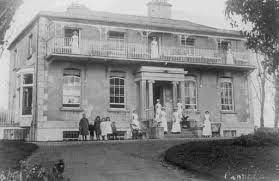
Still in Dublin after the War ended,  Jonathan's father was recovering in Britain after being severely injured when his Spitfire was shot down in the War and in 1946, Jonathan himself, at the age of four, contracted tuberculosis and was admitted to Cappagh Hospital, Dublin, where he was an inpatient on a TB ward for more than three years. While there he was cared for and educated by Catholic nuns and after being discharged from hospital, was taken to Britain. Here he lived with his parents at Halesworth, Suffolk, and learnt to walk properly again within a few months. In accordance with his life of privilege he joined the prestigious, independent boys school, Eton College in 1953 and read law as an undergraduate at Christ Church, Oxford in 1960.

Having graduated from Oxford he started a career in journalism, served as a war correspondent during the wars in Vietnam and Biafra and gained a reputation for risk-taking when he took LSD in 1966 as an experiment for an article in the London Evening Standard. After a bad trip, he reported : 'This drug needs police, the Home Office and a dictator to stamp it out'. He related this period in his life in the 'Daily Mail' in 2017 in an article titled : 'My Summer of Love at the pop festival that changed the world 50 years ago'. In 1968 he graduated to television and for the next two years presented the regional news programme for Yorkshire Television.

In 1970, at the age of 28, he hit his first choppy waters when he was called to The Central Criminal Court of England and Wales at the Old Bailey where he was was acquitted for breaching section 2 of the Official Secrets Act, when he photocopied a report about the British Government's supply of arms to Nigeria and sent a copy to The Sunday Telegraph and to the Conservative MP, Hugh Fraser, a pro-Biafran in the Nigerian Civil War. As a part of the fall out, Jonathan's political ambitions were temporarily thwarted when he was dropped as the Conservative candidate for the Thirsk and Malton parliamentary constituency.

He entered Parliament as MP for Thanet East at the age of 32 and scuppered his chances of high office in the three Thatcher Governments from 1979 - 80 after he managed to offend her by ending a relationship with her daughter, Carol and suggesting to an Egyptian newspaper that Thatcher "probably thinks Sinai is the plural of Sinus". He stayed on the backbenches for 11 years, but hit the news again, when taking part in the re-launch of TV-AM, broadcaster Anna Ford threw her wine at him to express her outrage at his behaviour.

Before he finally made it to the higher reaches of Government at the age of 50 as Minister of State for Defence Procurement under Prime Minister John Major in 1992 partly because he had previously been a Director of BMARC, an arms exporter. His downfall came in 1995 when a House of Commons motion showed that while a Cabinet minister he had signed a controversial Public Interest Immunity Certificate (PIIC) back in 1992, relating to the Matrix Churchill Trial, and that the 'gagged' documents included ones relating to the supply of arms to Iran by BMARC for a period when he was a Director of the Company. By this time he was a member of the Cabinet as Chief Secretary to the Treasury and was forced to resign on the basis of the allegations that he had violated ministerial rules.

On 10 April 1995, The Guardian carried a front-page report on his dealings with leading Saudis and the story was the result of a long investigation carried out by journalists from the newspaper and from Granada Television's 'World in Action' programme. It made allegations that he breached ministerial guidelines when a Saudi Arabian business associate had paid his bill at the Ritz Hotel in Paris. In substance it said that he had done the bidding of the Saudi Royal Family and had worked since the 1970s as a glorified fixer. He called a press conference at the Conservative Party Offices in Smith Square, London, at 5 p.m. that same day denounced the claims and demanded that the World in Action documentary, which was due to be screened three hours later, withdraw them. 

He melodramatically said:

"If it falls to me to start a fight to cut out the cancer of bent and twisted journalism in our country with the simple sword of truth and the trusty shield of British fair play, so be it. I am ready for the fight. The fight against falsehood and those who peddle it. My fight begins today. Thank you and good afternoon".

The World in Action film, "Jonathan of Arabia"', was transmitted as planned and Jonathan carried out his threat to sue. The action collapsed in 1997, a month after he had lost his seat as an MP  in the General Election, when The Guardian and Granada produced, produced evidence countering his claim that his wife, Lolicia had paid for the hotel stay at the Ritz Hotel in Paris. The evidence consisted of airline vouchers and other documents showing that his wife had, in fact, been in Switzerland at the time when she had allegedly been at the Ritz in Paris. It was further alleged that he been prepared to have his teenage daughter Victoria lie under oath to support his version of events, had the case continued.

Alan Rusbridger, Editor of the Gaurdain emerged from the High Court triumphant. He said Jonathan  had "impaled himself on the `simple sword of truth'. For three years he has lied to newspapers, lied to the Cabinet Secretary, lied to the Prime Minister and lied to his colleagues. Now he has made his fatal mistake by lying on oath to the High Court".
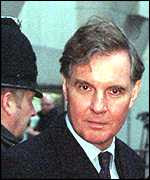
He was now charged with perjury and perverting the course of justice and, after pleading guilty on 8 June 1999 to both offences, was jailed for 18 months and served almost seven of those as a custodial sentence in Belmarsh Prison. Apparently, chatting one night with an Irish burglar called Paddy, and after rejecting his offer of hardcore pornography, Jonathan started talking about prayer. He recalled : “Paddy told me ‘I would like to try that.’ We prayed together four nights in a row. He had qualities of a good recruiting sergeant and before we knew it we had an armed robber, a pickpocket, a burglar, a safe blower and a murderer. We talked, shared and prayed. Remarkable things happened. It might not sound much but young men stopped swearing, threw away the porn mags, stopped picking on pariah prisoners and started being civil to prison officers”.

While in prison he studied the Bible, learned Greek and after his release in 2000, took a degree in theology at the University of Oxford. In 2000 he said, with apparent humility, that he would not become a vicar because he is not worthy of the office and "wouldn't like to give dog-collars a bad name". 

His literary effort to cover this part of his life consisted of his two autobiographical works : 'Pride and Perjury' published in 2003 and 'Porridge and Passion' in 2006. In the same year he became Honorary President of Christian Solidarity Worldwide. His literary ventures with a Christian theme were : 'Psalms for People Under  Pressure' in 2004 and 'Prayers for People under Pressure' in 2006. The following year he wrote a biography of the 18th century English slave trade captain who was redeemed and became the Anglican clergyman John Newton, 'John Newton: From Disgrace to Amazing Grace'. 

In 2010 he published his book, 'Nazarbayev and the Making of Kazakhstan: From Communism to Capitalism' in which he described the President as a popular and compassionate leader, who had built a successful economy and rid his country of Soviet-era nuclear weapons.  In the acknowledgements to his book, he thanked the Kazakh Foreign Ministry. It had paid for his hotels in Astana, the country’s capital and Almaty, he said. Beyond this, Reuters reported that Aitken told the Agency he received no payment from the Kazakh Government. In view of the recently revealed 'Pandora Papers' by the Guardian, this appears to be at variance with the truth. Said to be the largest trove of leaked data exposing tax haven secrecy in history which provide a rare window into the hidden world of offshore finance, casting light on the financial secrets of some of the world’s richest people.

At the time the critics were unconvinced by the quality of the book. The Guardian described the biography as 'a fascinating, cleverly orchestrated snow job: quite probably the hagiography of the year'. The London Review of Books was similarly damning and said its flattery ranged 'from the banal to the cringing'. All remarked that it glossed over Nazarbayev’s autocratic behaviour and intolerance of dissent. Torture by his security forces was widespread and 'carried out with impunity', Amnesty International noted.

Back in April 2010 Jonathan had flown flew to Washington for the launch of his book. “Biographers are artists on oath,” he told an audience of senators and diplomats. “They like painting on a broad canvas.” He added: “I have never had a more dramatic and turbulent canvas than the life story of Nazarbayev”. The Pandora Papers now reveal that Jonathan's speech at the prestigious Library of Congress failed to mention one crucial point : that a PR firm working for the Kazakh Government appears to have secretly commissioned and paid for his book. According to Papers Jonathan got £166,000 for his literary effort. The money was paid in tranches from 2007-2010 and was routed via Hong Kong and the British Virgin Islands and discreetly sent to Oxford and the ex-MP’s company, 'Aitken Consultancy & Research Services Limited'.

According to the documents, the PR firm, WorldPR, picked up the bill for Jonathan's overseas book tour. His expenses included a stay at the Capital Hilton, two blocks from the White House. Aitken’s $1,527 receipt – found in the leak – lists three nights’ accommodation, laundry, a meal in the bar and grill, as well as 'Twigs Restaurant', plus high-speed internet access. The PR company paid the Library of Congress $6,996 for venue hire, with the Kazakh Embassy bankrolling a later speaking engagement at New York’s Harvard Club.

According to the documents, the under-the-table payments were made by WorldPR, a firm run by Aitken’s one-time press adviser Patrick Robertson. Robertson is Kazakhstan’s honorary consul to the Bahamas. Its website says WorldPR has 'worked for multiple Kazakhstan government departments and agencies since 2004'. Other clients include the late Chilean dictator Augusto Pinochet and Azerbaijan, another oil-rich post-Soviet state known for persecuting opponents, while it also ran a 'Global Britain' campaign.

According to the leaked files, WorldPR bought 3,000 private copies of Aitken’s book from the publisher Continuum, now a part of the Bloomsbury Group. This cost £30,000. Overall, the biography sold just 466 actual copies, bought by the public from bookshops and online. Robertson spent $96,000 in Russia on “media consultancy services” and paid a Moscow publisher $116,000 to translate Aitken’s follow-up book, 'Kazakhstan and Twenty Years of Independence'. The deal included 10,000 Russian language copies and a media launch.

Jonathan was rewarded for his biographical labours with a medal from the Kazakhstan Government and in 2017 the Kazakh Ambassador to Britain, Erlan Idrissov, gave him a Government Award and said it was in honour of Aitken’s contribution to promoting the country’s global reputation. 

In 2016 he told 'The Times', after being asked : Had he really changed? “I’m still troubled by the same faults and flaws. Pride and arrogance are my great weaknesses. At least I can see the little demon creeping up my arm now”. He told the paper that he lived on pensions from his time as a banker and an MP, earnings from his writing and a consultancy that he runs with his son William for British businesses starting up in China. He said : “I’m not on the breadline. I don’t lack anything. I’m fine. Praise the Lord”.

Three years before the 'Pandora Papers' saw the light of day, in the summer 2018, Jonathan was ordained in the Church of England as a deacon and served as the Chaplain of Pentonville Prison. Finally, exactly one year after becoming deacon he was ordained as an Anglican priest in St Mary's Church, Stoke Newington, by the Bishop of London. The ordination ceremony was the first to be conducted by a female bishop of London - the Rt Rev Sarah Mullally. A celebration after the service was due to take place at the Old Bailey, where he was handed his prison sentence 19 years before. A statement from the Diocese of London, in 'The Telegraph', at the time said :  

"Jonathan Aitken, like his fellow candidates, has been through the Process of Discernment. Once ordained, his specific focus will be on prison ministry".

Wednesday, 6 October 2021

'Britain is no country for old men’ proudly receives its first accolade from 'The Times' newspaper

My tribute to the life of Colin Jones, published last Friday, was composed after a week of research on my part : 


It was gratifying to receive this tweeted accolade from the Chartered Institute of Journalists : 


However, this was eclipsed by the wonderful recognition given by 'The Times' which, in its obituary of Colin on Monday this week, used no less than 14 of the quotes I used, constituting a magnificent 25% of the text of their obituary, and proudly highlighted here by me :


I had started my tribute with a first quote from an article written in the 'The Richmond and Twickenham Times', by Louise Hale back in 2005 under the title : 'Taking moral view through the lens' and, to my great honour, the Times writer started their obituary with the self same quote.

Louise, who presumably interviewed him and you'll notice makes no mention of Colin smoking a cigarette, had written in her introduction : 

I had written in my introduction :


But for some reason, The Times obituarist in their introduction had written : 


And I am left asking the question : 

'Where did that cigarette, which embellished The Times quote, come from ?'

Even so, joking aside, even though I have received no credit, it has been immensely gratifying to see that so much of the work I put in researching and composing my tribute to Colin was put to such good use by The Times obituarist last weekend. I am a truly honoured old blogger and long may 'The Times' feel free to plunder my posts for the nuggets I have unearthed.

Friday, 1 October 2021

Britain says "Farewell" to Colin Jones who triumphed over adversity and joined the Giants of 20th Century Photojournalists

Pageviews : 1300

Colin, who took his place among the giants of 20th century photojournalism and has died at the age of 85, told his local newspaper, The Richmond and Twickenham Times, back in 2005 : "I sometimes feel like a bit of an oddity. My life has taken funny turns. I was plucked out of the East End as a boy, was seduced at 14, travelled the world as a ballet dancer, meeting celebrities such as Sir Kenneth Macmillan. I have no formal education, attended 13 schools, was illiterate until I was twenty, ended up in the Army and then became a photographer. But such experiences have taught me about human life".

He was born three years before the outbreak of the Second World War, in the early summer 1936 in Poplar in the East End of London bordering the River Thames in a "rickety Georgian house that I loved". His was a working class heritage : his father, George was a printer and Colin said : "some of my great-greats were leather tanners and lightermen on the Thames". Even at this early age, he was aware of the poverty around him and recalled : "I grew up during the War and the decline of the docks. The stage when the East (End) was forever changing and London split into two cities. There was a deep cultural divide between the wealthy and the poor". In fact, the War had a dramatic effect on his life. His father was drafted into the Army and was involved in the Burma Campaign and he didn't see him again for six years. With the onset of the German Blitz on the London docklands followed by V1 and V2 bombings, he himself was evacuated to Essex with his mother, Maud, who had been a civil servant and kid brother in a series of evacuations from Poplar and recalled :  "Coming back, and then the house got bombed, so we went away again to Reading".

Colin spent the next five years in and out of no less than 13 different schools, which he described as "pure torture for me". He recalled : "One school I went to in Woolwich - used to go by the tram. One day I got up, got onto the tram, got to school, and it was a ruin. It had been bombed during the night. I’d only been there two weeks. Being evacuated, I kept moving about". He returned to Poplar at the age of 9 and, as a severe dyslexic who had received no help, he could neither read nor write and continued to make no progress through his junior and secondary school. The family were reunited with his father after he was demobbed at the end of the War and having not seen him for six years, Colin scarcely knew him. He later said of him : " he was a bit like me, very talented but never quite knew what to do with it".

He recalled, at the age of 12 in 1948 : "One day the Festival Ballet was doing a demonstration class at school, trying to recruit dancers, and you’d get some kind of grant, I think. I stood up and went on stage, and it didn’t seem too bad to me because I was always slightly athletic. At St Mary’s, Sidcup I’d boxed for the college so I kept quite fit. Sitting in the audience was a dancing teacher from nearby who asked me afterwards if I’d like to become a dancer, I said "yes", it was better than being a roadsweeper. I had no education, you see". In fact, the school had told Colin that he'd be lucky to be a roadsweeper when he left school. (link) Colin attended dancing classes and two was seduced by his private dance teacher at just 14 and recalled : "She was much older and the sex was life changing".

In 1952 at the age of 16 Colin's life changed dramatically when he won a scholarship to study at  the Royal Ballet School and whilst training as a dancer met the Canadian dancer Lynn Seymour, and seen here as the 4th dancer (link), who he would marry when he was 26, ten years later. He later recounted how tough it was at the School for the girls and said : "For the boys it was apiece of cake. I think they would have taken me in if I'd had one leg. There was a shortage of male dancers in those days. Nobody wanted to be because everybody thought you were gay. Homosexuality in those days was to go to prison". (link)

At the age of 18 in 1954 his career as a dancer was interrupted when he was called up to serve his two years national service in the Army in the Queen's Royal Regiment and recalled : "I enjoyed being in the Army. It was different from the dancing stuff, but the physical hardship was the same. But because they all knew I was a dancer, they assumed I was gay. It was one of the toughest infantry regiments. The sergeant-major called out, "Which one of you is the ballet dancer?" I stepped forward. And they gave me a terrible time in the barrack room. All trying to jump into bed. I took up boxing again in the Army and they left me alone because they knew that if anybody attacked me I’d kill them. I literally did get stopped nearly killing somebody, bashing his head on the iron bedstead - and I wouldn’t have minded if I had killed him. Because you’re being bullied, and to be bullied is unforgivable. He’d come along and try to stick his dick in my ear, and things. I laid him out. Nobody joined in - they just stood watching".

After he had finished training he recalled the selection officer "told me our regiment was going to Malaysia to fight in the jungle. He told me, "You don’t want to go to the jungle ?" I said, "I don’t know what else to do". He said, "Why don’t you become a physical training instructor?" And I ended up doing that, teaching physical training at the Tower of London. I could live at home when I was doing that". He concluded : "I hated the army. It was like ballet, actually, but much worse. I became 'acting sergeant' and we’d get invited to do physical demonstrations. All I had when I left was two demob suits, dreadful things. A bit like leaving jail".

Colin's return to the ballet was by no means a foregone conclusion. While waiting to be called up into the Army he had worked on a farm and returned to it again. "I went back to the farm after I was demobbed, and this guy, Mr Cheesman, who had this beautiful farm in Kent, took me back. We only got piece pay. You got paid by the box of apples. He said he’d give me a little bit of money and showed me this field, where I was supposed to wind these young hop shoots up the wire. I saw this field which seemed to go on forever, and thought to myself, there’s no way I can live like this, I’ll go back to the ballet. Within three or six weeks of being back I was in Australia on the tour". 

Colin had a successful audition and joined the Royal Opera House and shortly afterwards joined the  'Touring Royal Ballet' which embarked on a nine-month world tour and for the first time in his life his time as a top class dancer saw him want for nothing - chauffeur driven cars, top class hotels and exquisite restaurants. He performed alongside Rudolf Nureyev and Dame Margot Fonteyn, and in Kenneth MacMillan's 'The Invitation' with Canadian born and now Prima Ballerina, Lynn Seymour. In 2014 he recalled that "everything is done on the beat and if you know the music very, very well you know what's going to happen next and I was pretty unmusical and there was one difficult role they gave me in the in 'The Rakes Progress'. (link). So I go on when I think I have to go on and the bloke behind me said : "You go on too early". I had to do this step backwards into the wings and then go off again and I came to a complete standstill. I remember the ballet master coming round and saying : "That's the worst performance I've ever seen".

All the dancers had cameras and so Colin thought he ought to have one too and bought his first one whilst on tour in Japan in 1958, running an errand for Dame Margot Fonteyn. It was a Leica 3C Rangefinder and his self-portrait was taken at the Empire Theatre, Sydney and he started taking photographs of the dancers and backstage life during the Australian leg of the tour. (link) 

He recalled :  "There was a Hungarian photographer called Mike Peto who used to hang around the corps du ballet when I was a dancer. He didn't take pictures in the way that the rest did. Instead, he crept around the back and caught us lounging around. Dancers come alive in front of the curtain, but he wanted to snap the reality: the endless tedium of rehearsals in dusty church halls in the North East, the sheer misery of it all. He really inspired me and I became obsessed by the work of other Central European photographers such as André Kertész, who was also a great influence on Cartier-Bresson". Following in Peto's footsteps Colin said : "The thing is, dancers always want to look perfect, and I like taking pictures when they’re off guard, working in difficult places or in rough environments. What I wanted to show was that, for all the glamour, there’s a lot of hard work".(link) 

It was while on tour in 1960 at the age of 24 that Colin became aware of and uncomfortable with the insularity of the dance company. When interviewed by the journalist Ismene Brown in 2011, he told her : "We went to South Africa. I’ve got pictures upstairs. Not a black person in any of them. Except for one dinner I went to with my first girlfriend, it was all Afrikaans, they hated black people. We practically witnessed the first riots, actually the Sharpeville Massacre was on the day we went waterskiing on the Vereeniging River, which was just outside Sharpeville. I’ve still got some photographs somewhere. We didn’t know anything about it. Nobody in the ballet knew what was going on - we were so unpoliticised".

Back in Britain, in addition to backstage and stage, Colin took advantage of the ballet company's travel around the country, which allowed him to visit the Gorbals, Glasgow in 1961. Driving with fellow dancers from Newcastle to Sunderland that year, he saw, north of Birmingham, coal searchers on the spoil-heaps. He recalled : "We used to travel all over the country and I'd see ways of life. I was fascinated by coal miners and working class and that's what I concentrated on. Photography in those days was not an art form, it was just a thing for recording. I mean I photographed, documenting something you know would go".(link)

Colin was struck by the similarities between the life of coal miners and ballet dancer : "Because they do the same type of physical work; they live in close-knit communities - mining villages are the same as dance companies and down the pit miners help each other, even though they might be enemies. Down there, even if they don’t talk above, they’re all in it together, in the same boat - there’s a kind of camaraderie. It seemed to me that in the ballet world it was the same". He also said : "There are similarities between dancing and photography - it's about discipline. When you're a dancer you live in a closed community. For me it was like being a nun. I would get £14 a week but wasn't allowed to do anything - sunbathe, ride bikes, do sports. Photography is similar. I was never interested in being a member of companies, because it would have destroyed me. I like that I can be isolated if I want to be". 

Colin recalled the start of his love affair with Lynn Seymour : "We were in Athens. One of those posh rooftop restaurants and I sat next to her, and that’s how it started. It was some of these pictures from the north-east of England, the slag heaps of Durham. Coal scavengers. Anyway, that’s how I got her attention, and then much to my parents’ disgust I lived with her - because I was actually living at home at the time"

Back in London they stayed in the basement flat of South African choreographer, John Cranko's house in Alderney Street, Pimlico and were filmed there, where Lynn supplied the film narrative : "Some sundays, you've had a very hectic week and if Colin and I hadn't seen each other in our various rushings - sunday, it blooms like a kind of rose. You wake up, not wanting to wake up". (link)

He described some of the tours he accompanied as "weird" and recalled the one in 1961 which took in Tokyo, Hong Kong and the Philippines and saw him pose in costume with Manila police officers. He recalled : "When we got off the plane at Manila, these incredibly wealthy Filipinos were looking after us. On the Sunday we had a day off, and the Marcoses invited us to a party and they served up this meal where there were gigantic cubes of ice inside which were these exotic fish - this bloke would ask you to choose which one, and you’d point at one and they’d cook it. We had to do this changing of seats during the meal, and I ended up next to Imelda Marcos. I had no idea what to say to her, but we were facing this beautiful bay, and there was this smoke on the horizon. I asked her, "What’s that?" She said, "Oh, we’re burning off some of the slums". When we got back to the hotel - we all had chauffeur-driven cars, and I asked my driver to pick me up early in the morning and take me down to where the fires were. I went and saw what was happening and it was dreadful to see them bulldozing people’s houses and setting light to them. That’s when my life changed. I thought, 'I don’t want to live and not really know what’s going on in the world'. So that’s the moment really when I decided I’d leave the ballet".(link)

Colin said he : "realised photography was a discipline where I didn’t have to write my name or count a beat” and in 1962 he left his career in ballet and started work as a professional photographer and confessed : "I didn’t really like ballet that much – I couldn’t take the tension. You’ve got to be very self-assured" and "I never really enjoyed being in the Company. Towards the end I hated it, I couldn’t wait to get out. I was slightly dyslexic with music and other things, but if you’re not musical There are a lot of ballerinas even who aren’t musical, but I found it nerve-wracking". He also married Lynn Seymour in the same year and recalled : "I remember going to Vancouver for the wedding and not even knowing who my best man was going to be". 

He had landed a job with 'The Observer' newspaper alongside photographers Philip Jones Griffiths and Don McCullin in what would come to be seen as the heyday of investigative and photo-journalism, but found that they didn't welcome him with open arms. Colin recalled : "The Picture Editor at the time was Dennis Hackett. When I went for the interview, he looked at the pictures and said, "I think being a press photographer will be a bit rough for an ex-ballet dancer, don’t ring us, we’ll ring you". And I was dancing somewhere when I got a telegram from The Observer saying 'could I do six months’ trial as soon as possible?' And I’d just signed a contract with the ballet with de Valois and I went and told her I wanted to leave. She said, "No problem". Even though I’d just signed it. they resented me because I was an amateur. My very first job was in 1962, you see I was very young". He was 26. (link)

Working for 'The Observer' he returned to produce a series of photographs recording the vanishing industrial and mining communities in the North East of England. Katherine Viner said of  these photographs in the Sunday Times Magazine in 1996: 'They look like something described by Orwell in one of his political essays, like photographs from the 1930s to illustrate The Road to Wigan Pier –  cloth caps and granite-faced dockers'. 

She was referring to those he took at the Liverpool Docks in 1963, where he photographed one of his most memorable images of the docker waiting to be signed on for work. Colin published this and those of the miners in his book 'Grafters' in 2002. In relation to the book he said : "My pictures of miners in Newcastle were the first I ever shot. I felt they really represented the extreme conditions that labourers worked under at that point in time. I can empathise with my pictures because my childhood memories go hand in hand with working class hardship. But it's like a form of guilt. Because I come from a working class background most of my work has been with the underdogs and I guess that's because I feel I still belong there" .

In the same year he was sent to cover the race riots in Birmingham, Alabama, USA.  He recalled meeting Bull Connor who was opposed to granting civil rights to black Americans and was in charge of the police and fire departments. He said to Colin: "If you go across there and you join them, (Martin Luther King and his supporters) I take it you'll be one of them and you're likely to get shot and that was out of his car and he was sitting there with a double barreled shotgun and around his feet there were hundreds of cartridge cases". Colin ignored the threat and crossed the street.(link)

In 1964 he was off to Leningrad, in the USSR. He said of these years his low point was : "In 1969, while shooting a Sunday Times feature, I was put under house arrest by Colonel Gaddafi”. The boy soldiers of the Khmer Rouge were followed by the Cargo Cults (link) of the New Hebrides who worshipped Prince Phillip. The breadth of his work in these years was extraordinary. (link)

Studies of  Brazilian gold mines (link) and gangs in Jamaica were followed by prostitution in the Philippines (link). He said of the Philippine's : "I didn't know it was as corrupt when I went as a dancer, but when I went as a photographer you saw it. I went to the prison and I wanted to go to the lunatic asylum. They wouldn't let me go there, they let me go to the prison. They had all these people on death row. They had the old electric chair which was made in Chicago and the Prison Governor said : "Do you want to see an execution ?" I said "No thanks". That would have been against the ethics of being a photojournalist to do that. I knew that". (link) 

Colin painted a vivid picture of his life as a photographer rubbing shou;ders with actors back home in Britain the 1960s : "The worst people to photograph are politicians - they’re the most conceited. Pop stars, sometimes. But politicians I hated. I think with actors it is more about the head that you're focusing on, the body doesn’t seem to matter so much. Like Dirk Bogarde, for instance - he could only be photographed one side! The other one was that great friend of Lynn’s, Fenella Fielding - who would get everything booked in a restaurant and then go in and say, "Oh, I can’t sit here, the lighting is all wrong." 

"We would go to Stratford quite a lot and I was asked by Nova magazine to do a profile on the Royal Shakespeare Company. I knew Michael Williams (the actor), who was married to Judi Dench; we used to get so pissed in the 'Dirty Duck', this pub just across the road from the stage door. It was run by this amazing woman - you know, the hours of opening in those days were very strict, but all the actors would get into the pub and she’d lock the door, and get out the Champagne and Guinness. Great time I had there, we all did".

In 1966 he photographed 'The Who' for The Observer magazine cover at the beginning of their career, made between 'My Generation' and 'Substitute' and a copy of Colin's photo resides in the National Portrait Gallery. Taken at Manchester Airport, Colin improvised the background in the dreary hotel room with the Union Jack borrowed from an airport flagpole. Pete Townshend later said in an interview: "I hate all photographers except Colin Jones." Colin said : "He asked me to go on their first American tour, but I turned it down, because there was too much drinking. When I first met them, I went into this club in Manchester, and the place was just filled with Mateus Rosé bottles, they used to drink gallons of it, pop pills, and not turn up for the second show. Terrible. And always fighting - they’d fight on the bloody train. No discipline. So to go on a tour with them I’d have ended up a drug addict or an alcoholic. Which they all did. You see, Pete Townsend did, and Eric Clapton. Though I like Eric very much - a very nice bloke". 

However, Colin recalled : "I did a stint of pictures with them that I kept in a drawer for five years before I even noticed their potential. I shot them as normal lads, not rock stars. I wasn't interested in being a celebrity photographer, it didn't have enough depth for me. They were lovely guys and Pete Townshend inspired me, he was very ambitious". Pete Townshend revealed in an interview with the Sunday Times in 2007 : “It is very satisfying looking at Colin’s wonderfully mischievous photographs today. There is a continuity between what I am doing today and what I was doing in those pictures. Seeing them makes me feel more like the artisan, potter or painter I have always longed to be, rather than a mere pop performer".

In the same year he was commissioned by 'Time Life Magazine' to take photographs as part of a 'day-in-the-life series' they wanted on Rudolf Nureyev and Colin said : "We organised a trip with Princess Radziwill, who was Jackie Kennedy’s sister. And we were driving to Rickmansworth or something, where there was waterskiing and she wanted to buy a speedboat, top of the range, the Rolls Royce of speedboats - and she was all over him, wouldn’t leave him alone.  And she had her kid with her, which was strange. On the way back, he kept putting his foot up her skirt and she was loving it. Rudy was great fun, very naughty, he used to send these women up, and say, "They think I’m their puppy dog".

Colin recalled his photograph the Guardian published : "It was taken in a pub in Fulham, London. The woman is Lynn Seymour, who I was married to at the time. They were doing 'Romeo and Juliet' together, and they used to get on well; we used to go out drinking together all the time. Rudi was a great laugh, very outspoken – if something wasn’t right, he’d really lay down the law. He was fantastically bright, spoke six languages, and had an animal magnetism: you couldn’t take your eyes off him when he was on stage". "There was no paparazzi in those days. I just asked the bloke at the bar if I could take a few pictures, and he said "Fine". What I love about it is those people at the next table: they are just having a quiet drink and didn’t know or care about Nureyev, even though he was all over the papers". (link)

He confessed that when he took the photograph : "I wasn’t getting on too well with Lynn at the time; in fact, we broke up shortly afterwards". A major factor in the break up was the role played by the brilliant chorographer Kenneth MacMillan who Colin knew well. He recalled that a few years before : "He invited me, when Lynn was dancing in New York, he said, "I won’t fly, I’m going by boat to New York, will you come with me?" So we got on the France, and we were first-class - it was beautiful. But he was there with James Baldwin, the writer, amazingly gay. It was terrible. There were 23 bars on this boat, and they would go to every single one, and drink. Because first-class didn’t pay. So they got so pissed. I didn’t drink so much in those days, but it was all a bit embarrassing".

Kenneth, in fact, had embarked on some of his most pivotal, controversially new ballets, inspired by Lynn and when she married Colin back in 1962, he said that he : "did everything he could to break us up. She was his muse and he was a very selfish man”In fact Lynn would abort a child she conceived with Colin in order to be available for MacMillan’s world premiere of 'Romeo and Juliet' (link), which had been created for her. However, due to commercial pressures, MacMillan allowed Nureyev and Fonteyn to give the premiere instead, which devastated Lynn and sounded the death knell for her marriage to Colin. In 2011 when Colin was asked :"From your point of view, as husband, you were a spare part" he replied : "I was like a spare prick at the wedding".

Mick Jagger was 24 years old in 1967 when he posed for Colin in 1967 wearing the then current fashion for old military uniforms. Like Colin's group portrait of  'The Who', it too earned a place in the National Portrait Gallery. In fact, in his career
as a photojournalist Colin made friends with  Lucian Freud, Eric Clapton and George Harrison and over time, Richard Attenborough, David Hockney and Elvis Costello were also graced by his lens.

With advent of the 1970s, having worked in Fleet Street for several years, he turned freelance and then worked for many of the world's greatest magazines : 'Life', 'National Geographic', 'Geo' and 'Nova'. In 1973 Colin received a commission by the 'Sunday Times Magazine', at that time the paper was under the inspired editorship of Harold Evans. Colin was to document the Islington-based 'Harambee Housing Project' for Afro-Caribbean youth named after ‘Harambee’, Swahili for ‘pulling together’. His subsequent photograph on the front cover, 'On the edge of the Ghetto' was taken on one of his frequent visits to the dilapidated terraced house on Holloway Road, a refuge for troubled young black men which was run by a charismatic Caribbean migrant, Brother Herman Edwards and known as 'The Black House'.

The Project, often visited by the police, was an irritant to neighbours who complained of noise and overcrowding. It took Colin 6 months to gain the trust of the youths and admission to the house as seen in him photographed with resident, Warren. Many of them embraced their portrayal in the media as iconic delinquents which reinforced their status as outcasts. This first generation of Afro-Caribbean young people to be born in Britain experienced prejudice and disadvantage in education, employment and with the law and Colin sought, through his lens, to humanise what had been a one-sided news story. He said at the time : "I notice that a lot of boys are fascinated by the Black Power movement. They also talk a lot about home, family, identity. That's what Brother Herman is trying to do - help these young people to find and know themselves". The year 1973 was also an important one in Colin's private life : he married the model Priscilla Tanner, seen her gracing the Observer cover for John Gale's magazine story in 1966. Their daughter, Sarah was born in 1984 and Colin remained married to Priscilla for the rest of his life - for 48 years.

Supported by grants from the Gulbenkian Foundation and the Arts Council, Colin continued to photograph the Project until 1976 when the Project dissolved. He said : “I felt it was such a good thing to do that I carried on going up there in my Volkswagen camper van. Sometimes I used to go in there and not take any pictures because the atmosphere was too tense. In the end I was picking up the kids to and from the court". Colin stayed in touch with many of the residents and was invited to photograph their weddings, funerals, and other important occasions for decades to come. He later said : "Of all my work, I am most proud of The Black House". He said : “I knew that what I was doing, for a white person to get inside that place, was a privilege. It was like you found something that was unique and you stuck to it, and no other people had done it before”. He also said : "This was one of the hardest assignments I ever did and i used to say to myself  I'm never going back. I couldn't do it again. It's too tough".

The Black House photographs were displayed for the first time at 'The Photographer’s Gallery' in 1977, where they became the subject of controversy. Critics complained that Colin was making money out of his photographs of this marginalized community, but he remained convinced that even when his position was uncomfortable, the importance of finishing the series was even more important. He said : "The reality of what I had been doing was only made clear to me on the opening night of the exhibition, when I was asked: "Which part of America did you take these photographs?" I said : ‘Holloway Road, about three miles from where we are both standing.’ I now realise it could have been anywhere in the world where a small community is threatened and afraid". Colin later displayed his portfolio from 'The Black House' at the 'Missing Chapter Symposium in London in 2011 : Link

In 1980 he was in Zaire and the following year was with the musician Tom Waits in New York. The San Blas Islands in 1982, Northern Ireland in 1984 where he captured two kids passing a sectarian grafitti, Xian, China in 1985 and then in the 1990s, Ladakh in Northern India in 1994 and Bunker Hill, Kansas in 1996, where, perhaps aptly, at the end of his career he captured the sunset. 


With the advent of the 20th century Colin reflected : "Moral photography is hard to come by nowadays, I mean what is it with celebrity culture? Where's the truth in it? Not only is it killing photography but it makes us have a completely deluded idea about life". In 2005 he said : "People call me an artist, but my kind of photography doesn't exist any more. Today artists are judged by how many awards they have and exhibitions they have down. But artists are unjudgable".

Throughout his career, both as a dancer and photographer, Colin had always developed his own prints and in his early days had hidden his equipment under the bed. In his twilight years he busied himself in his darkroom at his home in West London, making museum-quality prints from his archive, some of which he sold to collectors. The BBC paid tribute to him with a montage in 2016 and 'The Who' have remembered him on their website last week and 'he Telegraph' have a fine obituary this week. 

Flatteringly, 'The Times' obituary of Colin, here behind a paywall and published on October 4th, is a smaller mirror image of this post, even down to the the use of 15 of the quotations researched in the course of the week that it took me to compose this piece. 

Colin once said : 

"My photography reflects me completely. The bottom line is that anyone can operate a camera. It's the mind that sees the image. So my images are my truth - my take on what's real and if people can see it too then that's great".