Monday, 26 March 2018

Britain, after all these years, still no country for old soldiers like Fergus Anckorn

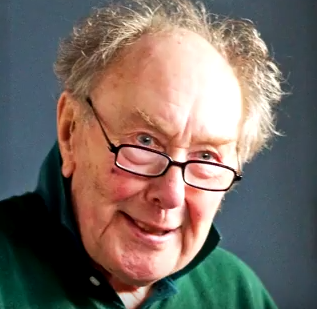
Fergus or 'Gus' Anckorn, who has died at the age of 99, was a truly remarkable old man whose life in the 1940s, when he was in his twenties, was testimony to the triumph of his will over unimaginable wartime hardship and deprivation. It was also, although he never once complained, testimony the Britain's failure in peacetime in the 1940s and 50s to give him any help to put his damaged mind back together. What was true for Gus seventy years ago is sadly still true for contemporary 'old soldiers' in Britain today. Witness :

In 2007 'The Telegraph' ran an article entitled :
It reported that there were no dedicated mental health wards for Service personnel and
the number of troops who have committed suicide after serving in Iraq and Afghanistan is equivalent to 10 per cent of deaths suffered on operations. Veterans said they were being failed by the authorities as they had to wait 18 months for treatment by an NHS psychiatrist as they were not given priority treatment.

In 2014 'The Telegraph' ran an article entitled :
Wounded soldiers failing to receive the care they are entitled to 
It highlighted a by Professor Tim Briggs that injured soldiers are being left to fend for themselves once their care passes from the Armed Forces and instead GPs should be specially trained to treat war veterans.

In 2017 'The Express' ran an article entitled :
It highlighted the the case of mentally traumatised war veterans are rotting on the streets of Britain because the Government is not adequately enforcing a law which states military heroes must be offered homes.

                                                                   * * * * * * *
Fergus was born with his twin sister in Dunton Green in Kent, in December 1918, just after the end of the First World War, at age 4 he was given a magic set by his mother and as a young boy would perform tricks at parties and by the time he was a teenager was a skilled performer who as 'Wizardus' became the youngest member of the Magical Circle at the age of 18.
After leaving school, he had taken a course in journalism, but despite the efforts of his father and brother continued to work at Marley Tile Company until being conscripted into the British Army and the Royal Artillery at the age of 20 in the Spring of 1939. He remained an enlisted man for the next seven years and three days and received his last Army-related medical care in 1962.

After the outbreak of the Second World War Fergus was posted to India with his Regiment, the 118th Field ,but was redirected to Singapore as re-enforcement for the troops there against the forces of Japan in 1941. He survived five days of combat and after the British Army surrendered Singapore was forced to endure almost four years of extreme hardship and sadistic torture as a POW working as a slave labourer on the Burma Railway.

During this time he :

* had his first experience of death when, at the age of 23, having docked in Singapore and under attack from the superior Japanese forces, he jumped into the water, while six of his friends, who sought shelter, were killed.

* sustained serious injury to his hand when hit by a Japanese bomb blast and was shot in the back of the knee while escaping from his burning lorry and when found in a ditch was assumed to be dead and as a result his parents were told he had died in action.

* having found to be alive, was tended to and told his hand would have to be amputated when by chance, the orderly about to administer ether recognised him as a magician from England and told the surgeon to save his hand because he was a brilliant conjuror.

* woke up in another hospital to find his hand still there, but pouring with blood and the building under attack from the Japanese who were systematically bayoneting doctors, nurses and patients, yet miraculously survived what became known as 'The Alexandra Hospital Massacre.'

* recalled that he buried his head under his pillow, muttered to himself, "Poor Mum" and waited to die" and : “When the Japanese were two beds away from me I said to myself ‘I’m dead, it’s all over. I’ll never be 25’. I went into unconsciousness and woke up and everyone was dead but me. Apparently the tourniquet was no good, blood was still pouring out of me and when they came to bayonet me they saw all the blood and thought they’d already done it.”

* found that his hand remained clawed, but saved, after maggots had been introduced to devour the gangrene and that, with the wound in his knee, he could only walk with difficulty and could not participate in the heavy labour, such as repairing the Singapore docks or carrying heavy sacks of rice, but found a job trapping flies to help stop the spread of dysentery, for which he was paid 5 cents a day.

* was then interned with 15,000 men in Changhi Barracks, nicknamed 'The Black hole of Changhi' where he entertained the camp commandant with magic tricks and was able to secure extra food by using bananas and eggs as conjuring tools, knowing the Japanese refused to touch any food touched by a prisoner and recalled : "I was doing tricks with anything that would give me vitamins” and in addition : “We had 10 minutes breaks from work. I’d do magic and the guards would watch turning those breaks into 45 minutes, when my friends would be stealing potatoes from the Japanese stores."

* in 1943 was taken 'up-country' in a metal railway car and travelled five days and nights to build a railway from Bangkok to Burma where he worked for 18 hours a day in 110-120 degree temperatures, as a slave labourer on the Bridge On The River Kwai and was fed on a handful of rice a day and supplemented his diet with rats, cockroaches, maggots and slugs.

* had suffered from vertigo after being bombed and, on one occasion, working on the bridge : “I started climbing up there a leg at a time but when I got to the top I couldn’t open my eyes. I was just clinging to the bridge. The guard came up after me and threw my five gallons of creosote over me and I started to swell up like the Michelin Man. I ended up in the river but so badly burned I was taken away for treatment.”

* was sent to recover at another camp and as he said goodbye to his eight friends he realised that they would never meet again. : “Three weeks later they were all dead. If I hadn’t been burnt I would have been dead as well.”

* in the Chungkai Prison Camp in Bangkok, designated a 'hospital camp' for those coming from the railway and suffering from exhaustion, sickness or injury, worked preparing the dead for burial and on some days, would have prepared up to 15 bodies and forced himself to stay clean shaven, washed and kept active in order to keep his spirits up and, in addition, slept on top of the corpses to avoid sleeping in the mud.

* managed to keep a tiny photograph of himself and his fiancee back home, Lucille, throughout the
War and set it in a discarded wristwatch face and communicated that he was still alive to his wife Lucille and his Mother, on a rare card sent home by incorporating the shorthand characters for 'still smiling' into his signature on the understanding that she would recognise her nickname for him : "Smiler"

* had his final ordeal when he was about to be executed by guards after the Japanese surrender in 1945 who, fearing reprisal, changed their minds at the last moment.

                                                                 * * * * *
Fergus was liberated in September 1945. He weighed just five stone and was sent to Burma to put on weight before the slow boat journey home. He was 27 years old and, like his fellow brothers-in-arms, was condemned to spend years rebuilding his life in a Britain which had little time for heroes and wanted to forget forever the disaster that had been Singapore which Winston Churchill had described as the “largest capitulation.” With hindsight he was clearly and understandably suffering from post traumatic stress disorder,

Sixty-five years later Fergus was able to articulate his feelings when arriving home and in the years that followed to Peter Fyans in his 2012 book : 'Conjuror of the Kwai' :

* 'In the days that followed I really didn't think about things much, I just floated along and took everything in like a sponge. It took me a long time to feel that it was really over. All those years when, at any moment, they could kill you and all that time feeling constantly that something awful was about to happen. All those nights when, in accepting sleep, I had also accepted that I may not wake up again. Now, in my own home and in my home surroundings, no one was going to kill me. I would see tomorrow.'

* 'Unfortunately, just being amongst ordinary people again was a trial for me. I just couldn't identify with them and their busy lives. I felt so out of it that I didn't want to actually meet anybody and so at first I only went out in the dark or in the nearby wood for a walk in the daytime. If I saw someone coming, I'd turn round and go back the other way.'

* 'It was impossible to put it all behind me and blend in. I really couldn't accept that it was all over and there never seemed to be a way of telling people what it was that I and so many others had been through. Everybody at home was full of their own stories of hardship that they felt deeply - how could they ever understand what it was like for us ?'

* 'My elder sister was saying things like, 'I suppose you had plenty of fruit out these - we haven't seen a banana for years ! I didn't really respond. How could I explain the depths to which we'd been plunged ? How men would fight over the smallest scrap of food that might have dropped on the dusty of muddy floor. We had been worse than wild animals. I couldn't even begin to tell them, so I just sympathises with their plight and said little about my own.'

* 'When I left home, I was naive and unworldly in every way. Since then, I'd been though so much and seen so many unspeakable things, I was returning a different person. They could look at me but they couldn't see inside of me. They were simply glad to see me return home with all my limbs and still looking like the person they knew.'

* 'I don't think I was in touch with reality during that time. I was withdrawn, as if stunned by all the goings on around me. I would simple wander around, go into the woods that I loved and look at the trees. I would listen to the wind blow and once again gaze at the cloudscapes. I just felt so happy to be alive.'

* 'I was existing somewhere between the living and the dead. I didn't realise it then but these were typical of the feelings of all those who had returned, while others had not.'

* He ventured on a train to London and on visiting a Lyons Corner house cafe where 'There were the tables, all beautifully laid out with white table cloths. There was the glistening silver cutlery and sparkling clean crockery. I just sat there taking it all in- dumbstruck, like a child again, filled with the wonder of this unbelievable sight. Then, gently, the orchestra struck up with Jerome Kern's Long Ago and Far Away, and that was it.My head went down into my hands and I began to sob. I just wouldn't stop. I just sobbed and sobbed.'


* 'It was all too much. Everything was so fine and so clean and the music so beautiful. Somehow, at that moment, all of the past four years seemed to explode out of me. Things I had kept within myself now impinged themselves upon my mind and tore at my feelings with a vengeance. I realised, on seeing that orchestra perform, how much I had taken it upon myself to entertain my fellows in the camps and keep spirits up. I had been the smiler, the positive one encouraging others, ignoring my own feelings and saying how things weren't that bad or how they would get better. Now, it seemed, the grief of it all hit me, all at once, here in a Lyons' Corner House. Not the best place to fall apart, but that's what happened.'

* 'On another day, I had tried taking myself up to London again and arrived at Charing Cross Station. Suddenly, I didn't know who I was or what I was doing there. The funny thing was - it didn't bother me in the slightest. I seemed to be possessed with a private euphoria at being alive and free.'

* His father met him and took him home 'But going into the house, i found I didn't know where my bedroom was anymore. Eventually, I found it, and for the rest of the day, I went about the house pretending nothing was wrong and believing my memory would come back. But it went on like that for days. The odd thing was that nobody else in the family noticed anything or thought anything was wrong. Life went on as normal. Once again, I was dealing with something privately. Only I should know about it.'

Because of the medical complications Fergus had accrued through his years of maltreatment it was to be another 6 years before he was discharged from the Army in 1952. In addition to serious amoebic dysentery and hookworm 'after a medical check they suspected that I had all sorts of residual infections, including TB, and also found liver complications which I knew was thanks to a rifle butt bashing in one of the camps.' He was eventually discharged with an Army pension based on 'effects of malnutrition and privation; injury to right wrist; injury to left knee; ancyclostomiasis and amoebic dysentery.' Every year until 1962, he had a annual stay in hospital to monitor and treat his conditions.

In the 1950s Fergus picked up the threads of his old life and returned to his job for Marley Tiles where he worked for six years before moving into teaching at West Kent College. He also became a semi-professional magician who was booked and rebooked many times for prestigious venues and tv and led to him becoming, in 1986, a member of the Inner Magic Circle with Gold Star. But it wasn't until he was 87 years old in 2005, that he revisited Singapore and finally laid his remaining demons to rest.

Apart from relying on his own resources, Fergus also owed a large share of his recovery to his wife, Lucille.

'She never pressed me on anything and I felt no need to talk about what happened to me. While I was with her, everything was alright and she knew just how to handle the moods I might find myself in. She would simply take over when there were details to be dealt with - details that to me always seemed so unnecessary and that could easily make me fly off the handle. I was just happy to be alive and to know that nobody was going to kill me today.'


Sunday, 11 March 2018

Britain is no country for sick, scarce old, erstwhile Commonwealth citizens like 'Albert Thompson'

He has the assumed name of 'Albert Thompson' and has lived in London for 44 years. At 63, he is scarce 'old', but he does suffer from cancer. He arrived in Britain from Jamaica as a teenager in the late 1960s with his Mum, who got a job as a nurse. His Jamaican passport was lost a long time ago and Albert was never officially registered for British citizenship. Since then, he got married in Britain, has two grown up sons and a 15-year-old daughter, was employed full time as a mechanic and later did MOT work.

Albert's troubles began in 2008 when he was diagnosed with the blood cancer, 'lymphoma' and since then he has been too ill to work. Things got worse for him last July when he was evicted from his council-owned accommodation because officials questioned whether he was eligible for residence. The Home Office said it could find no record of him in its files and he was forced to sleep on the streets for three weeks. He said, with understatement : “I kept myself away from other people, sleeping around the back of shops. It was a bit frightening when you’re not used to it.” 

Since then, after he had surgery for prostate cancer in January last year, he was due to begin a course of radiotherapy at the Royal Marsden Hospital in November, but when he turned up for the appointment he was ushered into a side room by a member of staff for a discussion about his eligibility and costs. “I was expecting to get the treatment, but they gave me a form requesting a British passport" and “The lady wasn’t at all polite. She said you have to produce it or pay £54,000. I said: "Oh my God, I don’t have 54 pence, let alone £54,00."

A spokesperson for the Royal Marsden has said : “Each NHS Trust in England is legally responsible for identifying and charging overseas visitors using NHS services where the patient cannot prove that they are ordinarily resident and legally entitled to live in the UK. In line with Department of Health guidance, from 23 October 2017 the Royal Marsden is now legally required to charge non-eligible patients in advance of any treatment.”

Lawyers at Duncan Lewis are now trying to help Albert, but because there is no legal aid for his kind of case, they can only continue if exceptional funding is raised. Jeremy Bloom, has said the firm had been contacted by a number of people encountering similar problems : “The Home Office routinely fails to recognise people’s permission to be here, regardless of whether a person has been living in the UK, registered with numerous other government departments, paying taxes and contributing to society for decades. This case is particularly serious because of his urgent health needs, and the time that it will take for him to regularise his status here through making the appropriate immigration application. Meanwhile, he is being denied potentially life-saving treatment.”

Albert's case has also been taken up by the migration charity, 'Praxis,' which has seen a sharp rise in cases involving retirement-age Commonwealth citizens who have lived continuously in Britain for about 50 years, but are facing questions about their immigration status, resulting in evictions, refusal of benefits and dismissal from work. In 2015 it dealt with 20 such cases, in 2016 there were 39, in 2017 there were 54 and since the start of this year the charity has already dealt with 13.

Bethan Lant has said : “The numbers are galloping up. These are people who have paid taxes and contributed all their adult lives who are suddenly being stopped and asked : "On what basis are you here?” Their only crime is that they have not filled in a form from the Home Office.”

Sadly, Albert's case is not unique and lawyers at 'Southwark Law Centre' are fighting a similar case involving a man who arrived as a child from the Caribbean more than 40 years ago and who has also been told that he is not eligible for cancer treatment on the National Health Service. Like Albert, he has worked and paid his taxes for decades. After a legal challenge, he has received some treatment but he has been told he must pay for it.

The Home Office has said that it could not comment on the case because it had : 'not been provided with the details that would allow us to investigate these claims.'


Albert has said : “I don’t know what is going on inside; it is really worrying me. It feels like they are leaving me to die.”

Thurs 22nd February :
Britain, after all these years, still no country for old men who came as boys from the Commonwealth

Sunday, 4 March 2018

Brexit Britain, in a "pitiful muddle", is no country for an old Historian of 'Empire' called Jan Morris

Page views : 2125

Jan Morris is 91 years old and has had an extraordinary life. She spent the first half of it as a man. She was a soldier in the Second World War and then, as a Times journalist who broke the news, in 1953, of the first conquest of Everest. She changed sex in the 1970s, wrote more than 40 books, including the 'Pax Britannica Trilogy,' the history of the British Empire and through her writing built her reputation as one of the greatest descriptive writers of her time. Now, her latest book is 'Battleship Yamato: Of War, Beauty and Irony,' which deals with the life and death of the largest battleship which fought in the Second World War.

Last week Jan was interviewed by Mishal Husain on the BBC Radio 4 'Today' Programme who asked Jan : "Now we are in a relative time of peace, yet you write of this century as being 'anguished.' 'Our anguished 21st century.' Given the long sweep of you life, when you look at the United States, or indeed, the UK's decision to leave the EU, what is your assessment of the way that powers are shifting ?"

Jan : "It's a mess and a muddle isn't it ?  We're none of  us sure, quite, of anything : a path to take or destination to aim at."

Mishal : "When you consider Brexit and the decision to leave the EU, you, a historian of the British Empire, what do you think it says about the UK's place in the world ?"

Jan : "I think it is complete abdication of our place in the world or, indeed, if we want that place in the world. We've turned into a totally different sort of nation altogether. So, nationally, I've never seen this country in such a pitiful muddle."

Mishal : "Can you see a route that might work, that doesn't lead to a pitiful conclusion ?"

Jan : "No. If you count 'pitiful' meaning 'less than ever place in the world', no, I think that is absolutely inevitable."

When asked about her choice of subject matter for her latest book she said that she'd always interested in warships and didn't know why. The Yamato, operating in the Japanese Navy in the Pacific, had been the biggest and greatest battleship that had ever existed and : "The Japanese who had been reduced by then, chiefly, to to fighting their war by means of kamikaze air pilots, they'd' run out of those. They hadn't got kamikaze pilots any more, but they had this one great ship, which they decided to use as the ultimate kamikaze pilot, so to speak, and to send it into action against overwhelming American forces and sink itself in the course of its final action with the loss of almost all of the 3000 men on board."

Jan is best-known for her travel writing, particularly her portraits of cities such as Oxford, Venice, New York and Sydney. However, she calls her 'Pax Britannica Trilogy', a history of the British Empire, her most important work. Written, thirty years ago and, although her methods and views are now unfashionable in academia and discredited by the presenters of 'Post Colonial Theory,' it still stands as a magnificent achievement.

It is with supreme irony that Jan's greatest work, which focused on the Britain at its zenith as the premier world power, should now in its nadir and "complete abdication" of its place in the world and a country in a "pitiful muddle", should write about the fate of the Yamato. It could well be a metaphor for the fate of Britain which is also involved in a suicide mission as it attempts to cleave itself from the European Union and win a victory in a senseless and unwinnable 'I Want My Country Back' War.


Saturday, 3 March 2018

Britain is no longer a country for and says "Farewell" to its old humourist Michael Green who gave it the philosophy of Coarse Rugby and Coarse Acting


Michael, who has died at the age of 91, was born in 1927 in a lower middle class suburb of Leicester where the family was supported by his father's war pension, having lost an arm in the 1914-18 War, ten years before Michael was born.

In the 1930s, rugby, rather than football,  was the main spectator sport in the Midlands and young Michael was an enthusiast not so much for the game but more to enjoy his father’s barracking of
the players and referee. He recalled : "My first contact with the Welsh was as a small child, sitting with my parents in the members stand at Welford Road, Leicester. I recall my father going purple in the face and I asked "Mummy, why is Daddy waving his fist at that man in the white shirt ?" Mother gently replied : "Because he's a Swansea player, dear,"

A bright boy, in 1937, he took up his place at the prestigious Wyggeston Grammar School for Boys where future naturalist, David Attenborough, was in the year above him and the future dramatist, David Compton, noted for his 'Theatre of the Absurd' in the 1950s was two years above.

Taught English by "Doc" Outram, who believed in the power of words, his taste for amateur dramatics first blossomed playing schoolboy in the school production of the James Hilton classic, 'Goodbye, Mr Chips.' He was one of the heavenly youth choir singing "Lord Behold Us With Thy Blessing," while Chips drew his last death in what Michael would later call an as 'All Purpose Coarse Death' which he described as : “Mr Chips was heard groaning and tottering round the stage, clawing at furniture, until a crash announced he had fallen down. The author intended Chips to die peacefully, but this was more like the demise of Lucky Luciano.”

Michael also indulged his passion for drama the evenings an enthusiastic member of his local amateur dramatic society and he had already learned at school that trick of comedians : that  nobody seemed to pay attention to him when he was serious, but only when he was fooling about.

He left school at the age of 16 in 1943 and started work as an editorial messenger with the Leicester Mercury and was then taken on as a trainee journalist. One of the things he took with him from the Mercury was his hypochondria which he acquired from writing up births, marriages and deaths which involved attending inquests, where he discovered ,as a teenager, how easy it was to die from a scratch or a germ.

Too young to be called up to serve in the War, he was assigned with another young journalist to night watch the offices for German incendiary bombs. Although this had a few perks : brown ale to drink, typewriters and telephones to use and the editor's cigars to smoke, they still found it tedious and bored with reading the editor’s private correspondence one night, they descended to the machine room to inspect the printing presses. Apparently, the attraction of the start button was irresistible and “the presses burst into life with a great roar and started to print the first and only midnight edition of the Leicester Mercury.” By the time he had found out how to stop the machines an enormous reel of paper had broken under the strain, he was knee-deep in newsprint and the next day he got the sack.

He found his next job at the Northampton Chronicle & Echo, where it was said that they were always short of staff because they paid the lowest wages. It was here that he conceived the fictional character who would later become Squire Haggard. He recalled : 'Our weekly companion paper The Northampton Mercury and Herald boasted the oldest complete files in Europe, going back to 1720, and once a week it was my job to descend into the basement where they were kept, and make an extract for the feature '200 Years Ago'. The old files were fascinating and frequently the chief reporter would have to send someone down to dig me out and return me to work. The thing that struck me was how dismal the old news was. It consisted largely of lists of deaths from such outlandish diseases as 'griping of the guts', news of disasters at home and abroad, executions and outbreaks of Plague.'

He was called up and conscripted into a tank corps and then the Education Corps in the Army at the tale-end of the Second World War in 1945 and after serving for two years returned for a brief spell at the Chronicle, where he still nurtured ambitions to write the great novel and made further incursions into amateur theatre which gave him a taste for Shakespearean pastiche.

Working as a 'scout,' he found it was "something of a celebrity in a rugby-mad town like Northampton and it was heady stuff at the tender age of 21." He recalled that the "Saints were an extraordinary bunch. They were a great club side full of England internationals and big names in their own right yet off the field" and  “I conducted my first post-match interview with the captain Don White in the shower, fully clothed, after he dragged me under when I ventured into the changing room. I didn’t bat an eyelid which rather impressed Don I fancy."

In 1950, he became a sub-editor on the Birmingham Gazette, where he also reported on rugby matches and three years later
moved to London and Fleet Street with the offer of a job on The Star, then one of a trio of London evening papers which had seen better days having started life in 1788 under its original title 'Star and Evening Advertiser' and was the first daily evening newspaper in the world. He left in 1957 and it closed three years later.

Michael indulged his passion for the theatre by acting in productions at the Questors Theatre in Ealing from 1953 which he recalled 59 years later in 2012 : https://www.youtube.com/watch?v=_TIFWhShLHE&t=0m50s

At the age of 28, he went freelance to write documentary features for the new Rediffusion television service. In addition, part-time work on the sports desk of 'The Observer' helped to build his reputation as a reporter who could enliven the account of an otherwise dull match with a few laughs at the expense of the players. It all started in a fit of temper when he was outraged by a sub-editor's snooty dismissal of works 'team rugby' and carried his anger into a pub diatribe directed at then Sports Editor, Chris Brasher, about the paper's coverage : "It's all Harlequins and Twickers and Old Whitgiftians and this dear old game of ours, and all that rubbish. Why don't you give some space to the real rugby, the sort played by ordinary blokes like me".

What he meant by 'real rugby' was "that great mish-mash in most of our teams. Varsity types, farmers, tradesmen, impoverished journalists, lawyers, butchers, doctors, bus conductors. Some were very decent players who couldn’t be bothered to train and most of us were cowards. I used to quake with fear before most matches and cringe at the size and apparent Olympian fitness of the opposition as they ran out. In all honesty the first couple of pints after the game were usually to celebrate my survival."

His subsequent 'The Art of Coarse Rugby,' published by Hutchinson in 1960, offered tips like : 'Never take a penalty with a cigarette in your mouth. Always hand it to the referee. These little courtesies distinguish the gentleman.'  It was intended to to go with a republication of 'The Art of Coarse Cricket' by Spike Hughes, who in turn had intended the title as a reference to 'coarse fishing' a term which originated in the 1800s when fishing was a recreational sport for the gentry who angled for game fish - salmon and trout, as opposed to other fish, which did not make as good eating and were disdained as 'coarse fish.'

He got to the heart of the book's 'coarse philosophy ' when he said : “It was a very British, its only ever appeared in English actually and I seriously doubt if the French for example would ever ‘get’ the ‘coarse’ philosophy at all. Essentially it was – is – about losing and being rubbish and incompetent while aspiring to such much more and I suspect only us Brits find that gentle egopricking genuinely funny."

Michael, in his own rugby playing days had joined Leicester ATC, Leicester Harlequins, Leicester Thursday, Stoneygate, Old Wyggesdonians, East Midlands Wanderers, Northampton Wanderers, Birmingham Press XV, Ealing and Lyons Sunday XV. Recalling Scottish full-back Tommy Gray, who played for the Saints he said : "He enjoyed his smokes and every Saturday, last man out of the changing room, he would stub his smouldering fag out on the tunnel as he ran onto the field. It somehow connected him very directly with the rugby I played.”

In 1963 at the age of 36, he published his fictionalised memoir, 'Don’t Print My Name Upside Down,' which was largely based on his early days in journalism at the Chronicle and Stanley Worker, the paper's long-serving chief sub-editor, was so proud of references to him in the book that he kept a copy in his desk drawer to peruse with quiet satisfaction during rare lulls in his working day.

Pursuing his successful coarse formula he published  'The Art of Coarse Sailing' in the same year and 'Coarse Acting' in 1964, inspired by his experiences at the Questors Theatre, in which he described a coarse actor as : 'one who can remember his lines, but not the order in which they come. An amateur. One who performs in Church Halls. Often the scenery will fall down. Sometimes the Church Hall may fall down. Invariably his tights will fall down. He will usually be playing three parts – Messenger, 2nd Clown, an Attendant Lord. His aim is to upstage the rest of the cast. His hope is to be dead by Act II so that he can spend the rest of his time in the bar. His problems? Everyone else connected with the production.'

In 1975 he returned to his dissolute, eighteenth century Squire Haggard, whose fictitious journal had first appeared in the Echo and re-emerged in the 1960s as part of his 'Peter Simple' column in The Daily Telegraph. In that year he published 'Squire Haggard's Journal' which began :
'Sept. 16, 1777: Rain. Amos Bindweed d. from Putrefaction of the Tripes. Jas. Soaper hanged for stealg. a nail. Shot unusually large poacher in a.m.  Because of the wet weather my Rheumaticks are so bad I was unable to have my usual whore yesterday. As she insists on payment in advance my servant Grunge had her instead, rather than waste threepence. This distressed me not a little as it was my favourite. Perverted Polly of Lower Sodmire. For dinner ate a rook pie and some pigs' cheek, together with a pease puddg. My portion of the puddg. appeared to be bad so I gave what remained to my wife Tib and was forced to expunge the taste with a quart of claret, item: To purgatives, £0.0.2d .'

In 1977 he saw his 'The Art of Coarse Moving' adapted for tv by Barry Took and become  the 8-part BBC series : 'A Roof over My Head' with the King of Whitehall farce Brian Rix.

He then took 'The Coarse Acting Show' to the 1977 Edinburgh Festival Fringe and 'The Coarse Acting Show 2' to the 1979 Fringe in which professional actors gave their worst in rehashed classics such as 'The Cherry Sisters' and, in homage to Beckett, 'Last Call for Breakfast' and in same year the one act plays reached the Shaftesbury Theatre in the West End. In 1984 the Questors Theatre performed the 'Third Great Coarse Acting Show' and in 1988 took 'Coarse Acting Strikes Back' to the Edinburgh Festival Fringe.


In 1981 he returned to history with the publication of 'Tonight, Josephine : And Other Undiscovered Letters' amusing and imaginary, written by historical figures and ventured to autobiography in 1988 with : 'The Boy Who Shot Down an Airship' containing his 1940s reminiscences of his National Service experience.

In 1990 came 'Nobody Hurt in Small Earthquake,' about his post war journalist and sub-editor experiences in Northampton, Birmingham and London and in which he, movingly, described the moment when they switched the teleprinters off on the day when the News Chronicle went bust as :  'It was as if a heart had stopped beating.' In the same year he saw 'Squire Haggard' adapted for Yorkshire Television and run for two series, based on his character and played by Keith Barron and written Eric Chappell, it centred on the Squire's attempts to restore the family's fortunes by any means necessary.

In 1985 the Questors Theatre produced its first Carol Concert and Michael was subsequently commissioned by Tim Godfrey to produce 'Coarse Carols' : 'The Pigge's Ear,' a low-budget carol for choirs which can't afford to do the 'Boar's Head Carol' and 'The Merry Sage and Onion,' a genuinely meaningless carol to provide an alternative to 'The Holly and the Ivy.' 


Always famous for his zany and slightly eccentric behaviour, when he appeared on an Eamonn Andrews’s chat show to plug one of his humorous 'The Art of Coarse Golf', he wielded a seven iron in the studio to demonstrate how not to swing the club and, in his excitement, accidentally let go. It missed the head of Spike Milligan, another of the guests, by a matter of inches and, visibly shaken, the comedian barely spoke another word for the rest of the show.

His involvement with The Questors, the biggest amateur dramatics troupe in Europe continued and in 2012 he wrote 'Coarse Shakespeare' for the Theatre : "There's All's Well That Ends As You Like It' which I wrote to go to the Edinburgh Fringe in 1977 and that's a Shakespearean comedy, as you know, like all the best Shakespearean comedies it's totally unfunny to a modern audience. The second one is Henry X, Part 7, which is a real history take-off and the third is Julius and Cleopatra. A Roman story with Cleopatra complete with snake dying in the end." https://www.youtube.com/watch?v=_TIFWhShLHE&t=2m23s

In 2014 at the age of 87 he made a final plea : 

“I trust ‘coarse rugby’ is still alive and kicking – very badly no doubt – on various muddy wastes around the country. Hopefully there are some sides where having 15 players is still considered something of a luxury. Please tell me this is so. I would be interested to hear from the modern-day keepers of the flame."

P.S.
Michael didn't get to write his great novel, but he did see 'Coarse Rugby' go through 25 reprints and sell 250,000 copies.