Saturday, 23 May 2020

Britain is no longer a country for and says "Farewell" to an old and much-loved photographic artist and son of Coventry called Richard Sadler

Richard who has died at the age of 93, was born in the winter of 1927 in the industrial and working class district of Hillfields, 160-acre suburb of Coventry. For over half a century Richard documented in photographs, the City of Coventry's, architecture, work and leisure. This involved recording the reconstruction of the City in the 1950s after its destruction in the enemy bombing of the Second World War; scenes from the factory floor and photographs of the artists and audiences at its Belgrade Theatre.

If the photos he took, at the age of 24, of his grandmother Minnie Sadler, are anything to go by, his was a working class family. She  lived on her own in Bath Street in Hillfields, where she slept in a tiny bedroom with its jug and bowl for washing and sat in her kitchen next to the iron stove, reading her favourite newspaper, 'The Coventry Evening Telegraph'.

When he grew up in the 1930s, most Hillside families were dependent on the motor industry for their livelihood. At the start of the 20th century, there were 20 motor manufacturers in Hillfields and by the 1930s and the Singer Company, which had became Coventry's largest manufacturer, operated in five different sites in Hillfields.

Richard was 8 years old when the Second World War broke out in 1939 and from 1940, Hillfields, with its densely packed Victorian terraced housing was, as an industrial target, heavily bombed by the German Luftwaffe.

In the Coventry Blitz on November 14th 1940, Richard and his father had gone into the City the next morning and, in the Cathedral ruins, saw that two burnt roof beams, which had fallen in the shape of a cross in the rubble, were bound together and placed where the altar had been and someone had written ‘Father Forgive’ on the wall of the ruined chancel.

 At that point the Cathedral Provost, Dick Howard, had made a commitment not to seek revenge, but to strive for forgiveness and reconciliation with those responsible. During the BBC radio broadcast from the Cathedral ruins on Christmas Day 1940, to which Richard may well have listened, Howard declared that when the War was over we should work with those who had been enemies “to build a kinder, more Christ-like world.” The experience of the visit to the charred and smoking ruins made an indelible impression on Richard and years later, as a photographer, it was with this memory and its spirit of reconciliation, that he began to document the reconstruction of the City and Cathedral, becoming their official photographer and providing the photographs for many of their books and other publications.

In all likelihood, Richard left school at the age of 15 in 1942 and started working life in Hillfields. The Town and Country Planning Act 1944 allowed local authorities to declare 'Areas of Comprehensive Development' and Hillfields was declared one of three in Coventry in 1951 because 53% of the houses were 'unfit to live in'. This gave the local authorities the right to use Compulsory Purchase Orders on the properties and ultimately this led to the demolition of the old slums and construction of 13 new tower blocks in the 1960s.

At the age of 18 in 1945, Richard would had undertaken his two years National Service in the Armed Forces and it was after this, in the early 1950s, that he served his apprenticeship at the photographic studios of Edward Eves in Leamington Spa. Eves was known, in particular, for his motor sport photography, but could also turn his hand to urban photography, as seen in his 1960 photo of the Parade, opposite Euston Place in Leamington Spa. In addition, he was also the owner of Edward Eves Limited, a camera maker in the town noted for its one-shot colour-separation cameras, with their ability to make a true colour image, with which Richard was no doubt familiar.


It was while working for Edward that, at the age of 24 in 1951, that Richard photographed his Grandmother Minnie as she went around Hillfields over the course of a day, from her home at 11 Bath Street.


He also had an eye for the the post-War Hillfields : The boy with his wooden, home-made gun, playing in the ruins of a bomb-damaged house and the policeman riding his bike on a deserted road in an area where the bomb-damaged housing had been removed.

As Richard's reputation as a professional photographer grew, he was drawn to both commercial and artistic projects. This included work in the City for Wimpey and Jaguar and a commission to capture working life at Courtaulds Fabric and Clothing Factory in Foleshill.


It was while working at Courtaulds, that he first met the comedian, Ken Dodd and later recalled : “I met him through working as a photographer at Courtaulds Research Laboratory in the 1950s. The company ran a social club and employees organised events and activities. Members ran a photographic club and naturally our department became ‘key’ members. 
Interested in theatre photography at our social club events, we were also invited to photograph the rehearsals for the annual Pantomime and spring show seasons at Coventry’s Hippodrome theatre. Shirley Bassey and Ken Dodd headlined one of the spring shows. Having attended our club event I decided to give some enlargements of my photos to Ken and others of the cast.

I presented myself at the stage door prior to an evening performance and ‘Nan’, the wonderful lady that controlled the stage door, told Ken, who invited me into the green room. Many 'before' and 'during' show visits, became the norm through that three-month season. We planned photos of him for publicity : ‘Ken the Gourmet’, visiting restaurants where he ate. He even visited me in my new home where our first child, Jane, by then nearly five years old, burst into tears on meeting him. However, as he jokingly said at the time, “most of my fans cry but usually with laughter!” Which he was sure Jane would when older.

I learned much and owe Ken a great deal from our conversations for our respective futures. He made notes on his performances on his timing, content and projection to and from an audience. I was even allowed to be with the ASM in the wings of the stage during his performances. I became aware certainly of the “atmosphere” of projection given and returned. I have continued to be a fan and followed his history. Attended many of his shows yet too shy and protective of our shared youthful moments to knock on the stage door and ask to see him. However I did discover the whereabouts, and indeed have visited, Knotty Ash many times since.”


In 1953, Richard captured the 'Boy in white suit' as part of the Queen's Coronation Day celebrations in Bath Street, Hillfields and 'Young Lad' , holding his box of 'Ludo', on a crowded London street in 1959.

Richard became the official 'In-house Photographer' for The Belgrade Theatre, at the age of 31 when it opened in 1958 and remained in post until his retirement at the age of 67 in 1994. Hamish Glen, Artistic Director for the Belgrade Theatre, said : “Richard’s photographs are an extraordinary and invaluable record of the theatre’s history and people from its very early days.” 

It was here that he photographed the comedy trio, 'The Goons', Harry Secombe, Peter Sellers and Spike Milligan at the peak of their popularity in the late 1950s. Over the years he captured David Suchet, Irene Handl, Susan Hill, Robert Lindsay, Leslie Grantham and Rosemary Leach in the early days of their later careers on both stage and in film.

At the age of 36, he took what would become his most famous photo of Arthur Fellig, better known as 'Weegee' and Richard spent a week with him in September 1963. Weegee was a New York press photographer who gained his nickname – a phonetic spelling of 'Ouija', the fortune-telling board game – for his reputation for arriving at crime scenes before the police. The real reason for his early arrival was that he was the only press photographer in the United States, at that time, with a permit to use a police radio. It was this radio, constantly tuned into police calls, that enabled him to be at the scene first - not, as was thought at the time, a mystical connection. He adopted the title 'Weegee' for, as he said, "It read better as a credit line for a picture than Arthur Fellig'.

His book 'Naked City' had become an international best seller and inspired a television series of that name in both America and Britain. He was the antithesis of Richard : the stereotypical, tough, wisecracking, news photographer - chewing a cigar stub, hat propped on the back of his head, holding a Speed Graphic 5x4 camera with his flashgun loaded with a PF6O bulb, ready to capture the decisive moment.

Richard recalled : "In Coventry I was commissioned by 'Owen and Owen' ( the Department Store) to assist him during his visit. The occasion was 'Russian Camera Week', a promotion by the UK importers who had commissioned Weegee to promote their cameras and lenses. During that week the Coventry Standard published an image he made at the time of the Lady Godiva statue entitled 'Lady Godiva on a Gee-Gee by Wee-Gee' where he employed one of the many image distorting methods he used to make his 'Art' photos. In an interview for the same newspaper he said, “I aim to bring any subject to life with my camera. I have even succeeded in making the Mona Lisa smile.”

The Coventry Express, the first national newspaper to use and print colour photographs, showed his colour work of Lady Godiva and Coventry. They also quote him as saying, at that time, that the caricature pictures he had taken of Macmillan and Kennedy, which were published widely in Europe, had been denied publication in the United States by the State Department. About Coventry he said, “Coventry reminds me of Philadelphia - I spent six months there one night!” Weegee was a great photographer, born in 1899, who died in 1968. He kindly gave me a signed copy of “Lady Godivia on a Gee-Gee”. I enjoyed his company, his impish humour and surreal but human eye. He taught me a great deal during that week. The images of him that I made show, I hope, some of the qualities of that remarkable man."

The V & A catalogue recorded Richard's famous photo of Weegee as : ‘Weegee the famous, by Richard Sadler. A portrait that suggests both homage, from one photographer to another, and construct about the photographic vision. Sadler focuses on the face and direct gaze of the famous American photographer Weegee. One eye is open, alert and fixed on the visible world, while the second ‘framed’ eye is the camera itself, Weegee’s Zenith. We, the viewers, appear to be the point of study for Weegee at the same time as Sadler is studying his fellow practitioner. Or is this portrait also encapsulating the essential relationship between subject, photographer and viewer? Weegee’s eye on the world and the essential prop of his trade are inter-dependent with us in our real space, as is Sadler’s; the construct is both finite and infinite.’

Richard's pursuit of an academic career saw him become a lecturer in photography at the Derby and District College of Art which opened in 1966 and subsequently became Derby College of Art and Technology and then Derbyshire College of Higher Education, where he was 'Course Leader in Photographic Studies.' In the early 1970s he was joined at Derby by his friend and fellow photographer of post-war Hillfields, John Blakemore. In 1992 the College was the only school of higher education in the country to be upgraded directly to a university and as the University of Derby it bestowed Richard with an honorary doctorate in 2006.

He also became a Fellow of the Royal Photographic Society which awarded him 'The Fenton Medal' which had been created in the name of Roger Fenton, a pioneer of early photographer who had documented the Crimean War. The award is made to a member or non-member who has made an 'Outstanding Contribution to the Work of The Royal Photographic Society'. Usually, no more than three or four Fenton Medals are awarded each year and Richard received his at the age of 78 in 2005.

Richard had the pleasure of knowing that his work reached a wider public by being exhibited in the V & A Collection, The Royal Photographic Society's space within the National Media Museum in Bradford and the Center for Creative Photography, founded by the American landscape photographer, Ansel Adams, in Tucson, Arizona.

In 1981, Richard was able to demonstrate his portrayal as the photograph as art, while on a trip with Lucien Clergue in Southern France when he photographed Lucien's daughter, Anne, on the beach as the nude subject of his image and also took a full-frontal photographic portrait of a young male nude gazing out of a window. Lucien was a self-taught French photographer of some reputation who had met and become a life-long with Pablo Picasso in 1953.


In 2005 Richard's 'Homes Fit for Heroes : Photographs by Bill Brandt 1939-1943' written with Stuart H. Bartholomew and Peter James, was published and in 2012 he supplied the photos for Mike Smith's 'Following the Cross of Nails',  based on the medieval nails which fell with the roof of the old Coventry Cathedral, which Richard had seen with his father 72 years before. Richard's photographs illustrated the Cathedral Choir's mission to present a replica Cross of Nails to the monastery of Ottobeuren in Bavaria, passing en route through Nuremberg and Munich.

Richard had recalled that when he first met Ken Dodd at the Coventry Hippodrome all those years before :

"We became friends, both recognising instinctively, as perhaps one does in one's youth, that we loved people and an audience. In my case, for my photographs and Ken for his humour."

Wednesday, 20 May 2020

Britain, emerging from coronavirus lockdown, is a country where an old writer called Ian McEwan senses "that things might not be the same again"

Page views : 485

Ian, who will be 72 years old next month has had a long and successful career as novelist and screenwriter. His novel 'Enduring Love' was adapted into a film of the same name and he won the Man Booker Prize with 'Amsterdam'. His following novel, 'Atonement', was adapted into an Oscar-winning film starring Keira Knightley and James McAvoy and his later novels have included 'The Children Act', 'Nutshell', and 'Machines Like Me'.

Yesterday on BBC Radio 4's 'Today' programme, he gave his thoughts at the prospects of emerging from lockdown after being "shunted into a siding from our main line existence."

"Now that the beginning of the end of our lockdown days may be in sight, this is a good moment to reflect on the nature of time. Not time as a set of subdivisions of the Earth's rotation and its orbit around the sun, but time as we feel it : time that slows in a emergency, speeds up as we age or lengthens as we wait, boiling with impatience, for a long overdue train.

The pandemic has put many of us through an experiment in subjective time. When the coronavirus is banished or tamed and clock time reasserts its ascendancy, we'll feel immediate relief, of course, but we already sense that things might never be the same again. We may want to retain some element of this altered time.

For those of us not doing vital work, what happened to our perception of time ? Part of the answer might lie with an ex-convict I once heard describe his 20 years in jail : "It went in a flash", he said.
Now that we’ve been doing time ourselves under house arrest, we may begin to understand what he meant : Bleached of events , one day much like another, time compresses and collapses in on itself . Friday again, when yesterday was Monday. But contained within that there’s an opposing element - the experience in lockdown of time's expansiveness, bringing in exponential growth, as we like to say, of : introspection, daydreaming, mental drifting, especially about the past.

Kierkegaard famously observed that "Life could only be understood backwards, but it must be lived forwards." When that forward motion is denied, then you’re liable to go tumbling backwards through time. You might begin to wonder or even remember who you are and how, minute by minute, you travelled through time by tiny stepping stones from your five year old self, to the person you are now. And this now has been mightily enlarged and you can begin to luxuriate in it : you can waste it without guilt. Within its spaciousness you might even appreciate the extraordinary fact, commonplace, yet miraculous, of you own consciousness or catch a glimpse of essential self that was partially obscured by the daily round.

If you suspect that our society is undergoing a profound shift, as yet hard to predict, reading a book even watching tv can seem irrelevant or hard to settle to. You wander into a room to do one thing, but you end up reaching for something else. As long as you don’t fight it, the experience can be enlightening. The unopened mail piles up on the kitchen table. It’s not laziness, so much as stillness, that prevents you from dealing with it. When time stretches so vastly ahead, why do today what you can do next month ?  Anaesthetists, care workers and many others doing important work, must remain under time's lash. The bereaved especially suffer cruelly for a sense of loss or truncated time.

More benignly, my younger son and daughter-in-law work from home and care for their lively two and a half year old son. They share child care shifts and have a book with each day portioned out in half hours :
9am. Make unicorns with daddy.
2pm. Make superhero masks with mumma.
But for the rest of us, shunted into a siding from our main line existence, time has had no book no timetable.

Now this episode could be coming to an end, the old life, its duties, as well as its many pleasures will be tagged with dates and times. But that life will be fundamentally altered. We face massive economic problems and perhaps opportunities. We'll need new resources. Our physics tells us that the rate of time's flow is a function of the strength of a gravitational field. For a while, we slipped free from under time's weight and linearity and we embraced a paradox : 
We’ve been like children at play for whom a summer holiday is a lifetime and yet it’s gone by in a flash. 

My hope is that we can take, from this extended tragedy, a memory and lesson in timelessness and stillness. They could be of use in turbulent times ahead."

Saturday, 16 May 2020

Why in Britain, a country besieged by coronavirus, is Barrow-in-Furness the most dangerous town for old men ?

In the coronavirus pandemic, if Britain, next to the USA, is the most dangerous country in the world to be an old man and London is the most dangerous city, then Barrow-in-Furness is the most dangerous town. Situated on a windy peninsula, a 45-minute drive from the nearest motorway, it receives a fraction of the visitors of the nearby Lake District. Yet, despite the fact that it is one of the remotest towns in the country, Barrow-in-Furness in Cumbria has the highest coronavirus infection rate in Britain.

According to Government figures, 552 people in Barrow, mostly old man and women and more old men than old women, have so far been infected with coronavirus. Put starkly, the average infection rate per 100,000 people is :

England                 : 244
Scotland                 : 250
Wales                     : 365
Northern Ireland    : 220
Barrow-in Furness : 882

Sixty-one, mostly old, Barrovians had died from coronavirus by 1 May, out of a population of 67,000 people, giving it a death rate of 91 for every 100,000.

The high rate of infection in Barrow, naturally, continues to cause concern locally and Lee Roberts, Deputy leader of Barrow Borough Council, has complained that he has not seen any data analysis looking into the figures. He has his own theories, such as high levels of deprivation among the densely packed terraces and has said :
“Most of Barrow is very compact: 40 to 50% of Barrow is terraced housing and we’ve got a lot of flats, we’ve got a lot of deprivation, a lot of health inequalities.” 

This link between poverty and a high level of infection is backed by figures from the Office for National Statistics this month, which showed that those living in the poorest parts of England and Wales were dying at twice the rate of those in the richest areas.

In addition, the constituency of Barrow in Furness has higher than average levels of asthma, chronic obstructive pulmonary disease, diabetes, high blood pressure and obesity, all of which are known to be risk factors for coronavirus. Lee said : “We have quite a lot of historic respiratory problems from people who worked in old industry, in the ship yards."

Yet perhaps the biggest factor is that the town's economy is reliant on a BAE Systems shipyard and plant where nuclear submarines are built and which employ almost 10,000 workers. Kevin Hamilton, Mayor of Barrow Borough Council, said :
  “You can’t build nuclear submarines while working from home. Not unless you have a very big bath. There are 9,500 people who work there and we know that one or two of them had the virus in early March, so that’s potentially a lot of people being exposed right there.” Indeed, even after lockdown, some 1,500 people remained working on site building the new Astute-class submarines.

He also backed up Lee's point about the connection with housing : “About 50 per cent of Barrow’s housing is terraced. You can’t social distance in those kinds of streets. That immediately means a greater likelihood of spread before restrictions were imposed.”

Finally, Barrow’s population is also older than average. It has a disproportionate number of old men and women with 22.7% of residents aged 65 to 90, compared with the England average of 18.3%.

Lee said : “You would hope some sort of spike would attract some sort of resource to come in and help. You’d want someone to say: ‘We better look at that to see if we can learn from it.’ But so far we haven’t had any detailed information. What I would hope for is some sort of deeper analysis, which we have been pushing for.” Kevin said that he had contacted the Government Health Secretary, but had heard nothing. “You would expect some kind of communication as soon as there figures were known, if only because the Government wanted to understand the disease more, As far as I’m aware, there’s been nothing.”

One woman, who spoke to the press and asked not to be named, said : “It’s so clear to myself and other residents that the high numbers here are the result of an outbreak at the shipyard. The main office blocks share stairwells and thousands of people are going through the same 12 turnstiles. Because the ‘customer’ for BAE Systems is ultimately the Government, at every step the company was forced to follow the government advice. In reality, with workers falling sick and confirmed cases in large shared offices, common sense should’ve seen most people sent home earlier.”

Colin Cox, Cumbria’s Director of Public Health, said the high infection rate may also be skewed by the fact Barrow is testing more people for the virus than other towns. "The rate of testing in Barrow has been two to three times higher than in many other parts of the north-west, so that will explain a fair chunk of it, but I don't think it will explain all of it." 

He also said : “I am aware of lots of speculation about the possible effect of the staffing of the shipyard, but I have seen no evidence yet that would support this. I have however had a number of conversations with BAE about their plans for establishing safe systems of work and I know that they have been taking very seriously their responsibilities to their workforce and the wider community.”

BAE Systems have said : “We strongly reject the suggestion that we have adversely contributed to the coronavirus infection rate in the Barrow area. Contrary to any assertion otherwise, we have 

* followed public health guidance and required employees who were displaying symptoms, or had come into contact with someone who was displaying symptoms, to self-isolate at home

* while introducing preventative measures to protect the safety of our employees.

* We took the decision to send the vast majority of our employees home before the Government announced the national lockdown.

* Since then, more than 4,500 employees have been working from home.

* We have restricted access on our site with fewer than one in five employees back at work and have put in place a number of measures to adhere to safety and social distancing guidelines.

*We continue to work closely with local authorities as we play our part in tackling this public health emergency.”

So why has Barrow-in-Furness been overlooked by the Government ? Accident or design ?

Friday, 15 May 2020

Britain, besieged by coronavirus, says "Happy Birthday" to an old political cartoonist called Ralph Steadman

Ralph, who is renowned for his 20th century political and social caricatures, cartoons and picture books, is 84 years old today. Five years ago, he made his last public appearance, in connection with a limited, 75 disc release of  a 7-inch vinyl single record, by Philthy Phonograph Records, entitled 'The Man Who Woke Up in the Dark.' With the sleeve designed and the lyrics written as an homage to Leonardo da Vinci, its title and subject matter seem strangely appropriate to an old artist, self-isolating in a Britain besieged by coronavirus today.

""Do not take away the things I know.
I cannot live inside a shell,"
Said the Man who woke up in the dark."


"In Tuscany where a little boy sits drawing for 
All the world to know :
"What brings the rain ?
What cools the sun ?
What pumps the life through everyone ?"
Says the Man who woke up in the dark."


* * * * * * * 
Back in the 1950s, without either a university or college of art education, Ralph left school and got a job with the aircraft company, De Havilland, but finding factory life unbearable, moved to Woolworth's as a trainee manager. Then at the age of 18 in 1954, worked in an advertising agency in Colwyn Bay, where he recalled that "I learned to make trademarks and tea."

Between 1954 and 1956, he did National Service in the Royal Air Force while continuing to take 'Percy V. Bradshaw's Correspondence Course in Cartooning', which his parents had paid for. From 1955 on he sent a drawing to 'Punch' magazine every week and had his first cartoon in print in 1956 dealing with 'Nasser and the Suez Crisis' in the Manchester Evening Chronicle.

He joined the Kemsley Newspaper Group and worked as a cartoonist from 1959 to 1961, producing editorial cartoons and a weekly panel about a teenage girl named 'Teeny' and at that time met Gerald Scarfe at a meeting of the Cartoonists' Club of Great Britain. He spent time with Gerald in the Victoria and Albert Museum, sketching statues and suits of armour and spent hours pacing the streets long into the night, talking about art and the future and discussing ways of putting the world right.
Ralph started to freelance in 1961 selling cartoons to 'Punch', the 'Daily Sketch', and the 'Daily Telegraph' and later recalled : "I got involved firstly with Punch, but they weren't really interested in social comment, they wanted jokes." Then in 1962, he decided to submit a drawing entitled 'Plastic People' 'to the newly-launched magazine, 'Private Eye', for which Richard Ingrams sent him £5 and a note saying : 'More power to your elbow' and published it with a double page spread in issue number 11.

In 1967 became 'Artist-in-Residence' at Sussex University where, at the time, I was a second year undergraduate student and have a dim recollection of some of his cartoons in frames on the walls of the JCR. 
Three years later he made a short visit to the USA and later said : "For me, art had to be about freedom. England at the end of the 1960s was parochial. I started drawing Nixon and I wanted to work in America." He teamed him up with Hunter S. Thompson, in what became a lasting partnership and illustrated his book, 'Fear and Loathing in Las Vegas'.
In June 1970, returned to London to cover the forthcoming General Election for 'The Times', as the second political cartoonist the paper had ever employed, worked for 6 months before he was told that the editor, William Rees-Mogg, had begun to : "feel your cartoons are a little seditious and I don't think we need them in the pages of the Times, so I'll have to ask you to leave." 

He was now changing his style and recalled that : “I developed this approach to drawing which became far more visceral, It was a kind of anger, really. I mean, it was partly induced by Hunter, but also the screaming lifestyle of America.” This was demonstrated from 1976 to 1980, when drew political cartoons for the 'New Statesman', and contributed to 'Rolling Stone', 'Radio Times', 'Black Dwarf', 'New York Times', 'Times Higher Education Supplement', 'New Scientist', 'Independent', 'Guardian', 'Observer' and 'Sunday Times'. 


In 1979, perhaps at the peak of his popularity, he was filmed working in 1979 on the 'Innes Book of Records' : https://www.youtube.com/watch?v=lwLSc0gweyQ

He was dismayed, in 1987, by the success of ITV's 'Spitting Image', which seemed to turn political caricature into entertainment and stopped drawing politicians, "leaving them to their latex lookalikes which rendered their latex antics a cosy entertainment in every living room throughout the land. You will never see a politician's face in my drawings again." He later relented to the extent of drawing politicians' legs, particularly in a series of 'Election '97' drawings for 'New Statesman'.
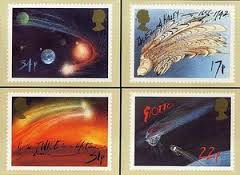
In 1985, he designed a set of four British postage stamps to commemorate the appearance of Halley's Comet and from 1987, catalogues for the wine merchant Oddbins, which inspired Hunter S. Thompson to write to him that 'politics was below you, so you stooped to worship grapes.'

Four years later he said : “Somehow in people’s minds you associate a cartoonist with someone who either does it in his spare time or didn’t get a very good education and therefore scribbles and does a few gags. I think newspapers...prefer it that way; keep the newspaper cartoonist under wraps. They use them to sell newspapers, but they...don’t give them that kind of dignified importance that they might give to their lead political writers.” 


He still retained the power to offend and in 1992 London Transport banned a poster he had designed for a cartoon exhibition at the Barbican Art Gallery, a photomontage with guns and a headless man spattered with blood because, as a spokesman explained, "they said it was a poster which showed blood and that the white areas around it would invite graffiti. They also said the guns could incite violence."
In 2002, he said : "Political satire is so boring now. Why the hell would I want to draw Tony Blair? The only politicians I've ever liked were Dennis Healey, Michael Foot and Tony Benn. Really nice people, good folk. The rest of them, I mean this whole crowd, this spun crowd of degenerate politicians are just not worth drawing."

In 2012, a documentary about his career, 'For No Good Reason', reportedly 15 years in the making and directed by Charlie Paul, played at the 2013 Toronto International Film Festival in the 'Mavericks' programme, in New York City and Los Angeles in 2013 and was given US domestic release in 2014. 
https://www.youtube.com/watch?v=DZz3uT7CgOc

In 2015 Ralph said, referring to his earlier work :
"When I did them I thought I would change the world. In fact, all these years later, I have changed the world. It's worse than it was before I started."