Saturday, 15 May 2021

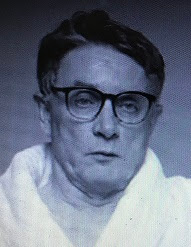
Britain is a country which made and lost and now says "Farewell" to its old Prince of Backpackers, the creator of 'Lonely Planet', Geoff Crowther

Page views : 1003

Geoff, whose travel guides for 'Lonely Planet' covered three continents, inspired and informed tens of thousands of travellers in the last quarter and the last century, has died in Australia at the age of 77. He was born in the little town of Todmorden in the Upper Calder Valley, West Yorkshire during the Second World War in the Spring of 1944. His was a working class family, where he was the only child of Susie and George, who both worked in a cotton mill in the historic market town of Halifax in West Yorkshire. 

In 1955 at the age of 11 he started to attend the co-educational  Calder High School in Halifax, which had just opened in the village of Mytholmroyd  in the Upper Calder Valley as one of the first comprehensive schools in the country and replacing the older, Hebden Bridge Grammar School for Boys. In the sixth form he studied the sciences at 'A' level and for recreation began to hitch hike around an early 1960s Europe, still recovering from the War, despite the fact that he was in his teens and also the fact that his father disapproved. 

At the age of 18, in 1962, he started life as an undergraduate studying Biochemistry at the University of Liverpool. John Howard recalled : 'Geoff was one my student housemates in the notorious Number 4 Mossley Hill Drive in Liverpool. One day he set off in an ancient Morris 8 with his cat and all his worldly possessions heading  for India. He broke down on the Runcorn-Widnes bridge and was towed back that afternoon. Of course his second attempt succeeded and the rest is history'. After graduating in 1965 Geoff contemplated a studying for a master's degree followed by a PhD, but dropped out of academia and took to the road.

John "Hoppy" Hopkins, the radical photojournalist in jazz and counter culture had co-founded Europe's first underground magazine, 'International Times' in 1965. Having got out of prison after serving 6 months for the crime of possession of cannabis, he had started 'BIT Information Service' in 1968 as a volunteer-run business which evolved into a collective and open house. The 'information' supplied related to advice on house squatting and drugs, but also foreign travel, like the Hippie trail to India, Afghanistan and Southern Asia. It was based above the 'Badge Boutique' in Kensington which was Britain's first 'Head shop', a retail outlet specializing in paraphernalia used for consumption of cannabis and items related to cannabis culture.

One BIT staff member at the time, Rick Crust, said : "We're open every day of the year from 10am to 10pm (telephone 24 hours) and we give free help and information about anything to anyone who wants it. Dirty, untidy office; friendly, sometimes exuberant atmosphere, inefficient staff, confused clientele, aggressive cat. Free information, free bogs, free bath. free duplicator and typewriter, free kittens and puppies, free clothes, free food - cheap at other times but free if you're really starving, free people to talk to, free alternative library, free day-room to freak out in or sleep in, free crash pad, lots of other free floor space depending on the season, free optimism, free ecstasy, free lots of other things plus expensive travel guides to pay for it all".

It had already produced the first BIT travel guide using a hand operated mimeograph  duplicating machine which produced copies from a stencil. Geoff himself recalled : 'The first edition of this guide, which became known as the “Bible of the East”, saw the grey light of dawn back in 1970 as one of BIT Information & Help Service’s 
 free hand-outs. Put together by Nicholas Albery and Ian King as a result of endless requests for information from intending  travelers, it consisted of half a dozen or so duplicated foolscap sheets stapled together with one staple and no cover'. It was called 'Overland to India and Australia' and provided the template for Geoff when he arrived and took over publications as editor in 1972.

The 1972 edition had grown to such a size that there was now a minimum donation of 50p per copy, but rather than acting as a deterrent, buyers regularly left double what was asked, in order to support BIT’s activities. Geoff painted a vivid picture of his arrival : 'I was confronted with over 200 letters from travellers which had accumulated in the overflowing files, the scruffiest “office” I’d ever seen before - or since, several sleeping bags full of snoring human beings on the floor, an arthritic IBM electric typewriter which frequently threw fits and the sound of night-shift worker Jimmy Red’s inimical style of guitar drifting up from the room below. It seemed an impossible task but three weeks later it was ready - all 100 pages of it, double- sided. Nicholas and I spent the next 48 hours drinking wine and smoking mushrooms non-stop while we churned out a thousand copies of the new guide on the second-hand manually-operated duplicating machine'. 

Geoff soon became aware of the financial importance of the travel guide to BIT which, for its work, not unsurprisingly, received no 'financial support from government authorities nor did it want such strings-attached grants. It was occasionally given £500 or £1,000 by a rock star (Paul McCartney & Pete Townsend in particular) or by a charitable trust but for its main income it was forced to rely on the travel guides. It’s bills were enormous - always'.

By 1975 the production and collation of the guide by hand was generating so much work for Geoff that 'the donkey’s back was about to break. So, after several stormy meetings of the collective we decided to go into print after I’d re-written and up-dated the whole thing'. He worked on the edition for 6 weeks and finished it, despite the 'bus-loads of travelers constantly banging on the door in search of up-to-the-minute information on everywhere from Istanbul to Port Moresby, some of whom brought me a little something to smoke (bless them!) and a friend who daily needed an ear to pour stories into and who would march me off to the pub by lunch-time and leave me incapable of doing anything by mid-afternoon'. Then, after 'Ian King, our printer, did a beautiful job. I retired to the country for half a year, exhausted'.

By 1977 Geoff's connection with BIT in London was coming to an end. He had taken himself off to South America with the intention of writing a guide to the Continent, but when he returned to Britain he found : 'BIT was in dire straights and teetering towards the edge of the precipice having been taken over by a bunch of petty crooks, speed freaks, rip-off artists, winos and cider freaks. It was a sight for suppurating eyes. A short while later, from the end of ’79 and early 1980 it finally folded'. 

Back in 1972, the same year Geoff joined BIT, the married couple, Maureen and Tony Wheeler, started the publication, 'Lonely Planet', after they had finished an overland trip through Europe and Asia to Australia, following the route of the Oxford and Cambridge Far Eastern Expedition. They had started the journey with a car purchased for $150, sold it in Afghanistan for $155, and continued by train, bus, boat and other forms of transport and on their return, decided to convert their travel notes into a guide book. It was written by the couple in their home and like BIT's travel guide, consisted of a stapled booklet and was published in 1973 as 'Across Asia on the Cheap: A Complete Guide to Making the Overland Trip'.

It was not until 1977 that the Wheelers teamed up with Geoff, who suggested to him that with his travel knowledge and their publishing house, he could start making a living out of what he had been doing for free. Tony said that Geoff was : "Larger than life". In that respect he probably resembled another, larger than life Yorkshireman, the actor, Brian Blessed who'd just played Augustus in the BBC TV's production, 'I Claudius'. 
Geoff clearly impressed Tony who said : "He'd been everywhere. He'd been all around Africa. He'd got malaria here and hepatitis there and if there was anything going, he was clearly going to get it. But he knew Africa and he didn't know it, just as a backpacker, he knew the history behind it. He'd read the books". Tony recalled on BBC Radio this year : "We called it, 'Africa on the Cheap'. It came out in 1977. I've got a number of things from 'Lonely Planet' that I'm proud of, but that's one of them because it is the only guide that has covered all of Africa". 

The book attempted  to cover 54 countries either in areas in Africa or off its coasts. Geoff didn't visit all of them, and much of the detail was supplied by travelers who sent in information in exchange for a mention in the next issue and a free copy. Under the heading 'Comoro Islands' situated north of, Madagascar, Geoff issued the invitation : 'We haven't heard of anyone going there for a long time so we have no details to offer. If you do go, please drop us a line'. 

By 1979 Geoff, at the age of 35, Geoff left Britain to set up camp in a rainforest commune outside Burringbar near the NSW to Queensland border in Australia and in the shadow of Mt Warning. Here he lived in what he described as a 'semi-derelict, Morning Glory-covered, former banana shed in the depths of the rain forest' which probably explains him working on the roof.

Despite the fact that BIT had folded, Geoff and the printer Ian were determined to keep the BIT guides alive. He said they were 'unwilling to see the guides die after all that effort by the thousands of travellers who’ve written in over the years and are still writing in - keep those pens busy, please!' ' If the day ever arrives when it ceases to be a mirror of traveler’s experiences and an exchange of information then we’ll lay it down to rest and leave you in the hands of the strictly commercial boys'. He updated and rewrote the BIT guide and told readers : 'This time its taken three months to put together but then it is twice the size and, as there’s no electricity here and half of every day is spent keeping lantana, groundsel, leeches, land mullets and 6ft-plus pythons at bay, it’s not altogether surprising'.

In 1980 Geoff  began to work with the Wheelers to create a new guide to India. At that time 'Lonely Planet' was a tiny company, operating with a staff of six, out of an old shop-front office in a questionable corner of Melbourne. He was to research the south while they explored the north of the country for the first comprehensive backpackers’ guide dedicated to the both the beauty and humanity of India. Tony later recalled: “Geoff moved in with us in Melbourne to put it together. Nearly all of the maps in that first edition were hand-drawn by Geoff. It was a crazy project; we felt like we were putting together an encyclopedia of India rather than a guidebook – and at times only Geoff’s beer-fuelled mapping mania kept it going”. The result, his 'India  a travel survival kit' was published in 1981.

At that time guidebook research and making money were traditionally incompatible and most authors put up with a pittance, so long as it allowed them to keep travelling. Geoff, however, had signed a 2.5 % royalty rate deal with 'Lonely Planet' and as sales of the India guide soared, so did his income. In the years that followed he added other first editions to the Lonely Planet repertoire : 'Korea & Taiwan', 'Malaysia', 'Singapore & Brunei', 'Morocco', 'Algeria & Tunisia'. Whether they were a product of Geoff working by himself or with Tony or Hugh Finlay, they all came with Geoff's hand-drawn maps. 

It was while he was researching his book on South Korea that he asked a fellow bus passenger where he could find the nearest post office. The passenger was Hyung Poon and they kept in touch by letter after he left and a couple of years later he returned to update his book with her help and they married in Seoul in 1982. Seen here together in Kenya, Geoff wrote  'Kenya  a travel survival kit' with Hugh Finlay and it was published in 1991.

Tony recalled : "Geoff's maps were a thing of beauty and joy for ever. They were hand drawn. Basically Geoff went out walked the streets and counted how many paces it took, then turned north or south or east or west and drew maps from it and there were mistakes, but they were absolutely the best thing out there". Some travellers drew attention to the mistakes. One, in a letter printed in the Africa guide complained : 'Since when has the ancient and well-represented word 'opposite' meant 'further down the street, take the first left, go around a cornfield and take a sharp right just before the military camp? Couldn't you put a caveat in your next edition telling unsuspecting travelers that your directions are an unbridled act of creativity, a spontaneous outpouring of the mango wine-fueled imagination?' On the reverse side of the coin, one traveler walked in Tony's Melbourne office and said : "You know that hike that you said would take a day and a half? It took me six weeks. Halfway through I was cursing your name, but later I realized it was the greatest adventure I'd ever had''. 

Tony said : "Geoff's work sometimes had political consequences. The Ethiopian rebels once used photocopies of his maps to to help them in staging a coup". In fact it was 1991 the Ethiopian People’s Revolutionary Democratic Front relied on his cartography when driving ex-Soviet tanks into Addis Ababa to overthrow the despised government of Mengistu.

On another occasion, Geoff's outspoken criticism of the Malawi dictator, Hastings Banda, provoked a personal reaction. Geoff's son, Ashley said : "He called the President at the time, 'The Second Hitler'. He really had a go at him for being such a ruthless ruler and he was banned from the country. He was part of that generation that was rebellious in the sense of anything against authority was something to be proud of. He was a very vocal opponent of any kind of war and I think that really came down to what he had seen in post World War Two Europe like and also what happened in Afghanistan, post Soviet invasion". 

With his new found affluence Tony said : "He started building this incredibly beautiful house. There were Japanese hippies there that would come and they did a lot of the woodwork on the place and it was just a beautiful, beautiful place and that was Geoff in his prime when he was building that house". Geoff's soaring roof was inspired by the Batak architecture from the Indonesian island of Sumatra and the house was his home with Hyung Poon and son, Ashley, who recalled : "All of his stories that he told me as a boy, revolved around African animals. He would always tell me about the sightings of tigers in India roaming through theses dry forests. Exploring the savannahs in Africa trying to track wildebeest herds or find lion prides"However, Ashley also remembered that Geoff was "off on what seemed like never-ending journeys across the planet. It was Mum and I fending for ourselves".

The unfortunate downside to Geoff's success, was that he used his income from the guides to fuel his increasing appetite for alcohol and drugs. His son Ashley said : "I grew up with him essentially, not really remembering him without a drink. I would probably say that probably broke us and it broke our family and it certainly broke him in the end because he was bored. He was bored about where life had taken him. Things were becoming very regular but he was always somebody who wanted to chase something crazy". 

Geoff's marriage to Hyung Poon was dissolved when Ashley was 8 years old in 1997 and he left her and Ashley and settled in the state of Goa on the south western coast of India. Ashley said in his eulogy to Geoff on his passing : 'From the little time you spent at home in Australia you were buried in writing, books, music, drugs, and alcohol' and squared it in his mind by saying : 'I guess it’s true what they say about geniuses – they can’t stop themselves'. 

Interviewing Tony Wheeler for the Guardian in 2007, on his standing down and selling his 'Lonely Planet' and 'Rough Guides', Carol Cadwalldr asked him about Geoff. She wrote : 'He's gone now. A broken man living in Goa, Tony Wheeler tells me, and it's hard not to feel a pang. The latest edition of Lonely Planet India is a monumental 1,236 pages, produced by 12 writers, and it's, without a doubt, a terrifically useful book if you need to navigate your way from Calcutta to Bangalore; probably even more so when it's a couple of megabytes rather than several kilos of dense matter weighing like a stone at the bottom of your bag. But, well, there's a certain something that's been lost; a Geoffness, I think I'll call it'. 

The travel writer Rory MacLean met Geoff in Goa while researching material for 'The Wheel Thing' which was published in 2006 and was not impressed. He recorded meeting Geoff who he said was steadily drinking himself stupid and whose memory for places was shot and commented that Geoff : 'had turned into a sad embodiment of the adage that “if you can remember the 1960s you weren’t really there”'. 

After a brief second marriage to a woman he met in Kenya and and longer writing travel books, Geoff was in financial straits after his second divorce and at the age of 60 in 2004, he had, in fact, returned to Australia. Hyung Poon and her partner had invited him back to live with them in the beautiful house he had built when they were first married. The following year he sustained a head injury in an accident and was transferred to a care facility where he spent the last 14 years of his life. As time went on his dementia increased and it is therefore unlikely that he was able to appreciate the greatest accolade of his life when the British Library’s 2016 'Maps & the 20th Century Exhibition' in London displayed Geoff’s maps and notes in his journal from researching the first edition of 'South America on a Shoestring', alongside the map of Middle Earth which J R R Tolkien used while writing 'Lord of the Rings'. 

His son Ashley said : "When the British Library reached out to mum and myself about wanting to display some of Dad's maps in this big exhibition, what was really wonderful being a big Lord of the Rings and Hobbit fan, was Dad's map actually exhibited next to Tolkien's map of middle earth. It really kind of illustrated Dad's connection with the world and also what his view of the world was and his view of particular people and places were and how he expressed that in his maps".

On Geoff's passing, BBC Radio 4 'Last Word' programme about Geoff was broadcast in April 2021, with Matthew Bannister's interview with Tony Wheeler and Ashley Crowther : https://www.bbc.co.uk/sounds/play/m000vjny

In his care home, he was a long way and time away from, one suspects, his happiest years working in London for BIT in the 1970s, which he described as : 'A constantly changing collection of drop-outs, misfits, visionaries, deviants, information freaks, students, runaways, travellers, electronics whizz-kids and even “normal” people from all over the world, none of whom were paid and many of whom worked all hours God sent'. 
Geoff died as a result of complications caused by advanced dementia. This was possibly accelerated by the long term effect of his long term appetite for drugs. His son Ashley said of Geoff : "If there's one bit of fatherly advice you've given me, it was don't try heroin, but a little raw opium is OK and LSD and mushrooms are fine and that pot was all right, provided you didn't do it while working".


Richard Everist, a former publisher at Lonely Planet remembered Geoff as :

"A charming rogue, with a fearsome appetite for life that sometimes challenged those caught up in his wake. He was a hero for me, and if I am not mistaken, for many others too."


* * * * * * * * * * * 

My own experience of back packing, while a student, consists of travels to the Greek islands of Mykonos and Rhodes with two friends in the summer of 1967 and alone to Sciathos and Alonisos in 1969. In Crete we slept on the beach in the unspoilt seaside village of Matala, where the 'Dolphin Cafe' repeatedly played the Beatles 'Sgt. Pepper's Lonely Hearts Club Band' on a record turn table. I was 20 at the time and have no doubt that, also at the time, the 23 year old Geoff was off  travelling to a more  exotic  destination. 

Three years later the 27 year old American singer, Joni Mitchell stopped off at Matala on her 'European Odyssey' and was inspired to write her song 'Carey', after 'Cary' or 'Carrot' Raditz, a cane-carrying chef with bright red hair, who she met there and referred to the village and the 'Dolphin Café' she called 'The Mermaid. https://www.youtube.com/watch?v=fFGrRSVW8jk

'Maybe I'll go to Amsterdam,
Or maybe I'll go to Rome,
And rent me a grand piano and put some flowers 'round my room.
But let's not talk about fare-thee-welIs now,
     The night is a starry dome.
                            And they're playin' that scratchy rock and roll,
                              Beneath the Matala Moon'.

Saturday, 8 May 2021

Britain, awash with rogues and liars in high places, says "Farewell" to a Principled old Nurse and Truth Teller called Graham Pink

Page views : 933

Graham, who has died at the age of  91, was born Francis Graham Pink, in the Manchester district of Barton upon Irwell in Lancashire, early in 1930, the son of Magadalen and Victor, who worked as a bank clerk. His was a Catholic family and he was the youngest of five children and grew up in the family home in Whalley Range about two miles from the centre of Manchester. With seven mouths to feed on Victor's modest salary from the bank, money was tight and he recalled how stressful it was for his mother, trying to make ends meet and pay for the doctor fees in the days before the free National Health Service. 

Graham attended, from the age of 11, the independent school for Catholic boys, St Bede’s College in Manchester. It had been set up in the 1870s as a 'commercial school' to prepare the sons of Manchester Catholics for a life in business and the professions and supported the nearby St Bede's Mission and priests on the school's staff worked to provide for the spiritual needs of the Catholic population in Whalley. Graham would have been familiar with the school motto : 'Range.Nunquam Otio Torpebat,' 'He never relaxed in idleness'.

After he left school at the age of 18 in 1948. he spent his two years national service in the Sick Berth Branch of the Royal Navy, where he worked as a Medical Assistant and was known as 'scablifter' or 'doc' in Royal Naval Jackspeak. After he was demobbed, he continued his medical training and qualified as a state registered nurse at Withington Hospital, Manchester, in 1951. Graham then worked as a nurse for three years, including a year in Canada

Graham then left the nursing profession to become a teacher at St Mary’s Roman Catholic Secondary Modern School in Stretford, Greater Manchester. It was here that he taught, not Science, but English, geography and woodwork for 25 years, the last 10 as the Head of the English Department. Morrissey was one of his pupils who later wrote to Graham to say how much he had enjoyed being taught by him and in turn, Graham said he had fond memories of the rebellious teenager, whom he described as “a very bright young man”.  Morrissey's memories of the school were less fond, as revealed in The Smiths 1985 song, 'Headmaster Ritual' and its opening lyrics : Belligerent ghouls /Run Manchester schools / Spineless swines /Cemented minds.

Now in his early 50s, having left teaching, Graham returned to nursing, first as a Student Nurse Tutor and then as a Night Duty Staff Nurse in the 'Regional Acute Burns and Plastic Surgery Unit' at Withington. Then in 1987, at the age of 57, he took up the appointment which would change his life and propel him into the national limelight as 'Supervising Charge Nurse For Nights' at Stepping Hill Hospital in Stockport, Greater Manchester.

 Witnessing the fact that there were just not enough staff to cope with the desperately ill and dying patients in his care, he began to write a series of letters to those in authority, highlighting their suffering. He later said he was driven by the knowledge that the men and women living out their last days on his wards had been through the horrors of the Second World War and "deserved the best". It was clear to him that, with just one qualified nurse and two healthcare assistants looking after 23 highly dependent patients, they were plainly not getting it.

Graham wrote to his letters to hospital managers, civil servants and politicians all the way up to the Prime Minister, Margaret Thatcher. In them he set out in meticulous detail the harsh realities of life on the wards and they made compelling, if deeply uncomfortable, reading.

AUGUST 24 1989.  F. Richards. Chairman, Stockport Health Authority                                     

OCTOBER 31. J. Geraghty. Director of Nursing, Stepping Hill Hospital 

and 

NOVEMBER 13 

JANUARY 11

JANUARY 25 


MARCH 21. The Prime Minister. Mrs Thathcher. 10 Downing Street 

Graham would have remained unknown had he not came to public attention at the age of 60 in 1990, when extracts of the many letters, with his trademark signoff were published in the Guardian newspaper. These had been passed on for publication, with Graham's reluctant agreement, by the local MP, Andrew Bennett. The result, in terms of reader response, revealed itself in the shape of more than 4,000 letters of support. 

In 1991, Graham was sacked by the hospital  for the offence of  'breaching patient confidentiality', despite the fact that he had not named any patients,  He now joined the Royal College of Nursing, which supported him at his disciplinary hearing and then his case went to a tribunal. After two weeks, the Health Authority conceded his dismissal had been unfair, as Graham had not been 'given a warning' and he was awarded the maximum compensation of £11,188. However, he was not reinstated and as a nationally recognised whistleblower, his medical career was effectively over. 

With his dismissal, he became a nursing hero and an inspiration to a generation of young student nurses who admired his courage and principled stand in his pursuit of decent patient care and he became a standard bearer for properly resourced nursing. He now travelled the country speaking to gatherings of nurses where he explained that he had made a case for three more nurses each night, which was refused because but that would have set a precedent for elsewhere. His campaign led to a 'World in Action' television documentary and debates in the House of Commons.

Hansard recorded that in December 1990 Andrew Bennett asked the Health Minister, Stephen Dorrell : "Will the Minister join me in congratulating Mr. Graham Pink on having the courage to describe so movingly in The Guardian and on television the major problems faced in Stepping Hill on the night shift on geriatric wards? Will the hon. Gentleman condemn the 147district health authority for suspending Mr. Pink for his whistle-blowing activities rather than solving the problems at that hospital? Does he agree that that is deplorable?" 

To which the Minister replied : "No, Sir. I shall not join the hon. Gentleman in congratulating Mr. Pink. The trouble with Mr. Pink's allegations is that he does not have the support of his colleagues, the clinicians in the hospital or the health authority's chief nursing officer; nor can it be established on any of the published criteria that his allegations are justified". 

When the proposed new law covering Whistleblower Protection was raised in Parliament in 1995 the MP, Dr Tony Wright said : "The Government have now inserted a whistleblowing clause into the current Pensions Bill in the wake of the Maxwell fraud, to put a duty upon auditors and actuaries to speak up about malpractice to the regulatory authority. So there is a public interest in whistleblowing, yet there is no effective protection for whistleblowers. The names of Chris Chapman, Graham Pink and Helen Zeitlin testify to the consequences that have befallen the brave people who have tried to raise concerns about the National Health Service".

In retirement, Graham appropriately gained an MSc degree in 'Healthcare Ethics' at the University of Liverpool and then a PhD from Manchester. He continued to use his case to create momentum for the 'Public Interest Disclosure Act 1998', designed to protect : '"workers" making disclosures in the public interest and allows such individuals to claim compensation for victimisation following such disclosures'. At the age 83 in 2013, his book, 'A Time To Speak – Diary of an NHS Whistleblower', was published. 

Graham has the distinction of being British nursing’s most famous "whistleblower", although for him the term was “inelegant” and he preferred “truth-teller” 

* * * * * 

In grateful thanks for the inspiration supplied by Janet Snell's obituary for Graham in the Guardian.

Wednesday, 5 May 2021

Why Britain, with a Prime Minister called Boris Johnson, is no country for a very old man called Alfred Walden

Alfred Walden, who is 97 years old and lives in the village of Harleston in Suffolk, was born in 1924 and during his long life, Alfred has lived in a Britain governed by 19 different Prime Ministers in 21 separate governments. 

When he was a baby and boy in the 1920s Stanley Baldwin was Conservative Prime Minister. As a teenager in the 1930s it was the Labour PM Ramsay MacDonald followed by the Conservative Stanley Baldwin again and then Neville Chamberlain. When he was called up at the age of 18 in 1942 to fight in the Second World War, it was  Winston Churchill and the Coalition Government. 

After the War, when he was in his twenties, it was Clement Atlee as Labour Prime Minister followed by PM Churchill as a Conservative, followed by the Conservatives Anthony Eden, Harold Macmillan and Alec Douglas-Home. When he was in his 40s in the 1960s it was the Labour PM Harold Wilson followed by the Conservative, Edward Heath. In his 50s Labour's Jim Callaghan was followed by the Conservative Margaret Thatcher. In his mid 60s it was the Conservative PM. John Major followed in his 70s by the Labour PM, Tony Blair. When in his 80s it was Gordon Brown the Labour PM, followed by the Conservative, David Cameron. Now in his 90s, Conservative PM, Theresa May has been followed by the present Conservative incumbent Boris Johnson.

Today, Alfred had this letter published in the Guardian : 


'
I am 97 this year, and have lived through the War and a lot of political turmoil over the
 years, but never have I felt more ashamed to be English, being represented by such a charlatan as Boris Johnson and his cronies, and their crass actions. It feels very personal that he can be so casual with our lives and livelihoods. I deserve better than this, and so does the British public'.
Alfred Walden

Definition of 'charlatan'

In the Middle Ages, people claiming medical skills they did not have, roamed throughout Italy, selling "medicine" that was often completely without worth. Many of these pretenders reputedly came from a village called Cerreto, and as a result, cerretano (meaning "inhabitant of Cerreto") became an epithet for a quack physician. In addition, these frauds used a practiced patter to attract customers, rather like the chatter of a circus barker. The Italian word for "chatter" is 'ciarlare', and chattering was so associated with the 'cerretano' that the spelling of the word shifted to 'ciarlatano'. By the early 17th century, we had anglicized the Italian word to 'charlatan' and adopted it as our own.

Merriam-Webster Dictionary : 'One making usually showy pretenses to knowledge or ability : FRAUD, FAKER. A charlatan willing to do and say virtually anything to remain in the spotlight'. 

Sunday, 2 May 2021

Britain is a country where old men in bed have a Champion in a Charity called 'Relate' and a campaign called : 'Let's talk the joy of later life sex'

The charity, 'Relate' began life in 1938 as the 'National Marriage Guidance Council', when the 70 year old clergyman Herbert Gray, noted that the divorce rate was increasing and decided to do something about it. In order to do this he teamed up with a young Methodist Minister in his 30s called David Mace and a Eugenicist called Dr Edward Fyfe Griffith. After the end of the Second World War in 1945, the organisation expanded with the help of Government funding received from the Labour Government. Relate adopted its current name on Valentine's Day 1988 and in the 1990s its public profile increased after Princess Diana became its patron in 1989.

Despite recent funding cuts, it still sees over 150,000 clients a year, at more than 600 locations across Britain where it provides counselling for couples, families, young people and individuals and sex therapy, mediation and training courses. In its most recent initiative, 'Let's talk the joy of later life sex', it says : 'We've teamed up with renowned British photographer, Rankin, to shine the spotlight on the unseen – sex and intimacy in our later years, in the campaign : It was conceived by advertising and marketing agency, 'Ogilvy', after seeing advertising failing to represent older generational intimacy. Relate chose to film five old couples and one older woman 'in their most intimate settings, the team set out to show what sex and intimacy can mean in later life in a way that’s never been done before'. Its aim was 'to tackle the stigma around this unspoken subject'.

'There is a notion that older people shouldn’t, couldn’t and wouldn’t want to have sex and be intimate. Why? It is rarely talked or written about yet we know that for many older people, sex and intimacy remains a really important part of their lives'. Apparently, according to new research :

*  two-thirds of over 65s (67%) say sex and intimacy for their age group is 'either rarely or never  represented in media'   

* only one-fifth of people across Britain think society is 'OK talking about sex and intimacy in people aged over 60'                                                                                                                                              *

* fewer than 10% of people aged over 65 think society is 'comfortable with talking about sex and intimacy in people aged over 60' 

* the majority (60%) of people aged over 65 'aren’t comfortable talking openly to anyone about sex and intimacy' and cite : 

embarrassment as the top reason at 66%

followed by, ‘it just wasn’t talked about when I was younger’ (64%)  

not wanting to make others uncomfortable (63%)                                                                                

not knowing when to bring it up (58%) 

and lack of confidence (57%)

'Relate' announced : 'It’s time to break that taboo. This campaign champions the importance of sex and intimacy in later life, exploring everything from long-term love to new adventures, tender intimacy to the more risqué. The series of images feature a whole range of older people, from Andrew and Mark who have been together for 31 years, to Chrissie who has had a double mastectomy and her partner Roger, to Daphne and Arthur who still hold hands when they walk. The people featured are of varying ethnicities, sizes, shapes and sexualities, aiming to show that we can all feel empowered to think and talk about sex and intimacy as we grow older'.


With Billie and Cora, Billie said : "I think you’re as young or as old as you think you are. Or how you feel. It’s all in the mind. I’m 83 now but I’ve never felt my age whatever it was".


With Mark and Andrew, Andrew said "We’ll lie in bed, and we both love reading in bed. And we’ll lie back to back. But feet would be touching and it's moments like that, that are important to you".


With Lynne and George, Lynne said : "Intimacy in a relationship is very important. You've got to love each other, be intimate with each other". 


With Daphne and Arthur, Daphne said : "Sex is great, and when your relationship is new. Sex is, you know, first last and in the middle. But, as you get older when the first flush of youth dissipates. I think intimacy comes naturally because intimacy is sharing everything, not just your body".

With Chrissie and Roger, Chrissie said : "There are barriers to having sex when you get older, but many of them revolve around health, particularly if you've had surgery, you physically cannot have sex. Then the intimacy, the love the couple share, often shines through".

Margaret said : "My sex life with my husband was intense through the whole of our marriage. As we got older it got better".