Page views: 1778
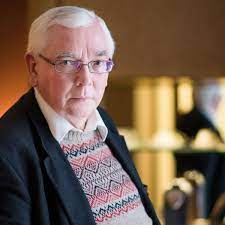
Tim, who has died at the age of eighty-three, was recognised, in his fifty year career, as a giant among 20th century educationalists said in 2005 :
"There's a two-fold purpose to education. One is, kind of, are we going to make life better economically whether, as an individual or collectively as a society ? And the second and in my book the far more important purpose of education - it's a moral one. If you don't have an educated people they can't be free. There's a form of mental slavery which is as real as any economic one. We're pledged to destroy it. Educationalists have to do that and they do it by unlocking kids' minds".(link)
* * * * * * * * *

Born in the market town of Loughborough in Leicestershire in the first full year of the Second World War on a day in January 1940, when it was -4 degrees c, in the coldest month on record for almost 50 years. The son of Mary and Denison, he recalled that he was : "Influenced by an event at the age of ten. I went to a pretty prestigious boys grammar school in the Midlands and was a school phobic". The school in question was Loughborough Grammar School and he said that he became a phobic : "Because smiling just wasn't part of the curriculum". "I would weep at night, I would be physically sick in the morning – this lasted for half a term until my dad lost his job, he sold televisions and we moved to Lowestoft”.(link)In the coastal town in East Suffolk where, on the first day at his new school, his eldest brother agreed to check on him at break time, Tim recalled : “But when I met him I said, "You can push off, I’m perfectly happy here, I like this place". "I remember the first school in black and white, the second in colour”. He described it as a : "Sleepy country kind of school with no prep at all, but amazing interpersonal relationships". He might have added that it wasn't single sex. Tim said : "There was a relaxed expectation, and I went from being miserable, to loving school". At the first school he was tested each week. Students sat in rank order and were treated that way too. The second did none of this: “They made everybody feel they were special. They were fantastic teachers”.
At Lowestoft County Grammar School his favourite teacher, Mr Spalding, taught history and inspired him to study it further. “He was a terrific person. He was the archetypal after-the-War, been-in-the-War, rode a sit-up-and-beg bike, smoked a pipe, you never knew quite where he was coming from; he would argue one thing one lesson then come in the following lesson and argue the exact opposite; made you do this and that; ran the school debating society, collected stamps, was a fisherman as well, an angler. I kept in touch with him until… well maybe probably a year or two before he died. I thought he was a fantastic guy”.Although Tim didn't know it at the time, this experience of school was to determine what he did for then rest of his life. He said : "I'm sure that at that very early age I was thinking 'eh, eh, eh ?' What is the difference between schools that work well and schools that don't work well ? Is it about individuals, group or whatever ?"

After taking his 'A' levels in 1958 he gained and thanks to Mr Spalding and after several attempts, a place to read Modern History at St. Catherine's College, Oxford and thoroughly enjoyed his time there, though initially he felt out of his depth. He recalled : “Nobody went from my school to Oxford. I remember being horrified, rolling into an Oxford college to find these hundreds of public schoolboys, all of whom read everything that you could ever read, and I’d only ever read about two or three books”.
As graduation approached he said : "I really wanted to be a journalist, but my parents said it was too hazardous" and "I suppose I decided : 'Well I'd like to be a teacher and I might do a bit of History as well and that turned out to be true". He stayed on in Oxford as a post graduate in the Department of Education and gained his certificate in teaching in 1961 and taught history in grammar and secondary modern schools, winding up in Monmouthsire. He aspired to be a headteacher because he thought they : "Can shape schools and make them different". With his ability and potential clearly manifest, he  moved into his first post in school management as a twenty-six year old Deputy Head Teacher at Kingsmark Secondary Modern (now Chepstow School).
He said however, that he got knocked off course when : "The guy in the school down the road from me said : "Why don't you apply for this job in Monmouthshire ?" which was to be an administrative assistant looking after sites and buildings. I said : "That's just the exciting thing I'd love to do. It was an opportunity to shape how Monmouthshire went comprehensive". Tim got the job and effervesced with enthusiasm and said : “Educational administrators after the War, there was a number of them and they were amazing. I wanted to do that sort of thing. It looked fun!” He said of the leader of the administrative team that from him he : "Learnt a tremendous amount. You've got certain people you measure yourself against" and asked himself the question : "Can I be that sort of administrator who is creative and makes a difference and gives the professional lead ? And I was really lucky that I've had job opportunities that have given me that".
In the early 1970s moved to Buckinghamshire County Council's Education Department and teamed up with the equally charismatic, Geoff Cooksey. Their joint project was the creation of Stantonbury Campus,  the first purpose-built comprehensive school for Milton Keynes New Town where Geoff was to be its first director. Together they designed state-of-the-art buildings focused on a magnificent resource area and theatre with the arts central in school life and as a community school, it was carpeted throughout. Like some other secondary schools built at that time, Stantonbury espoused unashamedly progressive ideas and the curriculum featured interdisciplinary work. For some, most radically, uniform was rejected and teachers and pupils were on first-name terms as a sign that they were all in it together.
In 1993 he took his post as Chief Education Officer in Birmingham and later said that it was : "The best time of my life. It was a job I prayed I would get, because I was over fifty and I thought I was finished". When he was scheduled to start work he turned up to the office a week late. He had, he told amazed officials, spent the week visiting schools there to find out what was going on. Birmingham at that time was at such a low ebb that thirteen schools had opted out of the local authority in the year before Tim started and joined the Tories' new grant-maintained sector. He said : "They wanted to write targets into my contract. They asked me what would be a reasonable number of schools opting out in my first year. I said: what about none?" Needless to say, Tim met his self-imposed goal.
Tim went visiting schools and held workshops - eleven of them in his first year - in which all the city's headteachers participated. His aim was simple : School improvement. He wanted to examine the processes and practices that made the huge differences in schools with teachers and share what worked with everyone. He said : "I wanted to find good practice in Birmingham and open the window and say 'My goodness, look at this. Are we not energy creators in this place?'"
He had been only been in the job for a short time when John Patten, the Government's Education Secretary, launched an extraordinary attack at a Tory party conference fringe meeting and said of Tim : "I fear for Birmingham, with this madman let loose, wandering the streets, frightening the children". Tim recalled : “He made it within three weeks of my arriving in Birmingham and don’t forget, I was going back into local authority administration, so within three weeks, that was all over the press”.
Tim felt he had no choice but to pursue a complaint in court. In the event it did him a bit of good because he said : “The fact that I won it and gave the settlement money to inner city education and the fact that during the ten months of the case, the politicians in Birmingham said : "You don’t want to tangle with him, he takes on Secretaries of State, so if he says something – listen". He said : "It did mean that I could take lots and lots of risks and I knew the politicians wouldn’t try anything”. It was typical of Tim that he used some of it to set up the University of the First Age, to encourage out of hours activities to enrich school children's learning.
During his time, Birmingham school results constantly increased and he became renowned for kindnesses, sending perhaps as many as 10,000 letters of congratulations and thankyou to teachers, and even turning up with champagne to one school after a tough Ofsted inspection after the ordeal was over. All was evidence of his belief that people work well when they are happy and engaged and he would do his bit to enhance that and said : “Blooming hell…that’s about being human! It isn’t that I won’t confront difficult situations where people have made a balls-up of something, because I have, and I do, and I would. But I do think they deserve dignity. And if somebody has not made a success of a particular school, they may have made a success of it earlier on. They may have been a very good head in another place or they may have been a fantastic deputy or they may be fantastic with difficult kids”.
During his tenure in Birmingham in 1999, he clashed with the Chief Inspector of Schools in England, Chris Woodhead who was infuriated after Tim gave evidence to the Government's Education Select Committee's inquiry into Ofsted that questioned the accuracy of its inspections. Tim was tired of being caricatured as championing 'trendy' teaching methods, while Woodhead was represented as the guardian of traditional values. He said : "I do believe in inspection, though I think we should have a better inspection system. I do believe in raising standards". Tim was thought to have been angered by an anonymous article in the Mail on Sunday written by an 'education insider' which parroted the views of Woodhead and attacked Tim with large parts of the article were very similar to speeches made by Woodhead.
It is not an exaggeration to say that his achievements in what had, by general consent, been the worst education authority in England, changed the debate on big-city schooling. As Ofsted put it in an almost lyrical report in 2002, two years after Woodhead left his post, Birmingham was : "An example to all others of what can be done, even in the most demanding urban environment". Tim's role was recognised when it said its success was attributable above all, to : "The energising and inspirational example set by the Chief Education Officer".
Education expert, Professor Ted Wragg said : "He is outstanding. He works with people rather than against them. He gives teachers a great sense of belonging rather than making them feel they are victims of policies. Birmingham teachers are much more positive than teachers elsewhere, they are not beleaguered. They see themselves as part of a great crusade. When I did my inquiry a damn good city was being badly let down on its education. Now it's a model for the nation. If I was asked to do an education commission anywhere else, I would not bother with taking evidence. I would produce a three-word report which would say: 'Appoint Tim Brighouse'".
In his book 'How Successful Headteachers Survive and Thrive' Tim suggested that Heads should greet children and teachers as they enter school. They should go on a daily walk, talking to kitchen staff and cleaners as well as teachers, and sometimes follow a pupil through a day's lessons. They should be not 'scolds' but 'skalds' - a Scandinavian word for poets who inspire warriors before battle - recalling great deeds and anticipating further triumphs. They should say "we", not "I". And they should spend two hours a week doing "acts of unexpected kindness", remembering birthdays and writing appreciative notes.
Tim's next move was to London in 2002 where he was the Government-appointed London Schools Commissioner or "Tsar". Stephen Twigg who, as an Education Minister, worked with Tim in his role said : "He exceeded expectations. He brought incredible energy".Tim himself said at the time : "I've been deliberately not visible in London. I've made an impact on schools, but not on the public. I didn't think the London media, particularly the Evening Standard, would give me a fair crack of the whip. It would have been a time and energy trap".

He instituted the 'London Challenge', a scheme to make the capital 'A
world leader in education" by offering extra support to 70 disadvantaged schools and five low-performing boroughs. He was asked, in a meeting, by the then Prime Minister, Tony Blair, if there was anything he wanted to add to the London Challenge prospectus ? Tim said his suggestion that they should include something about the chaotic state of secondary school admissions in the capital was : “Greeted with an audible silence”, after which, he admits, he backed off the subject. He reflected : “I have no idea how often I spoke truth to power; I am not sure I did enough. I didn’t fight hard enough over admissions and I am conscious now that I should have done more". He was pleased with what he had achieved but this nagged at him and he said : "Because we didn’t address admissions or exclusions and you see the results of that now in the children who are effectively forgotten by the system”.
Interviewed in 2015 when he was seventy-five, Tim said : "I keep in touch with teaching because I always hankered after being a head teacher and I really, really, really wanted to be a head teacher, That's my greatest regret and the headteachers I've worked with and there have been many, have always said to me : "That's your problem really - frustrated head teacher".
 Inspiring young teachers in a meeting in Northern Ireland he deployed George Bernard Shaw with his :
 “This is the true joy in life, being used for a purpose recognized by yourself as a mighty one. Being a force of nature instead of a feverish, selfish little clod of ailments and grievances, complaining that the world will not devote itself to making you happy. I want to be thoroughly used up when I die, for the harder I work, the more I live. Life is no brief candle to me. It is a sort of splendid torch which I have got hold of for the moment and I want to make it burn as brightly as possible before handing it on to future generations”. (link)

His son, Harry Brighouse, who works as political philosopher at the University of Wisconsin–Madison in the U.S.A said : “He was a loving husband, father, grandfather and great grandfather and a towering figure in the word of education. He never wavered in his belief that teachers and schools change children’s lives for the better”.
In the final chapter of his last book, 'About Our Schools', published last year, he expressed the same hope that had sustained him throughout his career, looking forward to the dawn of :
“A new educational age — a time of hope, ambition and collaboration”.
(link)
x x x x x x x x x
What you said about my post :
Harry Brighouse : 'This is a very nice and accurate account of Tim Brighouse's life : lots of detail and some pictures !'Tony Gallagher : 'Many thanks for this wide-ranging tribute to one of the greatest educators of our time. Anyone who met with Tim Brighouse will recognise his qualities and inspiration in this tribute'.
Helen Salmon : 'Wonderful inspirational man. He inspired so many of us. We need more like him in education now'.
Seb Schmoller : 'I enjoyed reading that. One of the greats : tremendous presence, easy to take risks with, uncompromising, committed, convincing'.Colin Pettigrew : 'That's marvelous, thank you for sharing John and I will certainly hope that 2024 and one of Tim's many legacies will be : "A new educational age - a time of hope, ambition and collaboration "'.Dr Karamat Iqbal : 'Thank you. Added to my reading list between Christmas and new year; will be useful in my own writing about Tim'.Carol Atherton : 'This is a lovely tribute. Such an important figure and a genuinely inspiring man'.Primary Head : 'A lovely article!'
David Jones : 'That was a great read'.
Sonya Lanckham : 'What a beautiful tribute. May you rest in peace, Sir Tim'.
Juliet Robinson : 'A lovely tribute'.
Dr Jill Berry : 'Loved it. Thanks for sharing John'.
Mel Ainscow : 'Don't miss this splendid account of Tim's journey'.
Juliet Robinson : 'Thank you for sharing ! A lovely tribute'.
Matthew Crawford : 'This is a wonderful tribute, thank you for sharing'.
Walkerdine : 'Thanks John. That's excellent'.
Tidbury Green School : 'Thank you. A wonderful read'.
Maureen Hunt : 'That's amazing - well done'.
Dr Kenny Frederick : 'A fabulous tribute. No more that he deserved ! Thank you !'
Brian Lightman : 'A wonderful tribute to a great educationalist'.

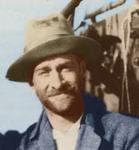 of the Royal Signals, who had spent much of the 1920s and 1930s exploring the desert, suggested to General Sir Archibald Wavell, 'Commander-in-Chief Middle East', that he formed a desert scouting force, a small body of motor commandos, never more than 350 strong, known as the 'Long Range Desert Group'. Wavell readily agreed, and the LRDG began operations in September with Mike on board as one of the recruits.


 When Lieutenant David Stirling formed the SAS to launch night-time raids against Axis airfields in Libya the LRDG loaned him Mike as a navigator and would have taken Lofty, but he declined to join and instead taught his navigation skills to the Unit. Lofty later recalled that he had taught Mike : "The rudiments of astro-navigation and how to use a theodolite" and that Mike had proved to be a quick learner. Like the LRDG, the SAS was a secretive unit, which also went deep behind enemy lines and, as to his role, Mike would have agreed with 'Lofty' when he said : “Being a navigator was extremely challenging. One minor fault or miscalculation could have tragic consequences".


 The actor Tom Glynn-Carney, who played Mike in the series and was filmed for 'The One Show', in Mike's living room told him what a "privilege" it was to be sitting with him and said afterwards : "Mike is blind now, but his memories are sharp". He told Mike : "Having played your role and having to look like I was an expert navigator through the desert, now no matter how hard I tried, I could not do it. How do you do that?" To which Mike replied with a laugh : "I think you just have to learn it. I expect you could, if you really tried. It’s not that difficult". (link)


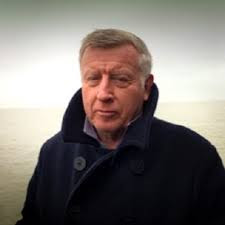


 In the raid the Germans struck the two-jeep convoy with Mike returning fire, allowing the other jeep to flee before escaping himself and as 'Corporal Willis Sadler' was later awarded the 'Military Medal'. One of the jeep drivers was shot through the head during the attack and buried in the sand. Still on loan from the LRDG, Mike was to be considered an 'Honorary' member of the SAS by 'The Originals'.