Wednesday, 26 February 2025

Britain is a country where old men remember 1969, a band called 'Thunderclap Newman' and a year when there was 'Something in the Air'

Andy "Thunderclap" Newman, who died aged 73 in 2015, was a jazz pianist and founder member of 'Thunderclap Newman', a cobbled-together session band whose 'Something in the Air' was the surprise hit of the summer of 1969 and achieved immortality with his stomping Dixieland bridge which blended perfectly with his younger bandmates’ psychedelic rock. (link)

                                                  Call out the instigators
Because there's something in the air
We've got to get together sooner or later
Because the revolution's here, and you know it's right
And you know that it's right

We have got to get it together
We have got to get it together now


Lock up the streets and houses
Because there's something in the air
We've got to get together sooner or later
Because the revolution's here, and you know it's right
And you know that it's right

We have got to get it together
We have got to get it together now

Hand out the arms and ammo
We're going to blast our way through here
We've got to get together sooner or later
Because the revolution's here, and you know it's right
And you know that it's right

We have got to get it together
Now
  So what was in the air in 1969 ?
 
January 1 :  About 40 members of 'People's Democracy' began a four-day march from Belfast across Northern Ireland to Derry which was modelled on Martin Luther King's 'Selma to Montgomery March'. It was confronted and attacked by Loyalist crowds on a number of occasions, the most serious attack occurring on 4 January 1969 at Burntollet Bridge in an ambush planned in advance and where around 200 Loyalists, including off-duty members of the 'B-Specials', used sticks, iron bars, bottles and stones to attack the marchers, 13 of whom received hospital treatment. (link)


January 12
 : The first 'Led Zeppelin' album, was  released including 'Dazed and Confused'. (link)             


January 16  : Student Jan Palach set  himself on fire in Prague's Wenceslas Square to protest the Soviet invasion of Czechoslovakia and 3 days later he died. (link)

January 30  : The Beatles gave their last public performance, filming several tracks on the roof of Apple Records.(link)

February 13 :  The Front de libération du Québec bombed the Stock Exchange in Montreal.

March 20 : John Lennon and Yoko Ono were married in Gibraltar and proceeded to their Amsterdam honeymoon 'Bed-In' for Peace. (link)

April 9 : The Harvard University Administration Building USA was seized by 300 students, mostly members of the 'Students for a Democratic Society' and before the takeover ended, 45 were injured and 184 arrested. (link)

Fermín Monasterio Pérez was murdered by the ETA in Biscay, Spain, the 4th victim in the name of Basque nationalism.

April 20 : 
British troops arrived in Northern Ireland to reinforce the Royal Ulster Constabulary.
          
A grassroots movement of Berkeley community members in the USA seized an empty lot owned by the University of California, to begin the formation of
 'People's Park'. (link)


May 10 :  'Zip to Zap', a harbinger of the Woodstock Concert, ended with the dispersal and eviction of youths and young adults at Zap, North Dakota USA by the National Guard.
"It's interesting to reflect that this took place just a month or two before Woodstock and so one has to wonder if  there wasn't something in the air, some kind of sense that the tribes are to be gathering." (link)

The Battle of Dong Ap Bia, also known as Hamburger Hill, began during the Vietnam War.

May 20  :
United States National Guard helicopters spray skin-stinging powder on anti-war protesters in California. (link)

May 21  : Civil unrest broke out in Rosario, Argentina, following the death of a 15-year-old student.

May 26 - June 2 : John Lennon and Yoko Ono conducted their second 'Bed-In', the follow-up to the Amsterdam event  held at the Queen Elizabeth Hotel in Montreal, Quebec and John Lennon composed and recorded the song Give Peace a Chance during the Bed-In. (link)
 
May 29 : A general strike and civil unrest broke out in Córdoba, Argentina.
.
May 30  : Riots in Curaçao marked the start of an Afro-Caribbean civil rights movement on the island.

June 7 : The rock group Blind Faith played its first gig in front of 100,000 people in London's Hyde Park. (link)


June 28  : The Stonewall Riots in New York City mark the started of the modern Gay Rights Movement in the U.S.A.

July 8 : Vietnam War : The first U.S. troop withdrawals were made.

August 5 : Mariner program : Mariner 7 made its closest fly-by of Mars and US proto-punk band 'The Stooges' released their homonym debut album. (link)

August 14 : British troops were deployed in Northern Ireland following the three-day Battle of the Bogside. (link)

August 15–August 18 : The Woodstock Festival was held in upstate New York, featuring top rock musicians from both sides of the Atlantic. (link)

August 21 : Strong violence against a demonstration in Prague and Brno saw the 'Prague Spring' finally beaten'.


October 5 : Monty Python's Flying Circus first aired on BBC One.(link)

October 15 : Hundreds of thousands of people took part in 'Moratorium to End the War in Vietnam' demonstrations across the United States.

October 25 : Pink Floyd released their Ummagumma album.

November 9 : A group of American Indians, led by Richard Oakes, seized Alcatraz Island inspiring a wave of renewed Indian pride and government reform.


November 20 : Vietnam War: The Plain Dealer published explicit photographs of dead villagers from the My Lai Massacre in Vietnam.

December 5 : The Rolling Stones released 'Let it Bleed' with 'You Can't Always Get What You Want'. (link)

And I went down to the demonstration
To get my fair share of abuse

Singing, "We're gonna vent our frustration
If we don't we're gonna blow a 50-amp fuse

 You can't always get what you want
You can't always get what you want
But if you try sometimes well you just might find
You get what you need

*********

Andy was born in Isleworth, Middlesex in 1943 during the Second World War and grew up in Hounslow, West London the son of Alice, who worked at the Ministry of Pensions and Charles, a park superintendent whose love of the piano rubbed off on young Andy who later recalled : "I somehow taught myself the play, not very well I'll admit, by watching the hands of my father when he played the piano and one of my teachers, I sort of worked something out from it but I never had a formal training." Those first musical efforts were on his great-grandmother’s old wooden-framed piano, later replaced by an iron-framed upright model. His father would play Victorian ballads and short classical pieces, but Andy’s tastes inclined towards New Orleans jazz and dance bands from the 1920s and 30s.

In 1954, having failed the 11+ exam he attended Bulstrode Secondary School for Boys and it was here that he acquired the nickname 'Thunderclap'  as he recalled : "It was my school friends in the latter part of my secondary education who called me that because they thought the clumsy style I played on the piano was reminiscent of a lightening bolt."

Andy left school at the age of 16 in 1959 having picked up playing the saxophone, clarinet and penny whistle and joined Ealing College of Art and its vibrant music scene and where, in 1961, he met the 16 year old Pete Townshend, who was two years his junior. (link)

With Art school behind him Andy joined the General Post Office as a trainee telephone engineer and nine years were to pass before, at the age of 25, in late 1968 he would play his role in the band which bore his name and was formed at the instigation of Pete, now known for his lead in 'The Who', and comprised Andy alongside a drummer and vocalist, John “Speedy” Keen  and a 15 year old guitarist, Jimmy McCulloch. (link) 

Andy, who had met Speedy a week before, first met Jimmy in the studio on the day of the recording before Christmas 1968. and he recalled that in the genesis of  'Something in the Air', Pete originally "had in mind putting us together to make some music for a film being produced by a colleague of his doing a sandwich course between Bristol University and the BBC Western Region in Bristol and we were just putting these skeleton numbers together for consideration for soundtrack which would later on be elaborated. It turned out that the film took place but they didn't use the music but Pete thought it would be a good idea if we put this together." In the recording Pete played the bass under the pseudonym 'Bijou Drains' .

The name of the band had little to do with Andy who recalled : "There was no thought of the band's name at that stage. It was after the tracks were completed that they decided that they were going to do something, but they had terrible problems thinking of a name to give it. One of the names was 'My Favourite Freaks', but that got thrown out and then they had a deadline coming up because they'd done the assignment with Polydore and they had to come up with a decision I was then notified the band had been named after my nickname, 'Thunderclap Newman.'"

'Something in the Air' was released as a single in May 1969 and the song went to the top of the UK charts and stayed there for 3 weeks and as a gentle anthem to the prevailing mood of social and political change it struck a chord with millions of post Second World War baby boomers. (link)

Andy said : "I'm of the opinion that if we'd started this thing six months before it probably wouldn't have got anywhere and it probably wouldn't have got anywhere six months after. It just so happened at that particular moment in time everything came together and that just happened to be the right moment for that particular song."

The overnight celebrity the song brought took the nascent band by surprise : "To us it was like absolute Bedlam. We were just doing this music and suddenly the whole world all around us was going crazy and we were being lauded left right and centre and people would come up to me, this is a person who's never been really in the professional music business before, as though I was the person who knew how to pull hits out of the stratosphere, which wasn't true and of course we didn't really come up with anything like as sensational as 'Something in the Air' after that. One of the difficulties is that it's very difficult to repeat something like that twice." (link)

Performing in a trilby with short hair and spectacles, braces and bow tie, the bearded Andy seemed a generation apart from his younger long-haired bandmates. The band itself broke up in 1971 and Andy released a solo album, 'Rainbow' and recorded with Roger Ruskin Spear, who had attended Ealing Art College, before joining the Bonzo Dog Doo-Dah Band. From that point on Andy returned to the relative obscurity from whence he'd come, working as an electrician and campaigning on behalf of the housing cooperative in Clapham where he lived.

Friday, 6 September 2024

Britain remembers Film Director Mike Hodges and his movie masterpiece : 'Get Carter'

Mike, who died at the age of ninety 90 in 2022, had a long and varied career in the media as a screenwriter, television director, playwright and novelist, but it was, at the age of thirty-nine in 1971, as the director of the big screen movie, 'Get Carter', that he will best be remembered. (link) 

The creation of the film was coloured by his life-changing experience of two years National Service in the Royal Navy which left him highly critical of the corruption in 1970's Britain and and its execution, by the skills and working methods Mike had gained from his earlier career in television.

Mike made the jump from writing scripts for TV advertising to film director when, in 1969 he directed an episode for 'ITV Playhouse', 'Suspect' in which a proud woman coldly concentrates on keeping up appearances when her 50-year old husband and a young schoolgirl go missing at the same time. The following year came 'Rumour' in which a hard-bitten newspaper reporter is drawn back into the world of sleaze he had hoped to have left behind.

Mike recalled : "In those days there were only three television channels so the audiences were huge. Consequently your profile could, if all went well, be pretty high. Feature producers watched out for any emerging talents. Presumably because they were cheaper than established directors but also because there was a certain kudos to finding new contenders". He was spotted by Michael Klinger who had earlier spotted Roman Polanski who made his first English films, 'Cul-de-sac' and 'Repulsion' with him. Mike said : "When Klinger sent me 'Jack’s Return Home', a novel by Ted Lewis, and asked if I wanted to adapt and direct it as a feature film, I couldn’t resist".  

"It rang all sorts of bells with me because Jack Carter, he's going up North to investigate the dubious death of his brother. The were scenes in pubs and clubs and lots of strange places that I recognised from my days in the Navy. So I knew instinctively the kind of milieu that he was moving in because I was on the lower decks and when you went ashore, all these ports, like Hull and Grimsby, are the kinds of places you ended up in and there was no where that would accept you. So I knew what the man was writing about". Harking back to younger days at sea, when he described himself as a 'passionate socialist', he said : "While not sharing the psychopathology of Jack Carter, I certainly shared his anger".  

 Mike brought the speed with which hed worked in television to the production and writing the script, casting it, finding the locations and shooting it took only 32 weeks. He said : "Michael Caine's name was never mentioned initially. Once he'd seen the first draft, he quickly came round frankly I was surprised because Carter was such a shit. I mean he's such an unpleasant men that I couldn't conceive a star taking the role". Mike spent four days with Michael Caine and his chauffer driven Cadillac, looking at possible film locations and focused on Newcastle and North Shields and began to fit the novel to Newcastle where he said : "As soon as I saw those huge rust-coloured bridges stretching across the Tyne I knew this was Jack’s manor".  

 Mike said that given the deprived nature of the locations they stopped at made him, sitting in luxury in the back of the Cadillac, a little uncomfortable. Without rancour he said that from a total budget of £750,000 : "Michael was paid £100,000 and a big percentage. I got £8,000 for writing and directing and no percentage".

The evidence of social and economic deprivation in the north-east had a profound effect on Mike and he said he : "I found the British very complacent about the state of its community. They were unwilling to face how deep the cancer of the country's class system ran. The corruption that stemmed from such desperate inequality infected society from top-to-bottom; parliamentarians, lawyers, police, media. All had, or wanted to have, their noses, in the money trough. In fact shortly after I'd finished the shoot in Newcastle its mayor and other dignitaries were convicted for taking whopping bribes". 

When it came to the inspired casting of John Osborne, playwright, screenwriter and actor most famous for his 1956 stage play, 'Look Back in Anger' as the gangster Cyril Kinnear Mike said : "My agent at the time was also Osborne’s and, out of the blue, he suggested him.  We met and liked each other.  John’s talent for invective intimated that there was another side to him than the affable playwright. You’re right. Chris Wangler, my brilliant sound recordist, asked for John to project more. I resisted his pleas and simply moved the camera closer. John’s decision to speak quietly was clever. So mundane; so sinister". When it came to playing the card scene he said : "It was the toughest scene I had to shoot. Boxing myself in by setting it in a bay window made it even harder for all concerned. I covered it to the best of my abilities, and being forced to move closer and closer on Kinnear, helped me in the end". (link)

Carter's memorable lines :

To Eric : "D'you know ? I'd almost forgotten what your eyes look like. They're still the same. Piss holes in the snow".

To Cliff Brumby : "You're a big man, but you're out of shape. With me ? It's a full time job. Now behave yourself".

To Albert : "I know you didn't kill him. I know".

Mike was philosophical about the fate of his greatest film and said : "Soon after its release in 1972, the film was banished to the dark shadows of cult status.  It was, after all, not considered a very nice film here in the UK.  But then most of my films have been more appreciated beyond these shores, particularly in the US and France. That changed when, in 2009, the BFI decided to release it again; albeit in a limited way. This time around I think British audiences found the endemic corruption intimated in its every frame more acceptable. By then their rose-tinted glasses were off. We no longer saw our country as a beacon of propriety, and law and order. Our parliamentarians, police, press, the whole damned edifice, had been found to be wanting. They all had their noses in the money trough. The cancer of greed had reached every organ of British society. Maybe, just maybe, Get Carter had been an accidental augury? " 

* * * * * * * * 

Mike was born in Bristol in the summer of 1932 and grew up in a middle class, semi-detached house in a cul de sac, the son and only child of Norah and Graham who worked for the Will's Tobacco Company as a commercial traveler. As a result of the itinerant nature of Graham's work, the family moved to Yeolvil and then to Salisbury and it in that cathedral city that Mike spent his formative years. Norah was a devout catholic and as there was no catholic school in Salisbury, at the age of seven Mike began to attend Prior Park College as a boarder, twelve miles away in Bath. It was here that Mike first became smitten by the movies and recalled : "In the winter and autumn months, there was one film every fortnight, which was an absolutely magical  experience. The first one was 'Top Hat' with Fred Astaire". "You got enamored. It seemed so magical". 

He was five years old and still in school in Salisbury when the movie directors Powell and Pressburger came to film scenes for 'The Return of the Scarlet Pimpernel' at Prior Park School. In later life Mike saw fit to add this to his own 'fascination with the movies' mythology when he said : "I didn't know who they were. Even so I cut some classes and got into terrible trouble, so I could watch what was going on". They obviously chose the school for location because of its Georgian grandeur. As time went on, when at home in Salisbury, he said he secretly sneaked out to watch films at the ABC Regal or Gaumont two or three times a week. In addition, he got involved in school amateur dramatics.

When interviewed in 1998 Mike said of that the school was run by the Irish Christian Brothers : "Who are pretty renowned religious thugs. So it was a curious education really. I escaped from there at the age of fifteen having got to the age of matriculation with a distinction in 'Mathematics' and a credit in 'French'. I had wanted to get into the Royal Academy of Dramatic Arts to do the stage management course, but my parents couldn't conceive of me doing anything like that. I mean, I was obsessed by the cinema already. Because I's got this distinction in Mathematics they had decided that I'd be articled to a chartered accountants. That's what I did at fifteen". 

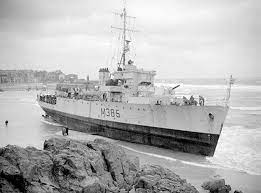
His firm was was the Dickensian sounding 'Fawcett, Brown and Pinniger' and with them until the age of twenty, he had followed a five year correspondence course in accountancy which he said he had "not liked at all" and he qualified at a second take at his exams at the age of twenty-two in 1954. He now had to undertake his two years National Service in the Royal Navy and said : "I  applied to the Navy and got in and to my parents horror turned down a commission as an officer". He did this because that : "I was likely to be stuck in a barracks. So I went on the lower deck which was the most important thing I ever did, probably in my life, because it was a complete revelation to me. A complete education".He served on two mine sweepers, HMS Coquette and Wave and was recognised as an 'Able Seaman' when he left two years later. 

The whole experience had a profound effect on Mike who said : "As a rating, an Ordinary Seamen, I was free to explore every corner of every impoverished fishing port around these Islands. Clad in my bellbottoms, blue collar and white cap, I witnessed scenes of such Hogarthian depravation that I experienced a sort of epiphany. From being a young Tory and recently-qualified Chartered Accountant, I became a passionate Socialist".

It was 1956 and he now went to London and for a time lived off the expenses he got for applying for jobs as a chartered accountant and then got a foot in the door of the new and coming medium of television broadcasting and got a job as a teleprompter using the new American device which came with the advent of commercial and live tv. Mike said : "The advantage was that you worked with every single company - Granada, BBC, ATV. ABC. So you were going round all over the place. It was an immense experience working in a vast studio. Fears fell away. In addition to which you were able to observe so much what was going on. It was an amazing curve for me".In his spare time he now wrote scripts for for TV advertising magazines and made enough money to allow him, after two years, to leave work as a teleprompter. He now became the editor of ATV's 'Sunday Break' which had been designed for a young audience and which he now changed by taking out the music and steering it towards the more serious subjects such as gambling and alcoholism. This was followed by him landing the job as a writer for 'World in Action', the weighty investigative current affairs programme made by Granada Television for ITV and his scripting, at the age of thirty-one, in 1963, 'The British Way of Death'. 

Mike once said :

"Mordant humour has always attracted me. Being indoctrinated a Roman Catholic at an early age has left me with the “grim reaper” as my constant companion. The only way I can cope is to laugh at him". (link)