Friday, 1 February 2013

Is Britain a country where cities can once more become places for old men ?

British cities don't always seem the most friendly of places for old men and women because they have :


* public toilets into which few dare venture
* street-lights turned off by cuts-driven councils
* roads and pavements choked with cars
* the fear of street crime

However, there is growing evidence to suggest that as the population of Britain ages, cities could actually be the best possible environment for old people.

The problem, according to Elizabeth Burton, 'Professor of  Sustainable Building Design and Wellbeing' at the University of Warwick is that :

"we don't have much choice at the moment for elderly people – it's either live in a normal house or live in a care home and there's not very much in between. Most of us have grown up believing in the rural idyll – that people move from city centres to suburbs, from suburbs to small towns and small towns to villages. But there is a recognition now that as people age and their mobility reduces, they may no longer be able to drive, and their world shrinks – it is therefore much better to live closer to amenities in a higher density of people."
Professor Jeremy Myerson, Director of the 'Helen Hamlyn Centre for Design' and specialist in age-friendly, design agreed with Elizabeth :

"The whole approach to older people in British society is unsustainable. It is very hard to care for older people – both social care and medical care – when they are thinly distributed across a rural environment, or congregated in seaside towns. What happens in Britain is people retire, sell-up, and either move to a seaside town or a country cottage. And actually the countryside is the last place for creating the inclusive accessible environment that older people need with access to highly specialised hospitals and care."

The message is clear : old men and women need to come back to the cities but first the cities need to be adapted to meet the needs of older people. Elizabeth continued :

"We don't want a whole generation of people trapped inside because they daren't venture out. The problem is that cities still have a bad image . We need a new vision of neighbourhoods that are suited to older people's requirements. Neighbourhoods that are easier to walk around, relatively high density, with a lot of greenery."

At the 'London School of Economics Cities Centre', Director Ricky Burdett, believes that :

"city centres need to once again be made attractive to people who have moved away."

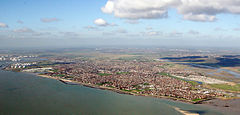
Apparently, one idea to tempt old men to stop moving from either not moving from towns or moving back is the 'shared space' where roads a stripped of signs and rules and regulations which assault the senses at street level and replaced with blank roads jointly shared by cars, cyclists and pedestrians. Exhibition Road in London's Museum District (left) was recently revamped at the cost of £30million using these principles. Jonathan Schifferes (left), Consultant at the 'New Economics Foundation' consultancy arm is a fan :

"Shared space is an equalising of the public realm so that it is more inclusive to walking and cycling, but not segregating and saying 'lets give 20% of our space to pedestrians and 23% to cyclists ' - it's based on a philosophy that by removing street furniture and street architecture you encourage different users of the public realm to engage with each other."

However, is this really a place for old men ? Jeremy thinks not and argues that shared space is anything but age-friendly :

"Shared space is meant to be about more equitable use between pedestrians, cyclists and car owners, so curbs and railings are removed, there aren't identifiable pavements. but, of course that is very problematic for a lot of older people with poor-eye sight and limited mobility."

Having said that, he is not against urban engineering projects :

"People say we can't afford extra seating, or to widen the pavements, or add extra street lighting, that councils are cutting back – but you need to ask what the cost is to the National Health Service of older people not getting out and about, the cost of social isolation in terms of mental health, or the link between the lack of cardiovascular exercise and health conditions."

So old men of Britain, if you can afford it, what do you want to do : either escape from the city and go live in the country or by the sea or stay in the cities and wait for shared spaces, if and whenever they may be built ? 
I know what my answer shall be.

P.S.
An earlier posting :
Britain is a country with an old harbour town called Whitstable in the old county called Kent which is awash with old men

http://britainisnocountryforoldmen.blogspot.co.uk/2011/08/britain-is-country-with-old-harbour.html


Thursday, 31 January 2013

Britain is thankfully a country with brave old harbour masters like George Reeder

George Reeder is the 63 year old harbour master at Watchet in Somerset became a self effacing old hero at 8.00am on Sunday morning when :

* a baby, who was strapped in the buggy, was swept into the water by a gust of wind as his mother walked along the pier at Watchet Harbour in Somerset.

* as George later said : "I don't know exactly how he went in, but I was on the esplanade and heard the commotion and I assumed somebody's dog had gone into the water, so I went cycling over.
They were on the West Pier, where you walk up to the lighthouse, some way away, but the noise travels and I could hear screaming from a woman. The mother was there and she said "my baby has gone in the water", so I went to the edge and I could see the pushchair upside down, floating away. I just jumped in and pulled the pushchair back over to the edge of the quay, and then somebody put a rope down over and I tied it on and they lifted it out. As far as I know, what the police told me was that the wind blew the buggy in."

Watchet* George also said : "The baby was still in the pushchair, it was very cold, it is amazing really because he must have been in there for a good five minutes, under the water. They pulled up the pushchair and a lady started doing CPR, and then the coastguard came, and the ambulance and the police, so I backed out the way."

So Britain is still a country with some calm, collected, courageous, modest old men like George Reeder.

Sky report :
http://news.sky.com/story/1043597/dock-master-saves-baby-from-icy-waters

Map of Watchet, Somerset

Sunday, 27 January 2013

Britain is still, but only just, a country for an old rock guitarist called Wilko Johnson

Wilko Johnson, the 65 year old, former rhythm and blues,'Dr Feelgood' guitarist and founding father of the English punk movement has spoken of the strange "euphoria" he has experienced since being diagnosed with terminal cancer and said the news made him feel "vividly alive" and had lifted the bouts of depression he had previously experienced. Last year he was given 9 or 10 months to live and refused chemotherapy when it was clear it might only add another two months to his life.

Wilko is due to play four dates in France followed by three nights in Sheffield and concludes with London, Bilston, Holmfirth and Glasgow in March and has said : "If the cancer kicks in before that, then I can't go on stage. I'm not going to go on stage looking ill - I don't wanna present a sorry spectacle!"

"Every little thing you see, every cold breeze against your face, every brick in the road, you think 'I'm alive, I'm alive' - I hope I can hang onto that. I've had a fantastic life. When I think about the things that have happened to me and the things I've done, I think anybody who asks for more would just be being greedy. I don't wanna be greedy.This position I'm in is so strange, in that I do feel fit and yet I know death is upon me. I'm not hoping for a miracle cure or anything. I just hope it spares me long enough to do these gigs - then I'll be a happy man."

What you possibly didn't know about Wilko, that :
* he was born in Canvey Island, Essex, which may explain his nostalgia for the sight of the River Thames which he shares with Jools Holland :https://www.youtube.com/watch?v=kpBbjyfCB2o

*  went to Westcliff High School for Boy and played in several local groups, before going to the University of Newcastle to study English, including early Anglo-Saxon literature and ancient Icelandic sagas.

* after graduating, travelled overland to India, before returning to Essex to play with the 'Pigboy Charlie Band', which evolved into 'Dr Feelgood' where he developed his own style, coupling choppy playing with novel dress of  black suit and unfashionable pudding basin haircut and jerky movements on stage.
https://www.youtube.com/watch?v=GPRP0gdS95A

* played riffs and solos at the same time on a vintage Fender Telecaster without using a pick which allowed him to move around abruptly on stage with the jerky movements of an automaton without the fear of losing the pick..https://www.youtube.com/watch?v=vEzKXW8q3Dw

* the BBC4 three-part documentary series, 'Punk Britannia' in 2012, stressed the importance of Dr Feelgood as 'pub rockers, a generation of bands sandwiched between 60s hippies and mid-70s punks who will help pave the way towards the short, sharp shock of punk'.
* reviewing his autobiography, 'Looking back at Me', Mark Blake of 'Q Magazine' said of Dr Feelgood : 'In the mid-70s the band's brutish R and B and their guitarists eye-popping thousand-yard stare inspired a young John Lydon, Paul Weller and Suggs from Madness.'

* left the band in 1977. joined the 'Solid Senders', then, in 1980, Ian Dury's band, 'The Blockheads' before forming the 'Wilko Johnson Band' and continued to pursue his musical career in the 1980s and 90s.


* in 2009, appeared in the documentary film 'Oil City Confidential' and was described by :
- reviewer, Philip French as : "a wild man, off stage and on, funny, eloquent and charismatic"
- director, Julien Temple  : "an extraordinary man – one of the great English eccentrics."[
-  Peter Bradshaw of the 'Guardian' as : 'the best rockumentary yet, the most likeable thing about this very likable film is the way it promotes Wilko Johnson as a 100-1 shot for the title of Greatest Living Englishman.'http://www.youtube.com/watch?v=7CZMLs8Ke40

* made his acting debut, cast in the role of mute executioner 'Ilyn Payne', in the HBO fantasy series 'Game of Thrones' after the producers had seen him in 'Oil City Confidential'  and said : "They said they wanted somebody really sinister who went around looking daggers at people before killing them. That made it easy. Looking daggers at people is what I do all the time, it's like second nature to me."


Wednesday, 23 January 2013

Britain, no country for neither old men nor the middle aged men forced to look after them

An article in the 'Daily Mail' yesterday was entitled :
Why middle age is getting harder: Thousands more in 40s and 50s are having to care for frail parents AND adult children  

It was based on a report entitled 'Future Identities' http://www.bis.gov.uk/assets/foresight/docs/identity/13-524-future-identities-changing-identities-summary.pdf by the 'Foresight' group of scientists led by the Government’s Chief Scientific Adviser, Professor Sir John Beddington which made the following points, that the new middle agers  :

* are, in increasing numbers and set to rise by up to 25%  over the next decade to approaching half a million by 2022, having to care for ageing parents and adult children and therefore face the prospect of the end of their expectation of a 'comfortable' middle age.

* will be affected by the trend, which is expected to continue, of children aged 20 to 35 increasingly staying in the parental home and be financially supported because they cannot afford a house of their own with number rising by 20% since 1997, to 3.5million.

THE CHANGING STAGES OF LIFE
* will become increasingly resentful as they have to take on increased responsibilities while working longer before drawing their pension.

* in fewer numbers will be able to use their pre-retirement years to pay off their mortgage, go on trips and fulfil lifetime ambitions.


* the growth in the numbers of this  so-called 'sandwich generation', with responsibilities to grown children and old parents has implications for social policy as they may demand greater recognition and, potentially, assistance, financial or otherwise.

Tuesday, 22 January 2013

Britain is no longer a country for and says "Goodbye" to an irrepessible old, table mat and film maker called Michael Winner

Michael Winner, who has died aged 77, provoked great passions among those who knew him, to some  he was a visionary, whose films, especially his early ones, exhibited a remarkable narrative skill and others saw him as a purveyor of violence and sleaze, a dilettante who traded his talent for the transient pleasures of the bon viveur.

What you possibly didn't know about Michael, that :

* at the end of his life had a succession of young women share evenings among his antiques in his Victorian mansion, but did not live on the premises, where his companions included five full-time cleaners and herds of soft toys and where he, on more solitary evenings, cut and glued table mats and said obituarists would describe him as a 'table-mat maker', adding 'film-maker' if there were space.
* he was born in London, the only child of mother and builder father of Polish and Russian extraction respectively, where his  father propped up houses blitzed in the War and used profits to invest in  property and fund his wife's gambling, which, Michael later complained, so distracted 'Mumsie', that he was neglected and, for example, left in the bedroom with the mink coats of guests who came to his barmitzvah, only to play poker with her.
* was a boarder at the quaker, St Christopher School, in Letchworth, Hertfordshire, where he was an attention seeker with a 'craving for power which he is trying to achieve by the use of his money' and earned a 'reputation of being movie mad' after he pinned handwritten reviews on the noticeboard.

* at 16, was asked to leave school because, they claimed, he was “out of sympathy” with their aims and was then judged 'medically unfit' for National Service, spent a year cramming for his exams before going up to Downing College, Cambridge, in 1953, at the age of 17, studied law and economics, edited the Varsity newspaper and persuaded the owner of the Rex Cinema in Cambridge to apply to the local council to approve a showing of 'The Wild One', banned by the censor because of its violence, a stunt which attracted nationwide interest.
* after graduation, applied for and was turned down for a directors' courses at tv companies,  worked as a journalist and film critic at the New Musical Expess, before joining Motion Pictures Limited as a writer and editor in 1956 and then as a journalist on London's Evening Standard before moving into film production, directing his first film, 'Shoot to Kill', in 1960.

* used the £1,500 his father loaned him for his 1962 film, money soon recouped from 'Some Like It Cool', a comedy in a nudist camp which was followed, from 1963 to '69 with : the singer, Billy Fury, in 'Play It Cool' ; 'West 11'; 'The System' ; 'You Must Be Joking!'; for which he blew up a car in Piccadilly Circus in the rush hour and told police he had no idea who was in charge; 'The Jokers' and 'I'll Never Forget What's 'Isname' with Oliver Reed and Orson Welles; 'Hannibal Brooks' https://www.youtube.com/watch?v=fQNLsSPGJ-I and 'The Games' about an Olympic Marathon. 

* moved to film making in Holywood saying :"I was looking for something that would keep us employed. You don't have that much choice" and started with the westerns 'Lawman', shot in Spain with rubber cacti and 'Chato's Land' in 1972 https://www.youtube.com/watch?v=4nfElgOSO5k and after mentioning to the actor Charles Bronson the idea of a man 'justified' by the rape and murder of his womenfolk to shoot muggers, directed 'Death Wish' https://www.youtube.com/watch?v=_GieK_55uyY
and two sequels and debated their controversy :
https://www.youtube.com/watch?v=6Ge2Slg56FI

* said that the film of which he was most proud was 'The Nightcomers' https://www.youtube.com/watch?v=lbtvJSI3Rik in 1971, a prequel to Henry James's 'The Turn of the Screw', starring Marlon Brando and Stephanie Beacham.


* directed versions of 'The Big Sleep' with Robert Mitchum in 1978 and 'The Wicked Lady' in 1983 which as Bronson remarked, were 'abusively hard on women.' and it was during these years, his, by then widowed mother who he described as a "nice, little, white-haired lady … She was a killer", sold paintings and antiques left to him to fund her casino losses and set 11 firms of solicitors on him.

* in 1984 set up the 'Police Memorial Trust' in response to the murder of WPC Yvonne Fletcher and tlater turned down the offer of an OBE for his work on behalf of the police, remarking: “An OBE is what you get if you clean the toilets well at King’s Cross Station” and later said that he had declined a knighthood.

* began to describe films as a hobby and spent his millions on a garage of cars which he drove 'Mr Toadishly' and the restored mansion, Woodland House, the former home of the Victorian artist Sir Luke Fildes, with his valuable collection of artwork for children's books, including EH Shepard's drawings of Winnie-the-Pooh and the artwork of Donald McGill, master of the ribald, big-bosomed seaside postcard.
* re-encountered Geraldine Lynton-Edwards, whom he had met in 1957 when she was a teenage ballet dancer and married in 2011 and after intending to leave his house to the nation, put it up for sale for £60million just before his marriage and also auctioned much of his art collection, but swore this was not to repay £9million he had borrowed for little luxuries, including the hire of helicopters.

* was encouraged by the 'Sunday Times' into restaurant reviewing for his 'Winner's Dinners' columns which were less about digestion than self-definition resulting in several famous eateries banned him for his bullying.
* used the catchphrase, "calm down dear"https://www.youtube.com/watch?v=efl5pFTFnBU, in the tv ads he directed and appeared in, once in drag, for the  displacing his own excitability and fluster on to female others and saw David Cameron the Prime Minister heavily criticised when in 2011, he directed it against the Labour Member of Parliament, Angela Eagle.

* facing the prospect of death said that he had been investigating the possibility of travelling to the assisted suicide clinic, 'Dignitas' in Switzerland “I’ve got no fear about death,” he said recently. “I’m very happy to snuff it; you have to live with the cards you’ve been dealt with" and admitted that not having children was a “the one mistake that wipes out everything I have ever done”.

* was described by the veteran critic Barry Norman, who, many years ago when working on the Daily Mail had been ordered to fire Michael, then one of his underlings considered him entertaining enough, “but he can also be rude and a bully, as if it amuses him to confront the world in the guise of a self-made shit ... Perhaps what gripes him is that he wanted to be a great director and never became one.”     
https://www.youtube.com/watch?v=Ige_K1a0L-M

With Prime Minister David Cameron as Chairman of the Police Memorial Trust.

Saturday, 19 January 2013

Britain will always be a country for and says "Happy Birthday" to an old actor / singer / dancer and now New Zealand islander called Michael Crawford


Michael Crawford, whose career covers radio, tv, film and stage in London's West End and on New York's Broadway, is 71 today.

What you possibly didn't know about Michael, that he :

* was born in Salisbury, Wiltshire, as Michael Smith and spent his early days during the Second World War in an Army camp and on the Isle of Sheppey off the Kent coast living withing with his grandparents.
My earlier posts about Sheppey :
http://britainisnocountryforoldmen.blogspot.com/2010/03/seawall-at-sheerness-on-isle-of-sheppey.html

http://britainisnocountryforoldmen.blogspot.com/2011/04/britain-is-country-with-county-called.html

* at the end of the War, moved to London with his mother and new Stepfather and under the name of Michael Ingram, was a church chorister and attended the Oakfield Preparatory School, Dulwich.


* had his mother die at age of 44 from acute pancreatitis after a short stormy and abusive second marriage and was taken under the wing by the famous theatrical 'Kendall Family' whose head was the music hall star, Marie Kendall.


* started his stage career as Sammy 'The Little Sweep' in his school production of Benjamin Britten's 'Let's Make an Opera' and got his professional break when hired by Britten to play in a production the Scala Theatre in London, alternating with another boy soprano called David Hemmings.


* had a name clash with another stage aspirant and changed his to 'Crawford' after seeing a lorry with the slogan 'Crawford's Biscuits Are Best' and after playing a number of parts on stage and on radio, at the age of 19, played an American, 'Junior Sailen', in the Steve McQueen film, 'The War Lover' in 1962.


* played the lead role in the 1963 film 'Two Left Feet' :
Watch out for a young David Hemmings :
http://www.youtube.com/watch?v=-IkfzHovPzs&feature=related


* was given by Richard Lester, the role of 'Colin' in 'The Knack …and How to Get It' in 1965.
http://www.youtube.com/watch?v=WVRJTFNYqzc


* was next cast in the film adaptation of the musical, 'A Funny Thing Happened on the Way to the Forum' with Zero Mostel.
http://movieclips.com/hS9P-a-funny-thing-happened-on-the-way-to-the-forum-movie-sleeping-potion/

* played in 'How I Won the War' with John Lennon
http://www.traileraddict.com/clip/how-i-won-the-war/green-green-green

and then starred in 'The Jokers' with Oliver Reed.
http://www.youtube.com/watch?v=KDobBmcRHFc

* made his Broadway debut in 1967 in Peter Shaffer's 'Black Comedy' and began to demonstrate his aptitude and daring for extreme physical comedy, such as walking into walls and falling down staircases.

* was noticed by Gene Kelly and cast in 'Hello, Dolly!' alongside Barbra Streisand and Walter Matthau and related that he got the part of Cornelius Hackl, and 'attractive idiot', because Kelly's wife thought he was 'attractive' and Kelly thought he was 'an idiot'.
http://www.youtube.com/watch?v=pw5EuvGPsyI

* saw 'Alice's Adventures in Wonderland', in which he played the White Rabbit, enjoy moderate success in Britain.
http://www.youtube.com/watch?v=I22xkIxueuQ&feature=related

* next faced a brief period of unemployment, helped his wife stuff cushions for their upholstery business, took a job as an office clerk and saw his marriage fell apart and divorce follow.


* playing the hapless Frank in the tv series 'Some Mothers Do 'Ave 'Em', saw his career take off again and his extreme physical comedy came into its own.
http://www.youtube.com/watch?v=lFLpwRMS00g

http://www.youtube.com/watch?v=6f4YQoqTJ4o

* played in his first leading man role on the West End stage in the musical 'Billy' and improved his singing under the tutelage of vocal coach and spending perfected his dancing with a choreographer.
Interviewed at this time :
http://www.youtube.com/watch?v=KyGeFPHPCFk


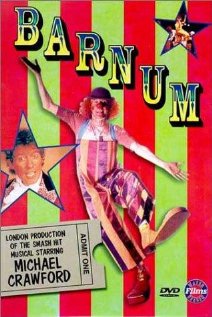
* in 1981, starred in the London production of 'Barnum' after training at the Big Apple Circus School in New York City to prepare for the stunts, learning to walk the tight-rope, juggle and slide down a rope from the rafters of the theatre and became a 'British Amateur Gymnastics Association' qualified coach.
http://www.youtube.com/watch?v=TnZgjJIZ7aA&feature=related

* starred in Barnum for 655 performances and saw it becaome a favorite of Margaret Thatcher and the Queen Mother.


* started his performance in 'Phathom of the Opera' in London in 1981, and continued on Broadway and then Los Angeles winning a host of awards and sang 'The Music of the Night' at the Inaugural Gala for President George Bush in Washington, in 1989.
http://www.youtube.com/watch?v=n5dhyiqhR7Y

* in 2004, playing the obese 'Count Fosco' in Lloyd Webber’s musical 'The Woman In White', his rubber fat-suit made him sweat so much he became dangerously dehydrated and his immune system broke down which led to him developing ME or chronic fatigue syndrome.


* in 2012 played the Wizard in the musical version of 'The Wizard of Oz'.

* five years ago moved to a small house by the beach north of Auckland in New Zealand where he goes sailing and fishing, has discovered the joys of gardening and restored his poor health  which he once feared would end his career.


A tribute :

http://www.youtube.com/watch?v=DdEnBbOg2B8


Thursday, 17 January 2013

Britain is a country where fewer old men than usual will die from the cold this winter because of a charity called Age UK and 'Spread the Warmth'


It's cold in Britain as the temperature here in Kent this morning indicated. Cold easterly winds from Europe are colliding with weather fronts from the Atlantic and there's more snow in the forecast.


The charity, 'Age UK', have launched their appeal for money, 'Spread the Warmth' with an old man called Frank :
http://www.ageuk.org.uk/get-involved/spread-the-warmth/

They underline this with the fact that :

* every year, more than 26,000 people die needlessly during winter because of the cold weather and 90% of these are old men and women.

* over a third of old men and women over the age of 65 say they are " dreading the cold weather in winter".

* old people's bodies respond differently to the cold, increasing the likelihood of a heart attack, stoke and pneumonia.

* 36% of people aged 60 or over in Great Britain either stay or live in just one heated room to save money and 30% say they avoid heating rooms like the bedroom, bathroom or living room because they are worried about the cost,

During their 'Spread the Warmth' campaign, Age UK will help old men and women by :

  • distributing essential items like clothes, heaters and electric blankets.
  • offering  snow clearance services, shopping support and befriending visits, so those with mobility issues can get what they need.
  • distributing information guides, including tips on how to stay warm in your home and thermometers, so they know when to turn on their heating.
  • putting pressure on Members of Parliament and local councils to make cold-related winter deaths a public health priority.
Britain in 2013 - a country where a charity steps in to help prevent old men dieing from the cold.

Earlier posts with cold, old men :

Sunday, 5 February 2012
Britain is no country for the cold, old men who will die this week
http://britainisnocountryforoldmen.blogspot.co.uk/2012/02/britain-is-no-country-for-cold-old-men.html

Wednesday, 1 February 2012
Britain, a country where many cold, old men die in winter has the antidote in the Met Office 'Cold Weather Plan'
http://britainisnocountryforoldmen.blogspot.co.uk/2012/02/britain-country-where-many-cold-old-men.html

Tuesday, 23 February 2010
Britain this winter has been no place for old men but one with plenty of advice from the Government
http://britainisnocountryforoldmen.blogspot.co.uk/2010/02/britain-this-winter-has-been-no-place.html

Monday, 14 January 2013

Britain is no country for old men 'in care' who want to be safe from abuse, receive enough food and drink and be kept clean

A recent headline in 'The Daily Mail' was entitled :
Scandal of neglect in Britain's care homes: NHS survey of 63,000 elderly residents reveals one in three are living in fear of abuse

The 'Adult Social Care Survey',  carried out by the Department of Health, the Care Quality Commission and the National Health Service, Health and Social Care Information Centre and based on a survey of 63,000 old men and women has reported that :

* 33% of adults, mostly old men and women, who are in residential care or receiving help at home fear abuse or physical harm , the equivalent to about half a million people.

* in some areas, such as Brent, North-West London, more than 50% claimed they did not feel safe, while in Hartlepool, Co Durham, St Helens, Merseyside, and Tameside, Greater Manchester, more than 40% said social care services did not make them feel safe.

* Others complained they received so little food and drink that they believed their health could suffer.

* nearly half of those relying on carers to perform basic washing duties said they did not feel as clean or presentable as they would like.

* thousands said the way they were treated undermined the way they felt about themselves.

Michelle Mitchell, charity Director  General at 'Age UK', said:
 "By neglecting the social care system for so long, governments have put the human rights, health and dignity of too many at risk. Many older people are worrying about having enough food to eat, and feel unsafe and unable to present themselves in a way that retains their dignity. How can this be acceptable in a civilised society?"

Britain in 2013 : A country with many frightened, thirsty, hungry and unwashed old men in 'care'.