Wednesday, 15 May 2013

Britain is still a country for and says "Happy Birthday" to an old political cartoonist called Ralph Steadman

Ralph, who is renowned for his political and social caricatures, cartoons and picture books, is 77 years old today.
https://www.youtube.com/watch?v=DZz3uT7CgOc

What you possibly didn't know about Ralph, that he :
* was born in Wallasey, Cheshire, the son of a father who was a commercial traveller selling women's clothes.
* was educated at Abergele Grammar School, but left in 1952 aged sixteen, unable to bear the strict authority of the headmaster, who gave him "fear and hatred of authority" and where he "couldn't take it any longer" and "just had to get out".
* got a job with the aircraft company, De Havilland, but finding factory life unbearable, got a job at Woolworth's as a trainee manager then at the age of 18 in 1954 worked in an advertising agency in Colwyn Bay, where he recalled that "I learned to make trademarks and tea."
* between 1954 and 1956, did National Service in the Royal Air Force while continuing to take 'Percy V. Bradshaw's Correspondence Course in Cartooning', which his parents had paid for. 
* from 1955 sent a drawing to 'Punch' magazine every week and had his first cartoon in print in 1956 dealing with Nasser and the Suez crisis in the Manchester Evening Chronicle in 1956 and later said that his work "was a Giles in all but name."
* joined the Kemsley Newspaper Group and worked as a cartoonist from 1959 to 1961, producing editorial cartoons and a weekly panel about a teenage girl named 'Teeny' and at that time met Gerald Scarfe at a meeting of the Cartoonists' Club of Great Britain.

* spent time with Gerald in the Victoria and Albert Museum, sketching statues and suits of armour and  hours pacing the streets long into the night, talking about art and the future and discussing ways of putting the world right.


* started to freelance in 1961 selling cartoons to 'Punch', the 'Daily Sketch', and the 'Daily Telegraph' and later recalled : "I got involved firstly with Punch, but they weren't really interested in social comment, they wanted jokes."
* in 1962, decided to submit a drawing entitled 'Plastic People' 'to the newly-launched magazine, 'Private Eye', for which Richard Ingrams sent him £5 and a note saying 'More power to your elbow' and published it with a double page spread in issue number 11.
* In 1967 became 'Artist-in-Residence' at Sussex University where at the time I was a second year undergraduate student and have a dim recollection of some of his cartoons in frames on the walls of the JCR.
* in 1970, made a short visit to the USA and later said : "For me, art had to be about freedom. England at the end of the 1960s was parochial. I started drawing Nixon and I wanted to work in America" and teamed him up with Hunter S. Thompson in what became a lasting partnership and illustrated his book, 'Fear and Loathing in Las Vegas'.
* in June 1970, returned to London to cover the forthcoming General Election for 'The Times', as the second political cartoonist the paper had ever employed, worked for 6 months before he was told that the editor, William Rees-Mogg, had begun to "feel your cartoons are a little seditious and I don't think we need them in the pages of the Times, so I'll have to ask you to leave." 

* was now changing his style and recalled that : “I developed this approach to drawing which became far more visceral, It was a kind of anger, really. I mean, it was partly induced by Hunter, but also the screaming lifestyle of America.” 

* from 1976 to 1980 drew political cartoons for the 'New Statesman', and contributed to 'Rolling Stone', 'Radio Times', 'Black Dwarf', 'New York Times', 'Times Higher Education Supplement', 'New Scientist', 'Independent', 'Guardian', 'Observer' and 'Sunday Times'. 


* was filmed working in 1979 on the 'Innes Book of Records' : https://www.youtube.com/watch?v=lwLSc0gweyQ

* in 1987, dismayed by the success of ITV's 'Spitting Image', which seemed to turn political caricature into entertainment, stopped drawing politicians, "leaving them to their latex lookalikes which rendered their latex antics a cosy entertainment in every living room throughout the land. You will never see a politician's face in my drawings again" but later relented to the extent of drawing politicians' legs, particularly in a series of 'Election '97' drawings for 'New Statesman'.

* in 1985, designed a set of four British postage stamps to commemorate the appearance of Halley's Comet and from 1987, catalogues for the wine merchant Oddbins, which inspired Hunter S. Thompson to write to him that 'politics was below you, so you stooped to worship grapes.'

* in 1989 said : “Somehow in people’s minds you associate a cartoonist with someone who either does it in his spare time or didn’t get a very good education and therefore scribbles and does a few gags. I think newspapers...prefer it that way; keep the newspaper cartoonist under wraps. They use them to sell newspapers, but they...don’t give them that kind of dignified importance that they might give to their lead political writers.” 


* retained the power to offend and in 1992 London Transport banned a poster he had designed for a cartoon exhibition at the Barbican Art Gallery, a photomontage with guns and a headless man spattered with blood because, as a spokesman explained, "they said it was a poster which showed blood and that the white areas around it would invite graffiti. They also said the guns could incite violence."
* in 2002 said : "Political satire is so boring now. Why the hell would I want to draw Tony Blair? The only politicians I've ever liked were Dennis Healey, Michael Foot and Tony Benn. Really nice people, good folk. The rest of them, I mean this whole crowd, this spun crowd of degenerate politicians are just not worth drawing."

* reacted badly to Hunter S Thompson's suicide in 2005 : http://www.bizarremag.com/film-and-music/interviews/4333/ralph_steadman.htm

* once told an interviewer : "When I began I thought I could change the world. It's much worse now than when I started, so I haven't done much of a job,"


My earlier post about Ralph's local pub in Kent :

Friday, 28 May 2010


Britain is a country with old villages in rude health and old pubs with rude landlords


http://britainisnocountryforoldmen.blogspot.co.uk/2010/05/britain-is-country-with-old-villages-in.html

and my farewell to Ralph's erstwhile friend, Ronald Searle :


Tuesday, 3 January 2012


Britain is no longer a country for and says "Goodbye" to its greatest cartoonist called Ronald Searle


http://britainisnocountryforoldmen.blogspot.co.uk/2012/01/britain-is-no-longer-country-for-and.html

Tuesday, 14 May 2013

Britain is no country for the more and more old men falling deeper and deeper into debt

Britain, still one of the top ten richest countries in the world, is also one where one of its biggest debt charities has warned of a crisis among old men and women  over the age of 60, with record numbers facing insolvency.

'Step Change', which offers counselling and debt management advice, said 13,148 people aged 60 and over, equal to around 36 a day, sought help last year, compared with 9,628 in 2009 with the total up by 40% since the economic recession began.


The facts about this age group are that :

* they have larger debts than any other age group, owing on average £23,000, while the typical debts of the rest of those contacting the charity are around £17,650.


* this only includes their 'unsecured debt's' such as credit cards, overdrafts, personal loans and payday loans and for those who have a mortgage, classed as a 'secured debt', the total burden is even larger.

* credit cards are fuelling their problem with debtors typically having more than £15,000 of unpaid credit card bills, around £5,000 more than the average for all other age groups.

Delroy Corinaldi, one of the charity’s directors, said: 
"The rise in the number of older people seeking help from the charity, along with their higher than average debt levels is very worrying. Whatever someone’s income level during their working life, most would expect to be in a stable, if not comfortable, financial situation when they are older."

Neil Duncan-Jordan, from the 'National Pensioners Convention', said :
He feared the problems were only going to increase and "people just don’t have the income to be able to sustain their lifestyle. The number of old people going to food banks is increasing. The number going for debt advice is increasing. The number of people really really struggling, usually in silence, is increasing."

He also said that last month’s increase in the state pension of just 38p a day from £107.45 to £110.15 a week or £2.70 a week, barely scratches the surface of the problem.
"The increase does not keep pace with the rising cost of living that everybody, including pensioners, is facing."

Official figures show more than 193,000 old men and 111,000 old women at and over the age of 70 are still working in Britain with many saying that they are too poor to stop working.

Britain in 2013 : not a happy country for many debt-ridden and still-working old men.


Monday, 13 May 2013

Britain is no country for old men who need help with dressing and eating

Tucked away in the 'Guardian' last week was a small article which spelt big implications for thousands of old men and women in Britain :

Warning over care of the elderly and disabled after £2.7 billion cut

It made the following points, that :

* social care chiefs in Britain warn that more old men and women and people with disabilities will be denied state-funded care support over the next two years as local authority finances continue to take a battering from funding cuts.

* many recipients of basic state-funded care such as help with either washing and eating or meals on wheels, could face a reduced service, while others will lose out on care support altogether.


* Sandie Keene, President of the Association of Directors of Adult Social Services said : "Some of the people we have responsibilities for may be affected by serious reductions in service – with more in the pipeline over the next two years."
* councils plan to make £800 million in adult social care savings over the next 12 months alone. 

* £104 million of the cuts in 2013-14 will come in direct withdrawal of services and as Sandie said : " It is absolutely clear that all the ingenuity and skill that we have brought to cushioning vulnerable people as far as possible from the effects of the economic circumstances cannot be stretched any further."

Britain in 2013 : a sad country whose Government has found that it is  necessary to save money spent on helping the poor old men and women who need help with those basic needs : to dress and eat.

Britain is no longer a country for the cellar of an old wine buff called Hugh Johnson


The world's best-selling wine writer, 74 year old Hugh Johnson, is moving from his house, which has a five-room wine cellar, to one with a coal hole, to be closer to children and grandchildren and as a consequence is selling off his private cellar after half a century of collecting. 
Like many an old downsizer, Hugh  is struggling to let go. Speaking of a pair of magnums of chablis about to go under the hammer in an Essex auction room he said : 
"I shouldn't be selling them. I don't want to look. You see, when I look at the bottles I know exactly how they will taste."

In last monday's sale at Sworder's Auctioneers over £100,000 worth of wines went under the hammer, including :

* rare vintages dating back to 1830.
* a £2,000 1945 Chateau Latour made in the balmy summer after VE Day at the end of the Second World War.
* his own 'desert island bottle', a single 1971 German riesling which sold for £6,000.
* an amphora dredged from the Mediterranean dated AD100.


For many in the wine world the sale of Hugh's wine marks the end of an era that began in the 1960s when it was the preserve of the elite and Britons drank on average just a third of a glass a week. Between then and now, Johnson's annual pocket wine guide, featuring hundred of bite-sized verdicts, has sold 12 million copies, his 'World Atlas of Wine', first published in 1971, close to 4 million and wine consumption in Britain has increased twelvefold.
Hugh is among a small group who are believed to have tasted the oldest wine ever, a 1540 Steinwein from Germany of which he said :
"The sugars created by the sunshine in the summer of 1540 were there and that was miraculous. There is only one bottle left and the owner says he won't open it which is stupid."

In his career Hugh :

* advised British Airways on how to deliver better wine at 35,000ft.

* started the first newspaper wine club at the Sunday Times in the 1970s. 

* was among the first to push the credentials of the New World wines that now fill supermarket shelves. 

* in 1976, established the 'Zinfandel Club' to promote California and declared an Australian wine, Penfolds Grange, the equal of a top Bordeaux.

* in 2005 expressed regret at the influence of the American wine critic Robert Parker :
"Imperial hegemony lives in Washington and the dictator of taste in Baltimore."

Before leaving his lifetime's collection, there was a moment for a last sniff and sip. He uncorked a bottle of Tokaji, a sweet and golden Hungarian wine from a famous vineyard he helped rehabilitate in 1990, swirled and inhaled its musty aroma and said :
"Wine connects man and nature and time in a way nothing else does, In a bottle of wine you have an identity created by a craftsman with materials at his disposal, which include the weather. That can't be replicated and it stays alive for centuries."

Hugh and the origin of wine :
https://www.youtube.com/watch?v=TJnHLdGxhlc


Friday, 10 May 2013

Britain, a country which, for 70 years failed to recognise the bravery of the young sailors who served on Arctic convoys, finally grants a few old men their medal

All those years ago, tens of thousands of men stood at Loch Ewe, fearful they might never again see the shores of Britain and 3,000 did not. A remote inlet in the northwest Highlands of Scotland, it was the starting point for the Arctic Convoys on their treacherous journeys to the Soviet Union during the Second World War.
Described by Winston Churchill as the "worst journey in the world ", the heroes were risking their lives running a gauntlet of German warplanes and U-boats to keep the Red Army fighting on the Eastern Front.
https://www.youtube.com/watch?v=Ey7bmCZM67I
The convoys :

* consisted of thousands of vessels which made the treacherous 1,600-mile journey past the enemy-held shores of Norway, through the Barents Sea to the frozen wastes of Murmansk and Archangel.

* carried four million tons of cargo including tanks, planes, fuel and food to help the Russia slow Germany's advances on the Eastern front.

* carried a total of more than 66,000 Royal Navy sailors and merchant seamen and during the War a total of 87 merchant ships and 18 British warships were sunk.

In the Post War world, the Cold War meant it was 'politically difficult' to give the survivors a medal for assisting the Soviet Union, a country which, although a former ally, was now Britain's 'enemy' and so those men who had served were awarded the 'Atlantic Star', even though that was a separate campaign 800 miles away. 
https://www.youtube.com/watch?v=WCZSEgcfs50
Last year, however, the Prime Minister, David Cameron, ordered the 'Arctic Star' medals amid concerns many veterans would die before they were awarded and admitted he was 'righting a wrong'.
This week, 39 of the dwindling band of veterans returned to the Loch's shores to receive the belated medals. They gathered at Loch Ewe for a service to remember their lost colleagues who had perished in the freezing waters between 1941 and 1945 and lay poppy wreaths at a memorial as RAF jets performed a flypast in long-awaited acknowledgment of their courage.

Bert Glazebrook, 87, who sailed on two convoy missions on the destroyers HMS Serapis and HMS Walker, said: 
" We got the medal for the ones who aren't here. Now we have got the medals I'm very pleased. Not just for me but for all my mates as well. We all went through hell. It was freezing cold, sleeping where you could when you have your duties to concentrate on, never knowing when it was our turn for a torpedo, but surrounded by your mates on a ship, we all just carried on. I got a little bit disillusioned while I was waiting for the medal, but today made up for it all."

Ron Leslie, 87, a member of the Fleet Air Arm, served on board the aircraft carriers HMS Vindex, HMS Campania and HMS Nairana and made various trips in support of a number of Arctic convoys said :
" Somebody one day said to me, "You are so brave going to Russia". I told them : " thank you, but there was more too it than that, we had to get back again. The enemies we had were not only German. There was the sea, the weather."

Bob Brighton, on the right in the photo and now 88, who joined the corvettee HMS Bamborough Castle, completed six convoys and experienced the horror of seeing allied vessels torpedoed, said :
" It is the end of the past and the beginning of the future today. It is recognition of something at last. These are my friends, and there is a lot more that have been gone. I have come here for the little celebration of ourselves."

Ivan Hall, 90, from Ludlow, Shropshire, who was a merchant seaman on SS St Clears and on one  of the first convoys in 1941 and wrote of his journey in a book entitled 'Christmas In Archangel' as his ship was icebound in the Russian port for six months said :

 "It is very strange being back here. It's hard to describe the memories that come back, but I am just amazed we are regarded so highly and people want to remember what we did. It is very humbling. We just went out there and did what we had to do. When we got to the ice sea it was frozen over. So the icebreakers dragged us towards Archangel but we were frozen in. We were in a very grim place, but one of the sailors found a shop which sold musical instruments. So we made a band. I learnt to play the Russian Mandolin while I was there and we played some songs. I just found the instrument in my loft, it has been stored in there for about 70 years."


Men of the convoys :
http://www.russianarcticconvoymuseum.co.uk/wp/themenoftheconvoys/

My post in March on the men in the convoys :
Britain is finally a country for and recognises the heroism of the old men who once served in its Wartime Arctic convoys

http://britainisnocountryforoldmen.blogspot.co.uk/2013/03/britain-is-finally-country-for-and.html

Tuesday, 7 May 2013

Britain is a country with a county called Devon, a village called Parkham, an old pirate hostage called Captain Darch and local pirates from the Women's Institute

Captain Colin Darch, who is 75 years old who had been a North Sea pilot and captain of a Lundy Island ferry was :

* in 2008, held hostage along with an Irish engineer and 4 Russian crew for 47 days by 20 gun-toting Somali pirates after they leapt aboard his Danish ship, the 'Svitzer Korsakov', 70 nautical miles off the north eastern coast of Somalia in the Gulf of Aden.


* struck over the head and warned he would be shot if the crew disobeyed their captors and was accompanied everywhere he they went, even to the lavatory.

* able to survive on Somali tea and goat meat.

* freed, along with the crew, 6 weeks later when a rumoured £350,000 ransom was paid.


* able to return to Devon where he was reunited with wife and began writing about the terrifying episode for a book, 'Capture By Somali Pirates And Other Events At Sea'.

* invited to talk to the 'Women's Institute' branch in Parkham, a village a few miles from his home.

* was stunned to arrive at the  meeting and find the members in fancy dress wearing eye patches, wigs and fake wooden legs while brandishing plastic cutlasses.

Branch Spokespesrson, Stephanie George said:
"We didn’t know much about him, but the notes said he was  Captain Darch and he was talking about piracy. I thought he was from a local fund-raising group who dress up as pirates to raise money for charity. Naturally everyone was aghast when we realised our mistake.
There he was delivering this harrowing story about how he was held hostage and feared for his life, and we were all sitting there dressed as Captain Hook.
We apologised profusely but Mr Darch was a great sport and it didn’t seem to faze him at all.
He was so funny and such a nice man. He carried on with his talk, which was wonderfully entertaining, and a few of the ladies bought copies of his book afterwards".

Colin said :

" They seemed to be a little embarrassed but it didn’t offend me in the slightest.
It’s been five years now and sometimes I have to remind myself just how terrifying and frightening it was. In any event, the ladies didn’t look the slightest bit like Somali pirates – more like the Pirates of Penzance.
In the end they asked me to select the best costume. I gave them all marks out of ten. It was just a bit of fun."

Sunday, 5 May 2013

Britain is still a country for and says "Happy Birthday" to an indefatigable, old film and television exponent called Michael Palin

Known unofficially as 'Britain's Nicest Man', Michael is 70 years old today.

Michael has had a long career in and is a great believer in the power of television :
"It's such a direct form of communication. You're in people's homes. With the travel shows I still find it unbelievable that we'd get audiences of 7.5 million when we crossed the Sahara. If you introduced it by saying: 'Tonight we look at Mauritania, a country that survives on iron-ore exports', people would switch off – but we took them there, to places they'd never go. That's something only television can do."

What you possibly didn't know about Michael is that he :

* was born in Broomhill, Sheffield, West Riding of Yorkshire in 1943, during the Second World War, where his father was a Cambridge educated engineer working for a steel firm and before he was born, his maternal Grandfather had been a Lieutenant-Colonel in the Army and High Sheriff of Oxfordshire.

* had his first acting experience at Birkdale Prep School, playing Martha Cratchit in a school performance of 'A Christmas Carol' and at the age of 10, made a comedy monologue and read a Shakespeare play to his mother while playing all the parts.

* after attending Shrewsbury School, in 1962 went to Brasenose College, Oxford where he 'read' modern history and met Terry Jones and wrote and performed with him in the Oxford Review.

* in 1966, at the age of 23, married Helen Gibbins, whom he first met at the age of 16 in 1959 on holiday in Suffolk, a meeting he later fictionalised in his play, 'East of Ipswich'.

* in 1965, became a presenter on a comedy pop show called 'Now!' for the Television Wales and the West and started to write comedy with Terry for 'The Ken Dodd Show', 'The Billy Cotton Bandshow' and 'The Illustrated Weekly Hudd'.

* worked on 'The Frost Report' with future 'Monty Python' members, Chapman, Cleese and Idle.

* in 'Monty Python', played a variety of roles including the lumberjack of the Lumberjack Song' :http://www.youtube.com/watch?v=mL7n5mEmXJo ; Herbert Achovy, presenter on the game show 'Blackmail'; the unflappably calm 'Dead Parrot' vendor (right)
http://www.youtube.com/watch?v=4vuW6tQ0218
and initiated the 'Spanish Inquisition' sketch : http://www.youtube.com/watch?v=CSe38dzJYkY

* continued to work with Terry after 'Python', co-writing 'Ripping Yarns' and appeared in 'A Fish Called Wanda', for which he won the BAFTA Award for the 'Best Actor in a Supporting Role'.
https://www.youtube.com/watch?v=SmVGMsMws9Y

* starred as Dennis the Peasant in Terry Gilliam's 1977 film, 'Jabberwocky'
https://www.youtube.com/watch?v=UuS8NaHNLyk
and co-wrote 'Time Bandits' with him, in which he also appeared.


* made his first travel documentary as part of the 1980 tv series 'Great Railway Journeys of the World', in which, humorously reminiscing about his childhood hobby of train spotting, he travelled throughout Britain by train.

* in 1982, wrote and starred in 'The Missionary' with Maggie Smith, playing the Reverend Charles Fortescue, who was recalled from Africa to help prostitutes.
http://www.youtube.com/watch?v=Vny8FJLWN8w

* has appeared in serious drama working as producer and actor in the film 'American Friends' based upon a real event in the life of his great grandfather and played the part of a headmaster in Alan Bleasdale's tv drama series, 'G.B.H'.
https://www.youtube.com/watch?v=3bAnWapmD2c

* began a new career as a travel writer and tv documentary narrator who visited the North and South Poles http://www.youtube.com/watch?v=ZUeGTTzZk-k
the Sahara Desert, the Himalayas, Eastern Europe and Brazil and from 2009 to 2012, was the President of the 'Royal Geographical Society' and is the President of the 'Campaign for Better Transport'.

* has presented occasional documentary programmes on artists : 'Palin on Redpath' in 1997
https://www.youtube.com/watch?v=5zXt91N3mLM  and 'The Bright Side of Life' in 2000, 'Michael Palin and the Ladies Who Loved Matisse'  in 2004 and 'Michael Palin and the Mystery of Hammershøi' in 2005.

* in November 2008, presented a First World War documentary about Armistice Day, 11 November 1918, 'The Last Day of World War One', when thousands of soldiers lost their lives in battle after the war had officially ended.
https://www.youtube.com/watch?v=x8s5QYwYtuY

* in  2010, sent a message of support for the Dongria Kondh tribe of India who were the construaction of a mine on their land saying :  'I’ve been to the Nyamgiri Hills in Orissa and seen the forces of money and power that Vedanta Resources have arrayed against a people who have occupied their land for thousands of years, who husband the forest sustainably and make no great demands on the state or the government. The tribe I visited simply want to carry on living in the villages that they and their ancestors have always lived in'.

* says of his long and varied career that : "It's been a series of lucky accidents. I wouldn't claim any credit for the choices – it's always someone else who's spotted something in me, from Monty Python to the travel shows."

I am not sure many old men would agree with Michael that it was all "lucky accidents".

Friday, 3 May 2013

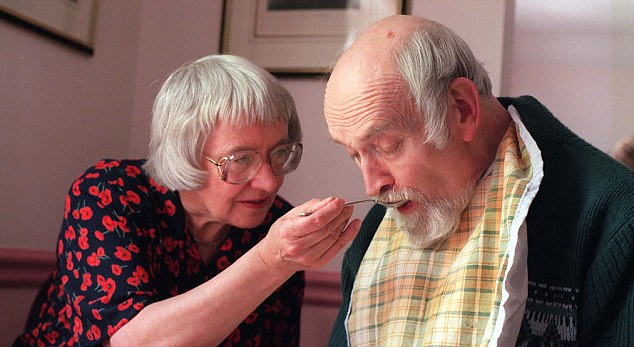
Is Britain's county of West Sussex no place for old men with Alzheimer's disease ?

Over time, Malcolm lost the power of speech and became unable to perform the simplest tasks for himself. But the most upsetting thing was his disappearances. He had completely lost his sense of directionAlzheimer's disease strips the old men and women who suffer from its symptoms of their independence and dignity.

Now, the county of West Sussex in England is one where people with dementia are being fitted with GPS tracking devices, enabling carers to find them should they take themselves off and go missing.

Under the pilot scheme, a joint project between Sussex Police and Chichester District Council, 15 dementia patients have been given the devices and if it proves successful, it will be copied across the county. It is hoped that this could help to alleviate the strain on all those involved with a person with Alzheimer’s.
The police hope it will save thousands of pounds spent on frequent call-outs to search for missing dementia patients, which can involve using helicopters to locate them.

Dot Gibson argued that the use of electronic tags was 'another way of putting a sticking plaster over a problem that arises because there are cuts and budget problems in the social care system'The campaign group, the National Pensioners’ Convention, however, has expressed outrage that dementia patients are being ‘tagged’ in  this way, claiming it demonises them and treats them like criminals.
The Convention’s Dot Gibson likened it to ‘fixing an ASBO to a dementia patient who isn’t able to decide one way or another whether they want one’. In addition, the use of tags was 'another way of putting a sticking plaster over a problem that arises because there are cuts and budget problems in the social care system'.


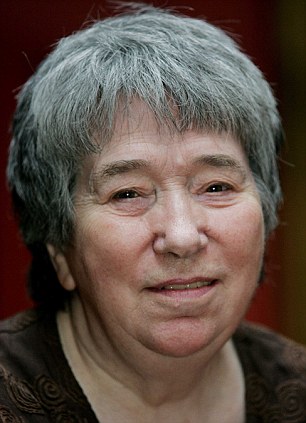
Barbara Pointon has cause to disagree with Dot because :

* when he was only 51, her husband Malcolm was diagnosed with Alzheimer’s, was fit and strong and if she locked him in, would kick down the door or lift the garden gate off its hinges, she couldn't keep him in, yet if he went out, he would get lost.

* with no idea of where he had gone, she would have to get in the car and drive around, sometimes for up to an hour, searching for him, utterly panic-stricken as they lived only a mile from the M11 motorway.

* over time, Malcolm lost the power of speech and became unable to perform the simplest tasks for himself, but the most upsetting thing was his disappearances because he had completely lost his sense of direction, had no memory of familiar places and signs because one of the hallmarks of Alzheimer’s is that the brain misinterprets what the eyes are seeing.
https://www.youtube.com/watch?v=b4eXJi50EMI

* Malcolm died in 2007, aged only 66, after living with Alzheimer’s for 16 years, except for a break of two years when he lived in a care home, she was his carer for 24 hours a day, seven days a week.

* would have loved a GPS device which could have told her where he was and would have given him and her more liberty and saved her endless, anxious hours searching for him.


* she feels desperately guilty about the two years Malcolm spent in a care home, where his condition deteriorated radically and he lost his mobility and, worst of all his freedom, and feels that if she'd had a GPS device, might have felt able to carry on at home, because it would have given her a feeling of security.

Barbara and Malcolm became the subjects of an award-winning documentary in 1999 :
'Malcolm and Barbara...... A Love Story' and the 2007 update :
'Malcolm and Barbara....Love's Farewell'.
http://www.youtube.com/watch?v=XgoWcE3Ecqc

If anyone is, Barbara is clearly an exponent of 'The Power of Love' :
https://www.youtube.com/watch?v=fnhdDV34RD0

There are 800,000 people in Britain with dementia, mostly old men and women, and the figure that it’s estimated will rise to one million by 2021 as the old Britons live longer.