Friday, 16 April 2010

Britain said " Happy Birthday" to Julie Christie and old men remembered a time when, as boys, they could have spent their dinner money on her


Julie Christie today and in t.v. and films - top to bottom :

Andromeda.
Billy Liar.
Darling.
Zhivago.
Fahrenheit 451.
Madding Crowd.
Petulia.

Julie Christie was 69 years old on Monday. Things you probably didn't know about her :
* born in 1941 in , Assam, India where her father ran tea plantations.
* her mother was a painter from Hove in Sussex.
* she had a brother, as well as a half-sibling from her father's affair with an Indian mistress.
* back in England studied as a boarder at the independent 'Convent of Our Lady School' in St. Leonards-on-Sea, East Sussex, from which she was later expelled.
* as a teenager at Wycombe Court School, she played the role of the Dauphin in a school production of George Bernard Shaw's 'Saint Joan'.

I first remember seeing her in the 1961 science fiction series on BBC television called 'A for Andromeda'. I was 14 and she was 20.
http://www.youtube.com/watch?v=zvcC2T2TQOc

Then, when I was 16 she played Liz, the friend and would-be lover of the eponymous 'Billy Liar' who was played by Tom Courtenay.
http://www.youtube.com/watch?v=m54NABR2pEw

When I was 18 she played the amoral model, Diana Scott in 'Darling'.
http://www.youtube.com/watch?v=beut0h1i7y0
In the same year she appeared as Lara Antipova in David Lean's adaptation of Boris Pasternak's novel 'Doctor Zhivago'.
http://www.youtube.com/watch?v=old4K4Tpo8c

When I was 19, she was in Truffaut's 'Fahrenheit 451'.
http://www.youtube.com/watch?v=7cQ-yGCyjyM

A year later, with me at 20 and she at 26, she played Thomas Hardy's heroine 'Bathsheba Everdene' in Schlesinger's 'Far from the Madding Crowd'.
http://www.youtube.com/watch?v=JuHlMn1scAI
And that wonderful scene with Terrence Stamp as Sergeant Troy on Maiden Castle :
http://www.youtube.com/watch?v=EGWUt0wgHg0

In that same year
From 'The Kinks'rock band, Ray Davies wrote 'Waterloo Sunset'
The story : http://en.wikipedia.org/wiki/Waterloo_Sunset
The song : http://www.youtube.com/watch?v=fvDoDaCYrEY
The lyrics :

Dirty old river,
must you keep rolling,
flowing into the night.

People so busy,
make me feel dizzy,
taxi light shines so bright.

But I don't feel afraid,
as long as I gaze at Waterloo Sunset,
I am in Paradise.

Every day I look at the world from my window,
chilly, chilly is the evening time,
Waterloo Sunset's fine.

Terry meets Julie,
Waterloo Station,
every friday night.

But I'am so lazy,
don't want to wonder,
I stay at home at night.

But I don't feel afraid,
as long as I gaze at Waterloo Sunset,
I am in Paradise.

Every day I look at the world,
from my window,
chilly, chilly is the evening time,
Waterloo sunset's fine.

Millions of people,
swarming like flies round,
Waterloo Underground.

But Terry and Julie,
cross over the river,
where they feel safe and sound.

And they don't feel afraid,
as long as they gaze at Waterloo Sunset,
they are in Paradise.

Waterloo Sunset's fine.

When I reached 21 she played the lead character, Petulia Danner, opposite George C. Scott, in Richard Lester's 'Petulia'.
http://www.youtube.com/watch?v=UqNNEBK41mU

Later films followed, but by this time I had no dinner money or student grant to spend on the woman Warren Beatty described as : "the most beautiful and at the same time the most nervous person I had ever known."

Wednesday, 14 April 2010

Britain is 'apparently' a country for old men who keep themselves healthy

I came across this article in the 'Daily Express' newspaper :

'A MAN OF ALL SEASONS'

At one end of the spectrum :

When I was in my 20's I was :

* at my healthiest and fittest as, so much of my system peaked during those years.

* my metabolism was operating at its most efficient.'

At the other end of the spectrum , which is where I am now, in my 60's :

* Everything is a bit more of an effort and my declining hearing and eyesight will be testament to the fact, that I am noticeably wearing out.

* A hardening of my eye’s lens and a weakening of the muscles behind it, will mean focusing becomes more difficult for me , starting with the closest field of vision.

* Although my muscles are naturally losing density and strength, I will be able to maintain them more efficiently and retain strength if I keep fit.

* I should continue to 'work out' because, at this age, I am are susceptible to high blood pressure, strokes and heart attacks. However, heart disease is less likely to strike, once I get past 70.

* A 'good level of nutrition is vital too', as I will need to work that bit more to maintain my immune system. Also, because it is natural for me to eat less, it is essential my food is as nutrient-loaded as possible.

* Mentally, I can be as sharp as I ever was, with greater analytical abilities, but this will be down to giving my brain 'daily workouts' to keep fit. This may help stave off dementia which becomes a very real prospect for me after the age of 65.

* I should be getting an 'all-over check-up', every three months.


* What I need to watch out for: Osteoporosis.

My bones will become progressively less dense, so I need to make sure I keep my calcium intake up. Apparently, milk, cheese, green vegetables, sardines and nuts are good sources of calcium for me.

* Low-level infections. My immune system is becoming increasingly less efficient and I have to keep it well nourished. I need to eat plenty of fruit and vegetables to ensure my diet is rich in vitamins.

So summarised :

DOWN :

* hearing
* eyesight
* muscle density
* immune system

UP :

* blood pressure
* strokes
* heart attacks
* osteoporosis
* low level infection

Not much of a prospect is it ?

Wednesday, 7 April 2010

Britain says "goodbye" to a fine old actor called Corin Redgrave


Corin was a member of the 'Regrave' acting dynasty: the son of Michael Redgrave,, the brother of Vanessa and Lynn Redgrave, the father of Jemma Redgrave and the uncle of the late Natasha Richardson.

He was a man who packed a lot into his 70 years :

* Educated at Westminster school, he won a scholarship to King's College, Cambridge, where he got a 'first' in classics. His contemporaries included Ian McKellen, Derek Jacobi and Trevor Nunn. Shortly after leaving Cambridge, he played Lysander in Tony Richardson's 1962 'A Midsummer Night's Dream'.

* Played the Pilot Officer in Arnold Wesker's 'Chips With Everything' in 1962 and in New York the following year and appeared in a number of West End shows.

* His elder sister, Vanessa, stimulated his interest in politics in the early 1960s and encouraged him to join the 'Campaign for Nuclear Disarmament' and in 1971 he joined the Trotskyist 'Workers Revolutionary Party'.

* From 1974 to 1989, his stage, film and TV appearances became ever rarer. He took time off from the WRP only to help his father write his autobiography, 'In My Mind's Eye', in which his father's tortured bisexuality was cryptically acknowledged.

* He re-emerged into the limelight in the late 1980s, playing Coriolanus at the Young Vic and was as a stronger, better actor who had a particular gift for playing establishment figures tortured by doubt and fear - something he had witnessed first-hand in his own father.

* In 2004 he enjoyed a rich season with the Royal Shakespeare Company and reached the summit as King Lear on the same stage where his father had played the role more than 50 years previously. "I was 13. My father was playing 'Shylock', 'Antony' and 'Lear'. My mother, also in the company, always a little in my father's shadow, played Octavia and Regan. I learned to love the sound of Shakespeare from my father who had an effortless command of the rhythms, cadences and stresses of blank verse. But it was my mother who taught me to love Shakespeare's stories."

* He claimed for many years that he had been dropped by the BBC because of his radical politics, but for all that, he appeared in 'Persuasion' in 1995 and 'The Forsyte Saga' in 2002 and also wrote two BBC radio plays.

* He had also appeared occasionally in films since the 1960s : 'Man for All Seasons', 'The Charge of the Light Brigade' and 'Oh! What a Lovely War'.

Tributes :

Sir Trevor Nunn : "I was Corin Redgrave's friend and employer over many decades and I think of him as one of the most extraordinary and inspirational people I have ever met."

Amnesty International UK director, Kate Allen : "Corin was a staunch defender of human rights and in particular his work campaigning for the rights of Guantánamo prisoners will be remembered for years to come."

Director Roger Michell : "Corin's performance as King Lear was selfless, unshowy and truthful, with a complete absence of rhetorical and theatrical tricks. He was a great man who stood head and shoulders above others for whom success, recognition and praise are the only things that matter."


http://vimeo.com/4227107


Britain's Medway Towns in Kent are a place for old men who like to walk

One of the possible new occupations for an old man like me to adopt is : to walk. There are the obvious benefits of exercising, my increasingly arthritic frame and if I walk in a group, I get to enjoy the company of other ancient walkers. Therein lies the problem.

Now the context :

I live in conurbation in North Kent called the Medway Towns. Apart from the City of Rochester, it is an unlovely and relatively poor part of the South East of England, which has never really recovered from the closure of Chatham Dockyard in 1970.
The closure was caused by the retraction of Britain's colonial role around the world in its decline from world power status. For the Medway Towns, it was devastating as the wages and salaries of Dockyard employees, disappeared from the local economy overnight.

So, the opportunity to walk and get out of 'The Towns', therefore has its attractions.

There are 2 groups of walkers/ramblers in this area.
Which one should I join ? :

The 'Medway Towns Footpaths Group' or the 'Medway Ramblers' ?

Let's see what is on offer :

April 11th : Footpath : 10.00 at Penshurst Church . 6 mile walk, some hills, no dogs.

April 11th : Ramblers : 10.00 at Linton. 5 mile walk across the 'Greensand Ridge', with good views,pub at the end with meals.

April 18th : Footpath : 10.00 at Cliff Woods shopping Centre for 4.5 mile, mainly flat walk, dogs allowed.


April 18th : Ramblers : 10.00 at the 'Chequers' pub at Loose Hill for a 6 mile circular walk, pub at the end with meals.


Supposing I want to join both. I can, but I can't do all the walks. I have to choose. I wonder why ? Is there some ancient rivalry between the two groups ? Have ancient walkers fallen out in the past ?

Well, in choosing between the two there isn't much to go on, apart from the fact that the Footpath emphasise whether dogs can go or not and the Ramblers always end up with a pub at the end.

So dogs or pub ? What is it to be ? Well, I don't like dogs but, is there a bit of a 'class' thing here ? Shopping centres or old pubs to meet and dogs and no dogs.

On second thoughts, I think I'll go with the dogs.

Tuesday, 6 April 2010

Britain is no country for old men who want to walk past Watership Down


On Sunday afternoon I walked along part of the ancient trackway called 'The Ridgeway' in Hampshire. The walk takes you past 'Watership Down' where Richard Adams set his story of good versus evil in the world of rabbits which was published 38 years ago.

I had enjoyed the walk with its splendid views of the Hampshire countryside. I paused to speak with a couple at Ladle Hill. They told me that it was an unfinished Celtic hill fort. I thought it was a barrow or burial site. I had romanticised that the chieftan who had ruled this area when he lived, could preside over it after death.

While conversing with the couple at Ladle Hill, my wife and daughter had walked ahead. I quickened my pace to catch up.

I want to be very precise about the next sequence of events.

1. A woman appeared on the Ridgeway with a little spaniel dog.

2. I don't like dogs and I don't like being confronted by dogs, after all, this is our place, not a dog place.

3. The woman smiled. I didn't pause. The untrained dog got under my wellington boots. I stumbled. I went down like a sack of potatoes, fell forward landing on my hands, to break my fall and my knees.

4. The woman said : " Are you all right ?".

She made no attempt to help me off the ground.

I said : " You should keep your dog under control."

This is the best bit, she said :

" It's only a puppy."


5. So, apparently, it's my fault that I allowed a puppy to get under my 62 year old feet and trip me up, even though the woman was committing a civil offence by allowing her dog to run around without a lead in a public place.

6. So, who was in the wrong, me, the puppy or the puppy owner ?

When I caught up with my wife and daughter, my wife accused me of being a 'puppy kicker', so we know who she blamed.

Sometimes, I think that the whole world transpires against me.

Friday, 2 April 2010

In Britain : England is no country for old women


Britain's old women, England is no place for you.

A recent report has revealed that for English women :

* poor cancer detection and bad diet mean that women in most other European countries live longer than you.

* you can expect to live to 81 years and 11 months, but your Slovenian counterpart will have an extra two months of life, even though the former Yugoslav republic spends far less on healthcare.

* experts say the difference can be put down to National health Service failures to spot cancer and heart disease early enough, as well as the fact that the British diet is worse than in other countries.

* chronic liver disease among you has climbed above the EU average, driven by the rise in binge drinking.

* your teenage pregnancy rates are the highest in western Europe and your obesity levels are the worst in the whole continent.

* In the rest of the world, only women in the U.S., Mexico and New Zealand are fatter than you.

For old British men, better news for you :

* Your life expectancy of 77 years and eight months is among the best in Europe, behind only Sweden, Italy, Cyprus and France.

My favourite comments which the article generated on the web :

'More useless statistics, once you reach the old age of 80, it doesn't make the slightest difference if you die at 81, 82 or 85 because most likely it means you are stuck on a chair or bed most of the time and waiting for death to save you from a life of boredom....'

- Nick, Birmingham.

'Wow, I could live a whole TWO MONTHS longer in Slovenia. Must move there now...'

- Rebecca, Gloucester.

'And remember - the last extra few months/years will most likely be in one of Gordon's wonderful care homes - better to drink and eat a little more now and avoid as much of that particular fate as possible.'

- downshifter98, London.

I've been wondering where to put this picture for some time> Here would seem the apposite place :

Monday, 29 March 2010

Britain says "Happy Birthday" to Eric Idle

Eric Idle, a founder member of the 'Monty Python's Flying Circus' team' is 67 today.


Things you probably didn't know about Eric :

* born County Durham in Harton Village, his father served in the Royal Air Force and survived World War II, only to be killed in a hitch-hiking accident in 1945.

* his mother had difficulty coping with a full-time job and raising him and when he was 7, enrolled him into the Royal Wolverhampton School as a boarder.

* he is quoted as saying : "It was a physically abusive, bullying, harsh environment for a kid to grow up in. I got used to dealing with groups of boys and getting on with life in unpleasant circumstances and being smart and funny and subversive at the expense of authority. Perfect training for Python."

* he became Head Boy, but was caught at the local cinema on sports afternoon and was stripped of his prefecture.

* he refused to be senior boy in the school 'Cadet Force', as he supported the 'Campaign for Nuclear Disarmament' and took part in the yearly 'Aldermaston March'.

* he said that there was little to do at the school and boredom drove him to study hard and consequently won a place at Cambridge University to study English.

* he was invited to join the 'Footlights Club' by its President, Tim Brooke-Taylor and Club member, Bill Oddie. Other members included Graham Chapman and John Cleese He became in 1965 and was the first to allow women to join.

* from 1967–69 he starred in a children's television comedy series along with future 'Python' members Terry Jones and Michael Palin and Terry Gilliam provided animations for the show.

* from 1969–83 he appeared in 'Monty Python' where his work is often characterised by an obsession with language and communication:

the man who spoke in anagrams,
the man who said words in the wrong order
the butcher who alternated between rude and polite every time he spoke


* One of the younger members of the Python team, he was closest in spirit to the students and teenagers who made up much of Python's fanbase and sketches dealing with contemporary obsessions like 'pop music', 'sexual permissiveness' and 'recreational drugs' were his work, They were often characterized by double entendre, sexual references, and other 'naughty' subject matter — most famously demonstrated in the 'Nudge Nudge' sketch.


* A competent guitarist, he composed many of the group's most famous musical numbers, most notably "Always Look on the Bright Side of Life", the closing number of the film 'Life of Brian'
http://www.youtube.com/watch?v=jHPOzQzk9Qo

* Since 1983 has had a varied career on radio, TV, in stage opera, film voice-overs and on tour in Canada and the USA. He has also written books of fiction and non fiction.

But it is 'Monty Python' sketches that he will be remembered :

http://www.youtube.com/watch?v=7W6b_UF6Weg

Friday, 26 March 2010

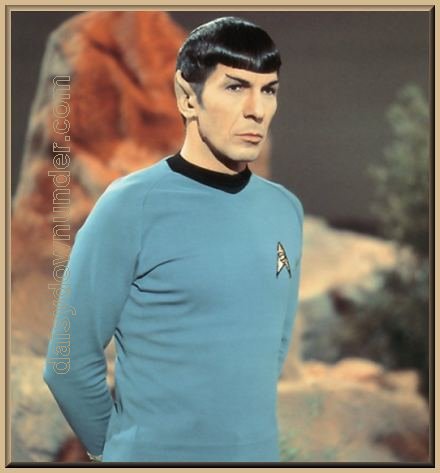
Britain's old men say "Happy Birthday" to an old American tv and movie actor called Leonard Nimoy.

Leonard Nimoy is 79 today. For millions who remember the t.v. series from the 1960's and 70's and the movie spin offs, he will always be frozen in time as 'Mr Spock'.
Here are some things you probably didn't know about him, that he :
* was born in Boston, Massachusetts, to Yiddish-speaking Orthodox, Jewish immigrants from the Russia. His father owned a barbershop.

* started acting at the age of eight and had his first big role at 17.

* studied photography at the University of California, got his degree and has an MA in Education and an honorary doctorate from Antioch University.

* served as a sergeant in the U.S. Army from 1953 to 1955.

* spent most of his early acting career playing small parts in B movies, TV shows such as 'Dragnet', and serials such as ' Zombies of the Stratosphere'and played an Army sergeant in the 1954 Sci Fi thriller, 'THEM!'

* appeared in a number of 1960's tv series including 'The Outer Limits' in 1964.

* was the half-Vulcan, half-human Spock in the 'Star Trek' series which ran from 1966 to 1969 and earned 3 Emmy acting nominations for his work.

* had a number of stage roles in the 1970's : 'Fiddler on the Roof', 'The Man in the Glass Booth', 'Oliver!', 'Camelot', 'One Flew Over the Cuckoo's Nest', 'The King And I', 'Caligula', 'Twelfth Night', 'Sherlock Holmes', 'Equus' and 'My Fair Lady'.

* started film directing in 1984 with the third 'Star Trek' movie. When later asked would he continue to direct he said : " No. No, I'm done with all that, thank you. I directed, I think, five or six films — I had a good time.”

* he had a love/hate relationship with the character of Spock and the Trek franchise.

P.S. In the early 1970's I attended an adult education evening class with my friend P.K. We were learning German. Unfortunately, the class clashed with 'Star Trek'. First, P.K. dropped out and then me, a few weeks later. Who knows, my spoken German might be better if it hadn't been for Captain Kirk and Mr Spock. It's O.K. Leonard, I don't hold it against you.

If you want a reminder of the original series you can see it on this link after a 20 second advert : http://www.youtube.com/watch?v=buF-BLM5RTU

Thursday, 25 March 2010

Britain's Imperial War Museum is a place for school children and old men

I went with my friend R.P. to the 'Imperial War Museum' in South London yesterday.

The journey was tortuous, involving us driving from North Kent to Greenwich and then by train to 'Waterloo East' and another train to 'London Bridge' and then a walk to the back entrance of the Museum. It was all worth it.

I hadn't been to the Museum for many years and may well have been there as a school child on a school visit. There were lots of school parties there yesterday and also retired people like myself and R.P. and we mingled together well.

The purpose of the visit was to go to the 'Photographic Archive' Section. R.P. wanted to pick up his Uncle's photo album which he had loaned it to the Museum for them to copy any photos from the 'Battle of Tobruk' in North Africa in the Second World War.

http://en.wikipedia.org/wiki/Siege_of_Tobruk


The 'Photographic Section' was a wonderful mix of the old and new. You could check references to the battle in an alphabetical card index of hundreds of draws filled with postcard size entries recording the information in copper plate handwriting. At the same time in the viewing room you could access photos on a monitor.

The young man who returned the album told us that he had copied 22 photos from the album of scenes from Tobruk the Museum didn't have.

Apart from getting the album, R.P. was interested in looking at the ships involved in the Battle. He combed through the album and found a few morsels. R.P. is still a water colour artist who specialises in Britain's naval power.

Our next 'port of call' after lunch in the restaurant, was the main gallery. It now had a glass roof to light the exhibits and before we left Kent R.P. showed me the paintings he had done for the Museum by commission, to envisage what the gallery would look like when the roof was done and suffused the exhibits with natural light.


In the gallery R.P. explained the special features of each war plane and each tank. In fact, one or two visitors 'listened in' as we went round' probably thinking that he was a museum guide.

I was struck and impressed by the following :

* That we still employ people to care for our National Archives.

* That The First and Second World Wars are still part of the 'History National Curriculum' in State schools.

* That old and young can rub shoulders without friction in a museum whatever their motives for being there.

* That the old and young can still get excited about the details of long forgotten battles, witnessed by the fact that the young man was just as enthusiastic as R.P.


P.S. Like R.P., I too had an uncle who served in North Africa in the Second World War. He was in the 50Th Royal Tank Regiment. I'll have to do some research on him. I'm sure that, he too, was at the Battle of Tobruk.

P.P.S. Some interesting facts :

The Imperial War Museum has :

* 19,000 paintings, drawings and sculptures constituting the second largest collection of 20th century British art in the world
* 15,000 posters
* 120 million feet of cine film
* 10,000 hours of videotape
* 56,000 hours of historical sound recordings
* more than 10 million photographs, negatives and transparencies
* over 15,000 collections of unpublished diaries, letters, memoirs and other papers
* 270,000 library items, including books, maps and ephemera
* plus thousands of three dimensional objects including, uniforms, medals, firearms, as well as hundreds of larger objects including aircraft and vehicles

Saturday, 20 March 2010

Japan is a country for old men

A robot pet stimulating old Japanese with dementia, is an example of how Japan is catering for the needs of its ageing population.

So, I have found it. I think my quest is over. I have found a place for old men, a country where you can grow old and be 'revered' and not be either looked down on, patronised or laughed at.
It is called 'Japan' and is turning its technology towards the problems of the 'new' old.

I found it in an article in the 'Guardian' today, which made some interesting observations : i.e. that Japan :

* Has a population ageing faster than any other nation : by 2020, there will be three pensioners for every child under 15, before long, one in six people will be over 80. That population will soon be falling by nearly a million people every year and some say that some time in the next century, the last Japanese person will die.

* Doesn't encourage immigration to solve its demographic woes, but is developing an array of hi-tech products and services.

* Gives a glimpse of what consumer society may look like in Britain when the baby boomers hit their 70s and 80s.

Japan has produced :

Intelligent toilets :

Which will talk to your GP, when it examines the healthiness of your stools. It has sensors which measure blood-sugar levels in urine and the blood pressure body fat of the user and the data is emailed to the GP.

Cars :

Which not just have dashboards that have large numbers and letters, but also hand controls for the brake and accelerator, and swivelling seats that make it easier to get in and out.

* Intelligent cars :

Toyota is working to make cars which monitor brain activity. The car will learn the driving patterns of the user, then curb any unusual and dangerous activity. This is good : it would automatically slow the car if it senses the driver is hitting the accelerator for no reason.

* Bikes for the arthritic :

Cycle equipment maker, 'Shimano' is developing bikes with handles and gearing designed for arthritic hands.

Pens, pencils and paint brushes in abundance :

With 30 million people expected to enjoy a 30-year retirement, Japan has seen a boom in the purchase of artists' drawing kits and pen and pencil sets, as millions take up hobbies.

* Internet kettles :

* As more care will fall on the dwindling number of younger adults, devices intended to allow them to remotely monitor the old without being too intrusive are now becoming popular. A good example is the 'Internet-connected kettle'. Each morning, when Granny boils the kettle this automatically triggers a signal to the carer that everything is normal.

Wide aisled supermarkets :

Supermarkets are making aisles wider, for the old to move around more easily, especially in motorised wheelchairs. There is also a boom in health foods and and in particular, 'royal jelly' , which is believed helps to reverse the skin-ageing process.

Robot pets :

Japan has twice as many pets as it has children and real animals are difficult to look after as their owners age. Paro, a furry white baby seal robot, responds to petting by moving its tail and opening and closing its eyes. It shows emotions such as surprise, happiness and anger, and has sold well in nursing homes where it is reported to stimulate responses among those with dementia.

* Robot lifters :

Japan's Institute of Physical and Chemical Research has developed Riba, a nursing care robot that can lift the elderly out of bed.

Burial space :

One company maintains underground vaults for the storage of cremated remains. When family members want to pay their respects, they use a radio-frequency identification key to locate their loved one's remains which are dispatched to a private viewing area. Families can also view the memorial stone from anywhere in the world by logging in.

Beds that turn into wheelchairs :

'Panasonic' last year launched a robotic bed that can transform into a wheelchair, so the old can get up without assistance. One half of the mattress rises, the other lowers and a unit slides out from the bed and the person is slipped into a motorised wheelchair. It can be driven around the home or even on to the street and when the person is sleeping, it helps turn them over to prevent bedsores.

And here is the way the Director Alexander Korda saw the H.G.Wells book ' The Shape of Things To Come' in 1936.

http://www.dailymotion.com/video/x5xi8m_things-to-come-10-19362037_shortfilms

That was 74 years ago. It's a funny old world.

Thursday, 18 March 2010

Britain is a country where old men can enjoy spring sun


It is warm. My ancient cat and the crocus, crocuses or croci, whatever you want to call them, are, like me, enjoying the warmth of the sun.

I am reminded of the poem :

Spring is sprung,
Da grass is riz,
I wonder where dem boidies iz ?

Da little boids is on da wing,
Ain't dat absoid,
Da little wings is on da boid.

A poem not by e e cummings, or by Ogden Nash, but that other well known poet called : 'Anonymous'.

Isn't that interesting ?

Monday, 15 March 2010

Britain is a country for cats with old cat owners

We have had 6 cats over the years :

One is still alive at 17 years. She has the feline version of 'Alzheimer's' but is still relatively fit.

I like this link : http://www.youtube.com/watch?v=Wvo-g_JvURI

We said "Goodbye" to O and R and C and T and M along the way.

Sunday, 14 March 2010

Britian is no country for old baby boomers and the 'Daily Mail' and Dominic Sandbrook

Dominic Sandbrook wrote the ' SATURDAY ESSAY' in the 'Daily Mail' this weekend.
He began with a 'profound' statement :


How the baby boomers bust Britain: Self-indulgence has left the country financially, socially and even morally crippled

Right, I'm one of them and my 'self-indulgence' has left the country I love :

* Financially
* Socially
* Morally ...'CRIPPLED'

Oh dear, what have we done ?

Apparently we :

* Are the luckiest people in history: 'the richest, most secure and most powerful generation the world has ever seen'.

* Are people who, while our parents 'scrimped and sacrificed through the Depression and World War II', 'basked in the long boom of an affluent society'.

* Were children in the prosperous Fifties and teenagers in the Swinging Sixties'.

* Bought our first homes in the Seventies and saw our mortgages 'wiped out by inflation'.

* Made our money in the Eighties and Nineties, and are now looking forward to a long, healthy and well-remunerated retirement.

This is the good bit :

'Welcome to the world of the generation born in the two decades following World War II: the baby boomers.'

We had :
* Free school milk and handsome benefits.
* Cheap holidays.
* Women's liberation and the shopping revolution.

We have :
* For more than half a century, been living it up, borrowing and spending in the conviction the money our wouldn't run out.

Now as we are :

* retiring and looking forward to their hefty pensions, the cost of our 60-year spree is becoming unpleasantly apparent.

And here it comes : good old right wing 'Daily Mail' :

'As everyone who has ever thrown a party knows, there comes a point when somebody has to clear up. And, according to The Pinch, a new book by David Willetts - one of the more thoughtful Tories in the Shadow Cabinet - that moment is upon us.'

So there we have it : The Daily Mail backing the Conservative Party with David Willetts, who I mentioned in a previous posting :

http://britainisnocountryforoldmen.blogspot.com/2010/01/britains-baby-boomers-beware-david.html


He goes on to state that we :

* Were brought up in an age of surging living standards and we were not prepared to wait for jam tomorrow. WE wanted it today, tomorrow and forever and we raised our children in our own image.

* With our 'me generation' values, we spearheaded the sweeping social changes of the late Sixties and Seventies, when the illegitimacy rate almost doubled from seven to 13 per cent, the annual abortion tally leapt from 24,000 to 170,000, and the divorce rate almost quadrupled.

Oh dear, more illegitimacy, abortions and divorces - we were responsible for all that and 'Britain has the highest rates for divorce and illegitimacy in the EU. And government figures show the proportion of single mothers has surged from ten to 25 per cent in the past 20 years'.

Apperently we are :

* Bequeathing a more individualistic, selfish, atomised society. * Handing over a Britain addicted to spending and crippled by debt - public and private.

* Going, in ten years, to suck up an extra £20 billion in public spending.

* Due to our the sheer size we have maintained an unprecedented monopoly on jobs, houses and income, effectively shutting out our juniors.
* Since New Labour came to power, our wealth of people in their late 50s has almost trebled.

* Through our 'enthusiasm for immigration' been reponsible for keeping wages for 'British youngsters at an unprecedented low'.
* And the future? : With the last of us still 'drawing pensions and benefits, paid for by the taxes of millions of immigrants, Britain could be a distressingly hectic, threadbare and overcrowded place'.

Just to recap, we :

* Had a party which went on too long.

* Ignored the warnings of our parents and were enjoying ourselves so much, we could 'barely hear the cries of their children'.

* Thought we were as rich as Croesus, the ancient king reckoned by the Greeks to be the wealthiest man in the world. Then forgot what the philosopher Solon said when Croesus asked what he thought of his riches and good luck. "Call no man happy," said Solon drily, "until he is dead".
He was right. Croesus eventually lost his money, his family broke up and he died in squalor.

http://www.dailymail.co.uk/debate/article-1257631/How-baby-boomers-bust-Britain-Self-indulgence-left-country-financially-socially-morally-crippled.html

Wednesday, 10 March 2010

Britain is a country where young industrial workers who are now old, were caught in aspic by a photographer called Maurice Broomfield


While Bert Hardy was the British photographer of street life in the 1940's and 50's, Maurice Broomfield was the photographer of the factories in the 1950's and 60's. He was interveiwed on the 'Today' radio programme earlier this week. He is 94.

What is interesting about Maurice is that he :

* Was son of a lace-maker and started as a lathe operator at the local Rolls-Royce plant. This didn’t please his mother : “She wanted me to be a nicely clothed worker, not a chap who had to take off dirty overalls before I was allowed in the house. They were covered with this terrible mixture of whale oil and disinfectant that got everywhere.”

* Later said that : " There was a human relationship between the man and his product. They’d clean up the machinery and make things look nice with the same pride they took at home. And they’d dress nicely, too. It wasn’t unusual to see a chap in a suit and trilby hat or a girl with red shoes and scarf."

* Would wander the factory, drawing: “I loved the noise, the movement. I remember sitting on the loo seat, making sketches on a piece of lavatory paper.”

* During the War, drove a Quaker ambulance.

* After the War,began taking photos, and became an industrial photographer who had been inspired by painters : Joseph Wright and Johannes Vermeer.

* Worked for ICI before travelling the world photographing for Hawker Siddeley a company making a spectrum from transformers to aircraft.

* Was in the 1950s, a newspaper photographer and said : "I was fortunate: Lord Drogheda had a great interest in the arts. He said he liked the way I regarded industry as a stage set. And he was right, I did see it as magical; that’s why my lighting became quite theatrical."

* His photos to be shown a in two exhibitions this Spring and Summer reveal not just, that defunct world of looms, laboratories, car factories and cooling towers, but also,something of the excitement of being part of Post Second World War British industry.

His website shows his beautiful photos : http://www.mauricebroomfield.com/flash.html

Here he is interviewed on the 'Today' programme : http://news.bbc.co.uk/today/hi/today/newsid_8559000/8559164.stm

Tuesday, 9 March 2010

Britain was once a country for young boys who are now old men who were caught in aspic by Bert Hardy


I came across this photo in the 'Sunday Times' magazine in an article by Richard Woods in a feature called 'Photography under threat'. It was taken by the photographer, Bert Hardy in Glasgow in 1948. Two street urchins. I think it is wonderful.

George Davis on the right and his dirty-faced pal Leslie Mason were snapped on the way to the shops as they walked up Clelland Street. George died at the age of 61 and Leslie is now 69. 'The Gorbals Boys' picture, was syndicated around the world and highlighted the appalling poverty in the city.

Leslie has said : "It's amazing how much impact that picture has had. My wife has relatives in Canada and they saw the picture for sale as a fridge magnet and sent me a few as a present."

George Davis died in 2002 at the age of 61.

His was a sad story from that harsh, bygone age of Britain in the 1950's.

In 1955 when he was 16 he was sent to prison for fathering a child by a 15 year old girl. She was sent away to live with nuns and have the baby and when she was away on a home visit, the baby boy was given to an adoptive family.

George subsequently married the girl and they had two daughters. With their mother and father both dead, the daughters, now in their 40's, are still trying to find their long lost elder brother.

http://www.dailyrecord.co.uk/news/editors-choice/2008/10/16/exclusive-hidden-heartache-of-the-gorbals-boy-86908-20808329/

Bert Hardy, the photographer died in 1995 at the age of 82.
I find his pictures strike a chord with me and take me back to my boyhood in Deptford in South London in the 1950's. I remember milk and bread being delivered by horse and cart and streets completely free of parked cars, since there were none.


Kids wearing air raid warden helmets left over from the recently ended Second World War and hitching a lift on a horse drawn cart.

Saturday, 6 March 2010

Britain says "Happy Birthday" Sir Ranulph Twisleton-Wykeham-Fiennes


Sir Ranulph Twisleton-Wykeham-Fiennes, 3rd Baronet, OBE, was born on this day, March 7 1944, 66 years ago. Here is the weather chart for that day :


Born on 7 March 1944, better known as Ranulph (Ran) Fiennes, he is an 'adventurer' and holder of several endurance records.

Things you probably didn't know about him :

* Was born in Glasgow, shortly after his father, a Lieutenant-Colonel, was killed in the Second World War at Monte Cassino in 1944.

* Inherited his father's title and became, the 3rd Baronet of Banbury, at his birth.

* Is the third cousin of actors Joseph and Ralph Fiennes, and is a distant cousin of Britain's royal family.

* After the War his mother moved the family to South Africa where he remained until he was 12.

* Ranulph then returned to be educated at Eton and then joined the British Army where he served for eight years including a period on counter-insurgency service while attached to the army of the Sultanate of Oman.

* Then undertook numerous expeditions including being the first man to visit both the north and south poles by surface means and the first man to completely cross Antarctica on foot.

* Was appointed OBE in 1993 'for human endeavour and for charitable services' — his expeditions have raised £5 million for good causes.

* In 2009, aged 65, he climbed to the summit of Mount Everest.

* According to the Guinness Book of World Records he is 'the world's greatest living adventurer.'

Here is my favourite :

* As a young soldier he was offended by the construction of an ugly concrete dam built for the film 'Doctor Dolittle' in the Wiltshire village of Castle Combe — reputedly the prettiest village in England.
He planned to demolish the dam and used explosives which he later claimed to have accumulated from leftovers on training exercises with the S.A.S.
He evaded search dogs by night, he escaped capture, but he and a guilty colleague were both subsequently traced.
After a court case, Fiennes had to pay a hefty fine and he and his co-conspirator were discharged from the SAS.

Thursday, 4 March 2010

The Sea Wall at Sheerness on the Isle of Sheppey, is a place for old men to stroll in the spring sun

I went for a stroll yesterday afternoon with my Old friend D.B. We were on the shore of the North Kent coast at Sheerness on the Isle of Sheppey. It was a sunny afternoon which was the perfect antidote to what has been, a long, cold and grey winter.The sea was a calm as a duck pond and full of relected blue light. Even the Isle of Grain Power Station reflected in the River Medway at Funton Creek looked beautiful.


Here D.B. points to the 'Celestine', a ferry en route from London and bound for for Zeebrugge in Belgium.


Spring was in the air. The sun was warm. A young couple sat without coats on the sea wall, while a man to their right was painting the railings.

Wednesday, 3 March 2010

One old Briton remembers Dave Berry


I was 17 when Dave Berry released 'The Crying Game' in 1964 and it was probably 'apposite' for me then.

http://www.youtube.com/watch?v=Rwkq48UetR8

I know all there is to know about the crying game,
I've had my share of the crying game.
First there are kisses (kisses), then there are sighs,
And then before you know where you are,
You're sayin' goodbye.

One day soon I'm gonna tell the moon,
About the crying game.,
And if he knows, maybe he'll explain
Why there are heartaches (heartaches), why there are tears,
And what to do to stop feeling blue when love disappears.

First there are kisses (kisses), then there are sighs,
And then before you know where you are,
You're sayin' goodbye.

Don't want no more of the crying game,
Don't want no more of the crying game.

Dave Berry, who was born David Holgate Grundy in Sheffield is now 69.

As a performer, I shall remember him wrapping himself around and behind, the microphone lead.

Tuesday, 2 March 2010

One old Briton says "thanks" to Darrell Banks


When I was 17 I thought I could dance. At parties I would flay my arms around in, what I thought was, a creative way.

I went to university and met and became a friend of K.M. who knew a thing or two about 'dancing to music'. He had honed his skills on the 1960's 'Leeds' dance circuit and took me in hand and showed me how to dance 'on the off beat'.

I remember the dancing classes took place in my flat in Hove, with me wearing moccasin sandals on a green carpet. These gave me the extra bit of 'shuffle' I needed to twist my legs and do the 360 degree turn which added that extra bit of 'flounce'.

I practised hard, while taking time off from essays on 'Machiavelli' in History and 'Kierkegaard' in Philosophy, but I knew it was going to pay off when I went to a party and a girl called Lucy said that of K.M. and I, that we : " danced like snakes."

The one 45 record I had, which K.M.loaned me was Darrell Banks singing 'Open the Door to Your Heart'. I played it over and over again.

http://www.youtube.com/watch?v=K8rC9Bf0hXk


Thanks K.M. and thanks Darrell.

Sadly, Darrell died 5 years later in 1970 at the age of 33.

Walk right on in,
Stretch out your arms.
Let the lovelight shine on my soul, baby,
And let love come running in.

You know that I needed you,
I've needed you a long, long time.
My pride is too much for me, baby, and I'm about to lose my mind.

Walk right on in.
Let your love come running in.

Open the door to your heart, baby,
Open the door to your heart,open the door to your heart,
And let love come running in, let your love come running in.

Let it flow like the river,
Let it shine like the light.
Take all my mind and soul, baby,
Why don't you give it sight ?

I'm trying to keep from loving you,
And I've been loving you a little too long.

Darling, darling,
You've been so sweet to me,
That's what keeps my love so strong.

I need you to stand by me,
Let your love come running in.
Let it flow like the river..

Monday, 1 March 2010

Britain is a country where one old man has sharp auditory memories of Eden Kane and Billy Fury

Eden Kane was born, Richard Graham Sarstedt in Delhi, India in 1941 and is 69. Billy Fury was born Ronald William Wycherley in Liverpool in 1940 and died at the age of 43 in 1983. Had he lived he would now be 70.

The auditory memory is a wonderful thing. I can have trouble remembering what I did yesterday afternoon, but my recall of the songs and singers of my youth is almost perfect.

Eden Kane recorded 'Forget Me Not' in 1962 when he was 21 and I was 15.
http://www.youtube.com/watch?v=A94evtK0iz4

Billy recorded ' Once Upon a Dream' in the same year.
http://www.youtube.com/watch?v=ae_ogriURVk

My memory of both songs is alost word perfect, possibly because at the age of 15, I probably fell in love for the first time and so their songs were my songs.

Eden today :

Comments on Alexander Chancellor's article asking : Why is it so fashionable to celebrate ageing ?'

The Alexander Chancellor article entitled : ' Why is it fashionabble to celebrate ageing ?' provoked 65 people to send their comments to the Guardian Newspaper.

http://www.guardian.co.uk/commentisfree/2010/feb/26/good-time-to-be-old#start-of-comments

These are my 3 favourites :

1. 'Can't imagine why an ageing society is something to celebrate.'
Oh I can.
More pensions to tax and more people to mug!

2. 'The prime minister has invited me to a reception in Downing Street next week for "celebrating our ageing society".'

Twat him with your walking stick.

3 ......and what's more I voted Labour in the last Election and I'm still five years older now. It's all their fault!!!